A Closomat White Paper Written by The Occupational Therapy Service
Regardless of ability, 21% of adult men and 29% of women have difficulty doing basic activities of daily living.¹ Going to the toilet is one of the top 10 most ‘dangerous’ activities² in and out of home. Yet it is something we all do, on average, eight times a day.

Abstract
In 2023, Falls cost the NHS at least £2.3billion.³
Low falls (falls that are from a height of 20ft or less) cause five fatalities and over 150 major injuries to care residents each year.4
People handling is the most common cause of injury to health and social care staff, with over 500 injuries to employees per annum.
Transfer from a wheelchair to toilet was rated as the most stressful task undertaken by care workers.5
Using appropriate mobility, moving and handling aids when going to the toilet can:
- Reduce the risk of falls and injuries
- Restore some or all the user’s control over their limitation
- Improve and increase their dignity and independence
- Reduce carer costs
- Facilitates a Single-Handed Care approach
- Achieves best value in use of resources
Moving
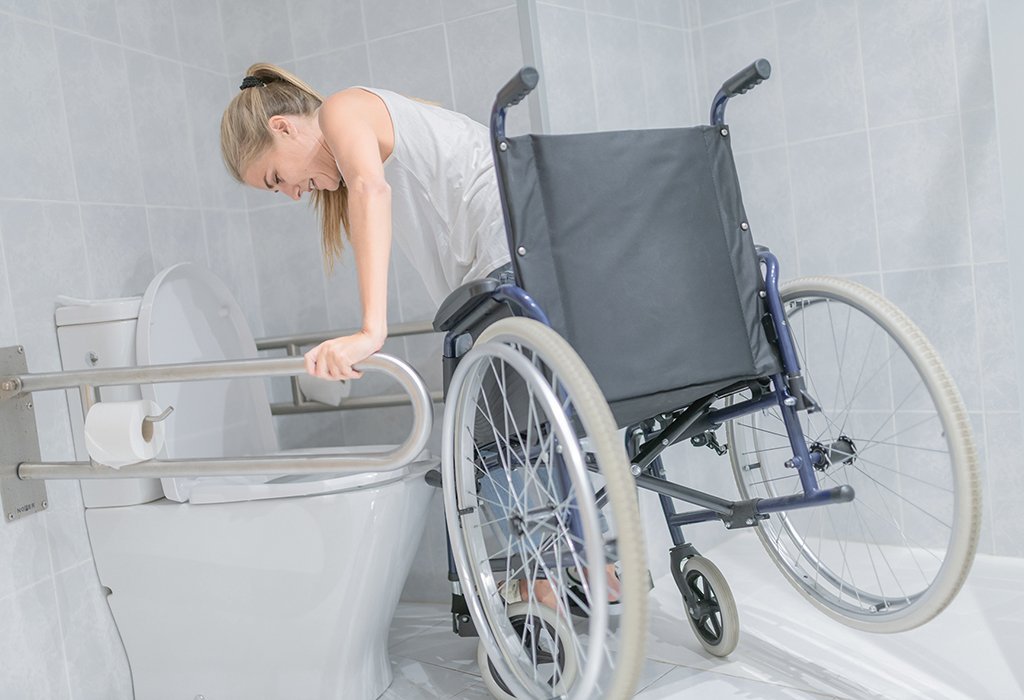
For the majority of elderly or disabled people, the main issue is just getting on and off the toilet.
Grab rails/support arms
Assistive technology as basic as a grab rail can give extra leverage and security as the user gets on and off the toilet, whether or not a carer is in attendance. Such rails do require the individual to have a relatively high degree of flexibility in the legs. The type of grab rail depends on the size and layout of the room, and the room’s wall construction/strength. The rail needs to be within easy reach, without causing unnecessary stretching, and at a distance and height to provide stability and leverage.
Walls may be too far away, nor bear the load, especially if a modern stud wall. In those instances, drop down rails may be an appropriate solution, either fixed to the wall or floor behind the WC.
If space is really limited, and/or wall or floors not suitable for fixed rails, drop down rails/ support arms may be attached to the toilet directly.
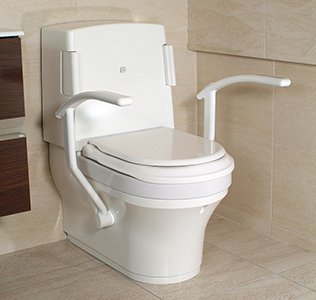
Raised Toilet seats
Sometimes it could simply be that the toilet is too low, or that the user simply doesn’t have sufficient power in the lower limbs to push into standing from such a low position. Raised toilet seats have been an effective solution for many users over the years. Raised toilet seats tend to come in a choice of 2” 4” and 6” heights, depending on how much the user needs the toilet raising by. They are easily fitted onto the toilet “pan” using pressure fitted brackets or clips.
Paediatric
Approximately 11% of children in the UK are disabled.6 Children of all ages need proper support when going to the toilet. Research shows that using functional rooms, including the toilet, was the second biggest problem for families with a severely disabled child. It also impinges on the child’s self-care skills.7 The most basic toilet supports provide orthopaedically-contoured backs to position the child or young adult correctly over the toilet, with straps to support them in that position. Where greater support is required, a full seat version delivers functionally- correct postural support through back to and including the pelvis.
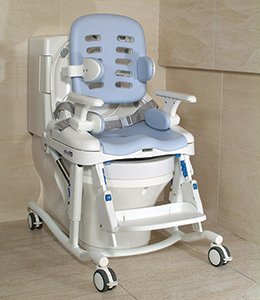
Paediatric options
A Rifton Hygiene & Toileting System (HTS) delivers optimum adaptability to accommodate personal hygiene requirements – showering, toileting and bathing – from one core unit. It has been purpose-designed to ensure the occupant is supported, in the best position for good hygiene. Available in small*, medium and large options, the standard system can be easily adjusted through height, seat depth and backrest, without tools, according to needs, and as the child grows. A range of accessories including lateral supports, seat and back pads and a footboard enable the system to be tailored to specific occupier and carer requirements.
*Only the medium and large sizes work with the Closomat Palma Vita wash and dry toilet.
Bariatric
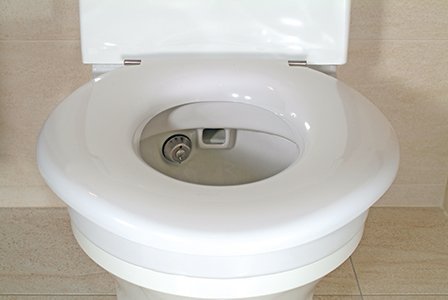
A quarter (25.9%) of the UK’s adult population is now obese. Obesity is defined as those who have a BMI of over 30.8 Obesity poses problems when toileting. User’s weight is often distributed differently, and they sit differently. It’s important to ensure that users are properly positioned, and supported, on and over the toilet. Their weight can place additional loading on seat fittings. A bariatric Big John toilet seat has a wider seat, larger aperture, and stronger fixings to address these issues. It can take up to 57 stone or 362kg in weight. Where the user is of greater girth/width, a bariatric bench gives greater surface area for sitting, with an appropriately proportioned aperture over the toilet pan, and greater body support whilst sitting.
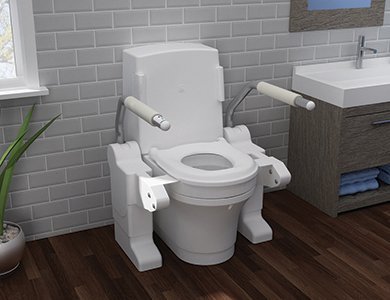
Toilet lifters
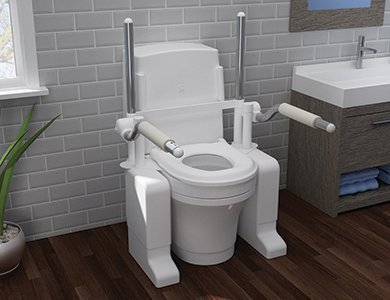
If leg power, flexibility or balance, are issues, toilet lifters automatically lower and raise the user onto and off the toilet. A toilet lifter is also recommended for those users who struggle to use their upper limbs to assist in the on/off action of a toilet transfer. This could be due to pain or reduced function in one or both upper limbs. Toilet lifts replicate the natural motion of standing up and sitting down. They gently raise and lower the user to position them accurately over the toilet as required whilst enabling their feet to remain in contact with the floor and maintaining the centre of gravity above the feet for balance. After toileting, the lifter can be raised by degrees to ease access for cleansing. A toilet lifter enables the client to ‘go’, safely and independently.
Shower and toileting chairs
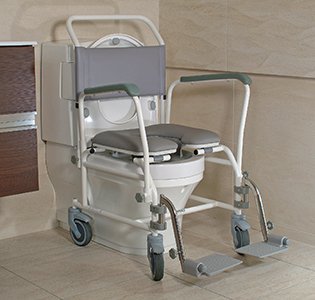
Commonly referred to solely as shower chairs, these can also be wheeled directly over the toilet as they have an appropriately positioned opening in the padded seat to enable access to the toilet pan. They are purpose-designed and engineered for optimum suitability to the environment in which they will be used, with stainless steel (rust-free) frames, and wipe-clean upholstery. They can be fitted with seats that either have a full aperture or a horseshoe shaped aperture, the latter enables easier access at the front to assist with cleansing. There are Self-propelled and carer-propelled frame options, lap belts and or chest belts and harnesses can be fitted to many styles of shower/toilet chairs. Some users require their shower chairs to tilt in space, this is particularly important if the user has poor trunk control and cannot maintain a 90 degree sit.
For more information on Toilet Accessories – please click here
Handling
The Health and Safety Executive provide guidelines around lifting capacity, as there are no safe limits recommended in law. The guidelines provide figures of no more than 16kg for women and 25kg for men. To work over these limits, increases the risk of injury to the handler.
Hoists
When the user is unable to participate in a transfer, a hoist ensures the manoeuvre is undertaken securely and safely, for both user and carer. A hoist is used in conjunction with a sling. Slings vary enormously and depend upon the needs of the user. There are several types of hoist available:
- A mobile hoist
- A static or wheeled Gantry frame
- Ceiling track Hoist. The track can be a straight piece or an H-frame which can cover a whole room.
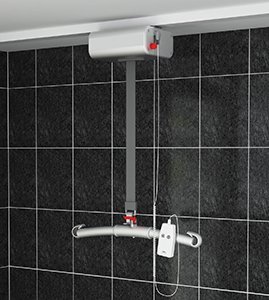
Choice should be based upon what meets the user and carer needs. As always, it should be based upon a balanced robust risk assessment.
Other aspects for consideration are:
- Is it a single or multi-user environment,
- Is it for use in one room or beyond
- The building structure i.e. whether ceilings and walls are robust enough to bear the necessary load, and the positioning, and style/protuberance of fixtures and fittings
- Budget
- The transfer itself. Where is the user transferring from, and to where and what. It could be from wheelchair to bed or toilet or maybe from shower chair to changing table.
Changing tables
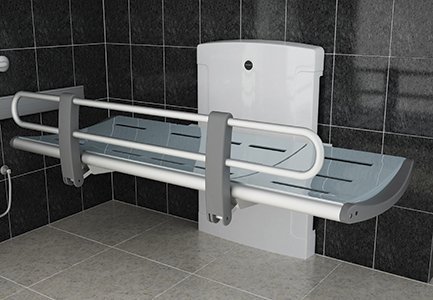
Studies suggest that in the UK ‘major faecal incontinence’ affects 1.4% of the general population over 40 years old, and similar numbers of young children. Of those older people in institutional care, 25% are affected by bowel incontinence.9 A changing table provides a safe, stable and hygienic environment on which to lay a child or adult to clean them and change continence pads and clothing. Some can be folded flat against the wall when not in use to optimise space, and some feature water collection elements to avoid water being splashed onto the user or carer, and for ease of cleaning after use. Wall-mounted fixed, mobile and height-adjustable variants are available and again choice comes down to structural wall strength, room size, as well as the needs of the user and the carer.
For more information on Bathroom Products – please click here
Single-handed care
When it comes to performing personal and intimate activities of daily living, such as toileting and bathing, most of us would agree that this is something we prefer to do alone or in private.
When independence becomes difficult with these occupations it can feel like a real blow to a user’s privacy and dignity. Many of the pieces of equipment discussed above can enable the user to continue to achieve independence. Grab rails and toilet seats, toilet lifters, self-propel shower chairs and wash and dry toilets can give the user a continued care free experience. However, where assistance from carers is required, having one person rather than two can make the world of difference to the user in terms of their dignity and how they emotionally accept receiving care. Also known as Proportionate Care, Optimised Care or Right sized care, Single-Handed Care is easy to achieve with the right equipment, adaptations and techniques and should be considered when recommending equipment.
Wash and dry toilets
With their integrated douching (and in some cases drying) capability, the WC cleans the user after toileting. For those users who struggle with reach and range of movement this negates the need to continually wipe, cleansing and drying with the touch of a button. There is therefore no need for carer intervention. This improves safety and hygiene for all, delivering a consistent level of cleanliness. It is also useful for clients who have skin sensitivity, avoiding the abrasion of toilet tissue or wet wipes. Floor-standing and wall-hung versions are available.
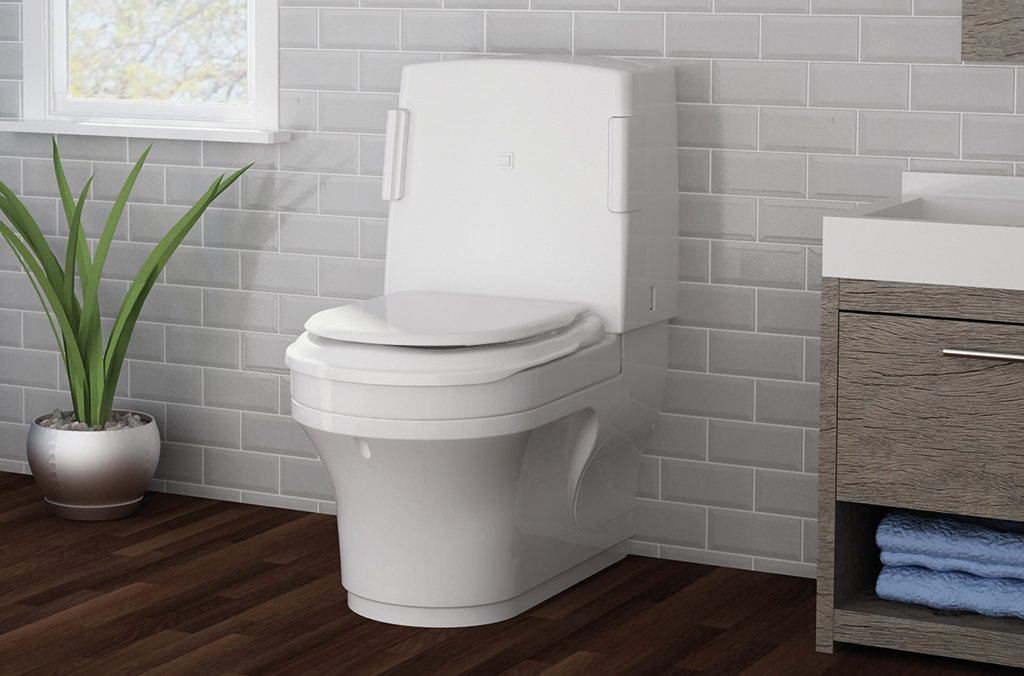
For more information on Wash and Dry toilets – please click here
Sources
- Digital.nhs.uk
- RoSPA (HASS,LASS)
- NICE
- Health & Safety Executive report into care homes
- Age UK
- The house of Commons Library Aug 2023 and Family Resources Survey 2023
- Every Disabled Child Matters survey into housing needs
- The Health survey for England 2021
- Hunskaar, S., Lose, et al. (2003) Prevalence of Stress Urinary Incontinence in Women in Four European Countries