A Closomat White Paper Written by The Occupational Therapy Service
Abstract
Chronic obstructive pulmonary disease (COPD) is a long-term respiratory condition in which breathlessness, cough, sputum production, fatigue, reduced exercise tolerance and exacerbations can progressively affect a person’s ability to perform everyday occupations. In England, COPD accounted for 118,975 emergency hospital admissions in the financial year ending 2025, illustrating the continuing health care system burden associated with the condition. For occupational therapists (OTs), COPD is not only a respiratory diagnosis but a condition that can alter occupational performance, routines, roles, safety, confidence and participation.
This white paper considers COPD through an occupational therapy lens. It explores how respiratory impairment can translate into activity limitation and occupational disruption, and how assessment of the person, task and environment can identify opportunities for intervention. It focuses on functional strategies including energy conservation, equipment, assistive technology and environmental adaptation. Particular attention is given to the bathroom and toileting environment, where transfers, clothing management, personal hygiene and repeated exertion may create significant demands for a person living with COPD.
Understanding COPD: An Occupational Therapy Perspective
COPD is a group of lung conditions characterised by persistent respiratory symptoms and airflow obstruction. It commonly includes emphysema, involving damage to the air sacs, and chronic bronchitis, involving long-term inflammation of the airways. The condition develops over time and can cause increasing difficulty with breathing and everyday activity.
Common symptoms and functional consequences include:
- Breathlessness, particularly during exertion, which can restrict walking, transfers and self-care.
- Persistent cough and phlegm, which may interrupt routines and require additional time or rest.
- Wheeze and chest symptoms, which can affect confidence and tolerance for activity.
- Fatigue and reduced exercise tolerance, contributing to slower task performance and increased need for recovery.
- Exacerbations, during which symptoms worsen beyond normal day-to-day variation and usual activities may become substantially more difficult.
NICE guidelines note that breathlessness is a primary symptom of COPD; for OTs, the significance is functional: a person’s reported breathlessness should be connected to what they can actually do, how they do it, how long it takes, what they avoid, and what support is required.

From Respiratory Impairment to Occupational Disruption
A useful occupational therapy formulation considers how respiratory impairment and its associated impact on functional capacity interact with occupational demands and environmental factors to influence occupational performance, participation and engagement in meaningful occupations.
Respiratory impairment → reduced capacity → activity limitation → occupational disruption → reduced participation → occupational avoidance
The same respiratory limitation can have very different consequences depending on the person’s priorities, routines, home environment, support network and task demands. For example:
- Showering becomes exhausting and requires several rests.
- Dressing becomes prolonged because bending, reaching and standing increase breathlessness.
- Getting to the toilet becomes unsafe because the person rushes when breathless or fatigued.
- Toileting and personal hygiene take longer because transfers and clothing management are physically demanding.
- Meal preparation is reduced or abandoned because standing and repeated trips around the kitchen exceed available energy.
- Social participation decreases because the person avoids activities that may trigger breathlessness or require recovery afterwards.
Evidence from occupational therapy literature identifies activity and participation interventions such as energy conservation, breathlessness management, ADL practice and environmental adaptation as recurring components of OT intervention for people with chronic respiratory conditions. Research into ADL performance in COPD also identifies mobility, lower-body dressing, bathing, cooking, shopping, cleaning and laundry among activities that may be particularly affected.
Activity Analysis: Where Can the OT Intervene?
COPD-related difficulty is often best understood by observing the occupation rather than focusing only on the diagnosis. Activity analysis can identify where respiratory demand, posture, effort, repetition, transfer requirements or environmental barriers are contributing to breathlessness.
For example, toileting can be analysed as:
Accessing the bathroom → transfer → clothing management → voiding → cleansing → drying → hand hygiene → exiting the bathroom
At each stage consider:
- How far does the person need to walk and how many turns, thresholds or changes of direction are required?
- Does the person need to stand for prolonged periods, bend, reach, twist or hold a fixed posture?
- Does the transfer require a high level of lower-limb strength or repeated effort?
- Can the person manage clothing while maintaining balance and breathing control?
- Does personal hygiene require shoulder range, grip strength, dexterity or reach that the person no longer has?
- Is the environment cluttered, poorly positioned, poorly ventilated or difficult to access with mobility equipment?
- Does the person have sufficient time to complete the task without rushing?
- What happens on a good day, a bad day and during an exacerbation?
Functional Strategies for Breathlessness and Energy Conservation
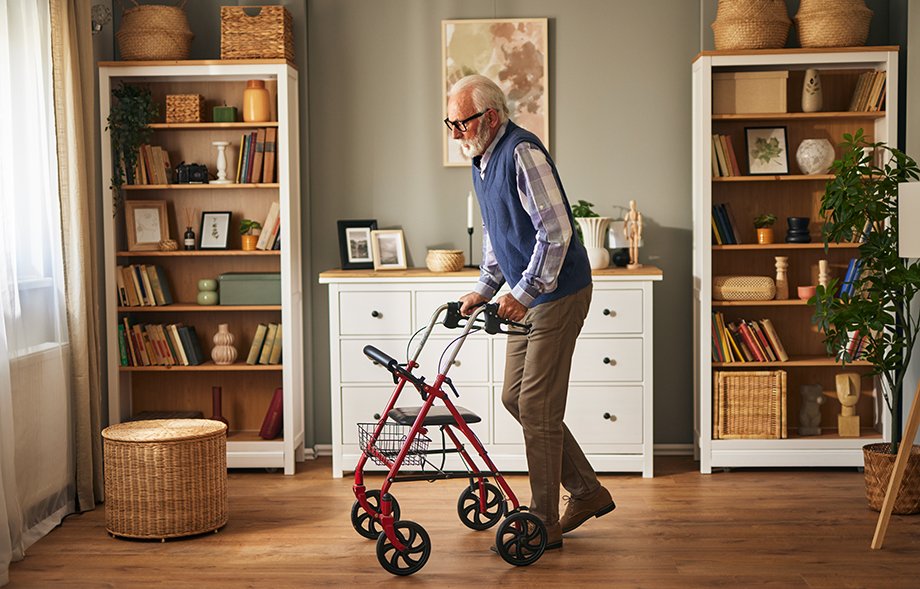
Management of breathlessness, physical activity, pulmonary rehabilitation, self-management and aids for daily living are recognised as important components of multidisciplinary COPD care. Occupational therapists can translate these principles into practical strategies that support the person to manage their breathlessness while continuing to engage in meaningful everyday occupations.
Core strategies include:
- Plan – organise activities around the person’s priorities, predictable fluctuations in energy and appointments or commitments.
- Pace – slow the task down, avoid rushing and introduce planned pauses before severe breathlessness develops.
- Prioritise – identify what needs to be done, what matters most to the person and what can be delegated, simplified or postponed.
- Position – use stable, supported positions and seated methods where clinically appropriate to reduce unnecessary exertion.
- Simplify – reduce unnecessary steps, repeated journeys, bending, carrying and prolonged standing.
- Prepare – gather equipment and materials before starting a task and position frequently used items within easy reach.
- Rest – build recovery into the task rather than waiting until the person is exhausted.
- Practise – rehearse strategies during meaningful activities so the person can judge whether they are effective within their own routine.
These strategies are not intended to reduce activity, but to help the person use their available energy more effectively and maintain independence in the occupations that matter to them. The OT can then consider whether changes to the environment, equipment or use of assistive technology could further reduce the physical demands of the activity. This is particularly relevant where the person’s home environment is creating additional barriers to safe and efficient occupational performance.
Participation through Environmental Adaptation
The environment in which an occupation takes place can either support or create additional barriers to occupational performance. For a person with COPD, an environment that requires unnecessary walking, prolonged standing, bending, reaching or difficult transfers may increase physical exertion and contribute to breathlessness and fatigue.
OT assessment should therefore consider how the person interacts with their environment and whether changes could reduce the physical demands of everyday occupations. This may include considering access and circulation, the layout of key rooms, lighting, flooring and clutter, storage, temperature and ventilation, as well as the potential role of equipment and assistive technology.
The aim is not to adapt the environment simply because someone has COPD, but to identify modifiable environmental barriers that are affecting the person’s ability to do what matters to them. A relatively small change may reduce effort, improve safety and allow the person to complete an activity with greater independence and confidence.
The bathroom is particularly important in this context. It brings together multiple activities often within a relatively small space. For someone experiencing breathlessness and fatigue, these combined demands can make the bathroom a high-value area for OT assessment and intervention.
The Bathroom as a High-Value OT Intervention Area
Bathroom activities can combine mobility, transfers, balance, reaching, bending, personal care and time pressure. For someone with COPD, these demands may be amplified by their respiratory symptoms. The OT’s task is not simply to identify a piece of equipment, but to determine which part of the occupation is creating the problem and whether the intervention changes the task in a meaningful way.
Examples of functional questions include:
- Can the person reach and transfer to the toilet without becoming severely breathless?
- Can they manage clothing independently while maintaining safe balance?
- Can they complete cleansing without excessive reaching, twisting or repeated attempts?
- Can they stand from the toilet and leave the room without rushing?
- Would a seated showering method reduce exertion, or does the chosen equipment introduce new transfer demands?
- Does the person have adequate space to use their walking aid or other mobility equipment?
- Can the intervention be used reliably during a bad day as well as a good day?
Wash and Dry Toilets as an Environmental Adaptation
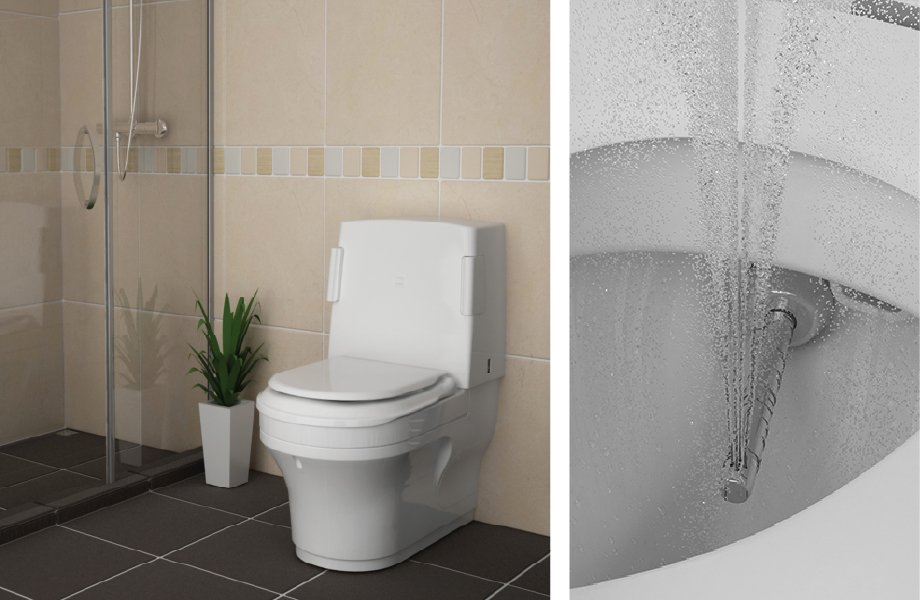
A wash and dry toilet can be considered where the assessment identifies toileting hygiene as a physically demanding part of the occupation. Automated washing and drying may reduce the need for repeated manual wiping and reaching, potentially simplifying the sequence for a person whose breathlessness, fatigue, range of movement, strength or dexterity makes conventional cleansing difficult.
For an OT, the clinical question is whether the technology meaningfully changes occupational performance for the individual. Potential functional benefits to explore include:
- Reducing the physical effort associated with manual cleansing and drying.
- Reducing the number of movements required during personal hygiene.
- Supporting independence where reach, balance, strength or endurance limit conventional wiping.
- Supporting privacy and dignity where the alternative would be increased hands-on assistance.
- Reducing reliance on carers for one part of the toileting sequence.
- Providing a consistent method that may remain useful across changes in functional ability.
Clinical Reasoning and Risk Assessment
Occupational therapy assessment and intervention should be holistic, person-centred and occupation-focused, rather than being driven solely by the medical diagnosis.
Skilled OT clinical reasoning involves understanding the complex interaction between the Person, Occupation and Environment (PEO) and how this interaction influences occupational performance, participation, independence and quality of life.
For the person living with COPD, assessment should move beyond identifying impairment and consider how respiratory symptoms and associated functional limitations translate into occupational disruption within the context of the individual’s usual routines, roles, priorities and environment.
The OT should consider:
- Person: respiratory status, breathlessness pattern, fatigue, strength, balance, cognition, dexterity, motivation, preferences and goals.
- Occupation: the exact task components that are difficult, the person’s usual routine, grading and modification, meaningful outcomes.
- Environment: space, access, layout, plumbing/electrical requirements where relevant, other household members and future changes.
- Risk: falls, transfer failure, inability to operate equipment, fatigue-related errors, infection-control requirements and emergency access.
- Outcome: whether the adaptation improves performance, reduces assistance, reduces effort or supports participation in a goal that matters to the person.
Good Days, Bad Days and Exacerbations
COPD is not static across a day or week. A person may complete an activity independently on a good day but require significant support during an exacerbation. NICE defines an exacerbation as a sustained worsening of symptoms beyond normal day-to-day variation and recommends individualised self-management and exacerbation action plans for people at risk.
OT assessment should therefore explore variability rather than relying on a single observed performance. Ask what changes when the person is more breathless, what they stop doing first, which tasks become unsafe, and what support is already used. Equipment and environmental changes should be considered for the person’s realistic range of function, not only their best performance.
Summary
COPD can create a progressive gap between what a person wants or needs to do and what their respiratory capacity allows them to do comfortably and safely. Occupational therapists are well placed to address this gap by analysing occupations, identifying modifiable demands and combining functional strategies with environmental adaptation.
Effective OT intervention may involve pacing, planning, positioning, task simplification, equipment, assistive technology, environmental modification and collaboration with pulmonary rehabilitation and the wider multidisciplinary team. The bathroom provides an important example of where repeated transfers, personal care and toileting can create significant exertional demands. Wash and dry toilets may be appropriate for selected clients where they reduce task demands and support independence, dignity and reduced reliance on care; however, they should be specified through individual clinical reasoning and risk assessment.
The central question remains: what matters to this person, what is stopping them doing it, and can we change the person–occupation–environment fit so that meaningful activity remains possible?
Sources
- 1. Office for Health Improvement and Disparities (OHID). Respiratory disease profile: statistical commentary, May 2026 – COPD emergency admissions in England, financial year ending 2025.
- 2. NHS. Chronic obstructive pulmonary disease (COPD): overview and symptoms.
- 3. NICE. NG115: Chronic obstructive pulmonary disease in over 16s: diagnosis and management – recommendations on symptoms, multidisciplinary care, aids for daily living and pulmonary rehabilitation.
- 4. McCowan J, et al. Occupational therapy in adults with chronic respiratory conditions: a scoping review. Australian Occupational Therapy Journal, 2023.
- 5. New Insights into Activities of Daily Living Performance in Chronic Obstructive Pulmonary Disease. Canadian Journal of Occupational Therapy / PMC, 2021.
- 6. Leeds Teaching Hospitals NHS Trust. Energy conservation and daily activities.
- 7. Harefield Hospital / British Thoracic Society pulmonary rehabilitation education resources: conserving your energy.
- 8. NICE. NG115: recommendations on individualised self-management plans and exacerbation action plans.
- 9. NHS England. Pulmonary rehabilitation: multidisciplinary rehabilitation for people with lung disease.
- 10. Imaoka Y, et al. How Patients Hospitalized for Chronic Obstructive Pulmonary Disease Exacerbation Understood Dyspnea Management in Acute Occupational Therapy, 2026.