A Closomat White Paper Written by The Occupational Therapy Service
Abstract
Toileting is one of the most universal human occupations. Regardless of diagnosis, age or functional ability, every person needs to toilet. Yet in clinical practice, housing adaptations and discharge planning, toileting is often reduced to a checklist item: “Yes, they have a downstairs toilet,” or “the patient was observed to transfer on and off.” This reductionist approach overlooks the reality that toileting is not just a fixture, it is a complex, multi-step occupation requiring coordinated physical, cognitive, sensory and emotional performance.
Ergonomics is broadly defined as achieving the best fit between a person and the environments, equipment or processes they interact with to maximise usability. The interaction should be intuitive, reduce effort, and minimise the likelihood of error. Usability is a multifactorial concept encompassing physical, cognitive, sensory and emotional ergonomics[1]. Ergonomics therefore provides a useful lens for understanding the challenges of toileting as an occupation.
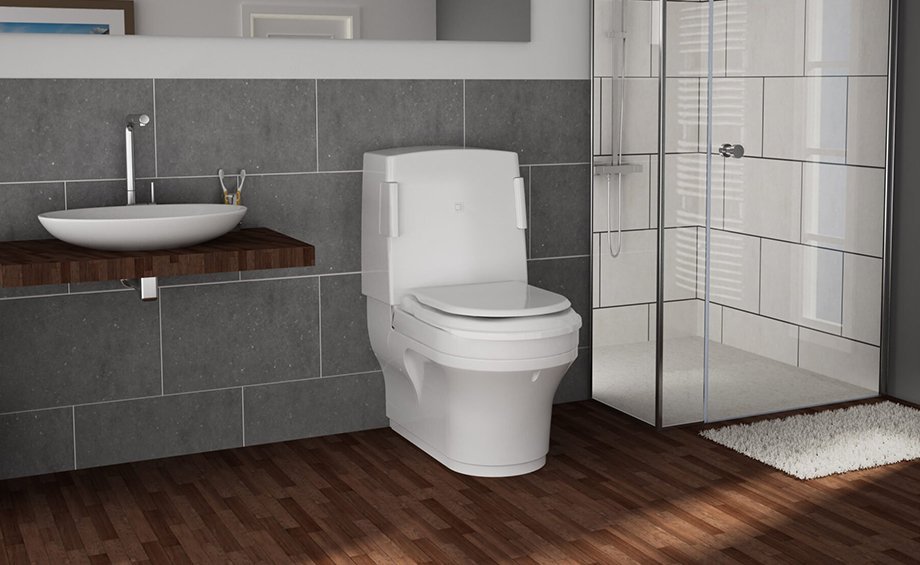
This white paper considers toileting as a complex occupation and explores how wash and dry toilets as an ergonomic solution can transform independence, reduce care needs and deliver cost savings for health and social care systems.
Toileting as a complex occupation
Toileting is often reduced to a binary activity (“I need the toilet”), yet the act itself requires coordinated motor, cognitive, sensory and emotional processes. It is a complex activity of daily living involving sequencing, interoception, postural control, clothing management, hygiene behaviours and social norms. Barriers to toileting are rarely due to motivation; they are more commonly the result of environmental or ergonomic mismatch. Understanding the broad components of toileting allows practitioners to identify demands and determine the most appropriate ergonomic solutions to maximise functional ability, independence and dignity.

Physical ergonomics
Physical ergonomics focuses on how the body interacts with the environment to support safe, efficient and comfortable performance. When the physical setup is poorly matched to a person’s strength, mobility, balance or joint range, toileting can quickly become effortful, unsafe or undignified. Conversely, small environmental adjustments can dramatically improve independence and reduce carer burden.
Toilet height is an important ergonomic factor. A seat that is too low increases hip and knee flexion, making sit to stand transfers more demanding and potentially painful for people with arthritis, reduced lower limb strength or balance difficulties. A seat that is too high can reduce stability, limit effective hip flexion for bowel emptying and increase the risk of sliding. Optimal height for comfort and transfers typically allows the feet to be flat on the floor with hips and knees at roughly 90 degrees.
The position of equipment such as toilet roll holders, flush controls and hygiene products can also affect usability. Items placed too far behind or to the side require trunk rotation and reaching outside the base of support, increasing the risk of falls. Placement within safe reach reduces physical strain and will support people with limited shoulder or trunk mobility or balance issues.
Space is another critical factor. Adequate clearance allows for safe transfers, whether independent or assisted as tight spaces restrict movement, compromise posture and make it difficult to position mobility aids or carers. Clear floor space also reduces trip hazards and supports wheelchair manoeuvring.
When these physical ergonomic elements are reflected to a person’s abilities, toileting becomes safer, more efficient and more dignified which in turn can support independence reducing the need for, often unwanted, assistance.
Cognitive ergonomics
Toileting requires recognising internal cues, possibly interrupting a task, planning a route, sequencing clothing, managing hygiene and returning to the prior task. Executive dysfunction, common in dementia, brain injury and neurodiverse conditions, increases cognitive load. Searching for toilet paper or deciphering complex flush systems requires effort and can increase the likelihood of error. Dementia friendly design research emphasises visual clarity, consistent item placement and simplified layouts[2].
Clear sightlines, visual intuitive routes, contrast between the toilet and surrounding surfaces, and unambiguous cues such as a visible toilet seat or an obvious flush reduce cognitive effort. Visual clutter, patterned surfaces or confusing layouts can overwhelm individuals with impaired attention or visuospatial processing, increasing the likelihood of mistakes or task abandonment.
Predictability is a core cognitive ergonomic principle. Inconsistent placement of items or multiple competing flush mechanisms forces the user to repeatedly relearn the environment, increasing cognitive load. Simplifying choices, reducing unnecessary steps and maintaining a stable layout support procedural memory and reduce reliance on executive control. For individuals with dementia or brain injury, these environmental supports can mean the difference between independent toileting and requiring support, as the environment effectively “does the thinking” that the person may no longer reliably sustain.
Sensory ergonomics
Sensory processing challenges can make using the toilet overwhelming and for individuals with sensory hypersensitivity, exposure to stimuli can activate a negative response. For example, cold seats, harsh lighting, echoes, strong odours or loud extractors can trigger avoidance, withholding and distress[3].
Environmental predictability is also essential. Sudden changes, such as a cold bathroom or a scented cleaning product can disrupt regulation. Providing warm lighting, soft-close seats, muted acoustics and consistent sensory input helps maintain a sense of safety. Sensory supports such as a footrest for grounding, a familiar scent or a textured cue on the flush can further enhance regulation.
Emotional ergonomics
Aesthetics and Identity
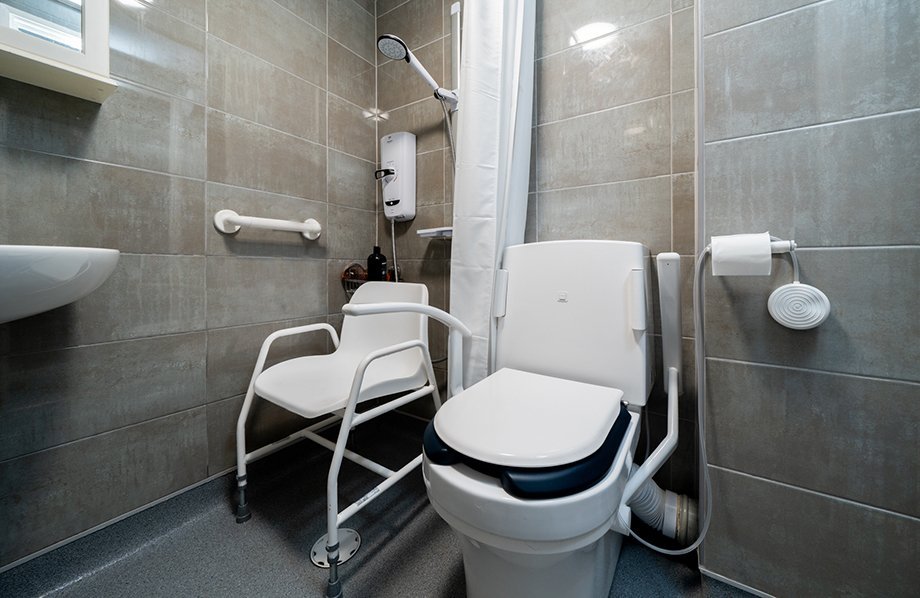
Many adaptations, such as raised toilet seats, grabrails or commodes visually signal disability. Research has shown that aesthetic acceptability is a major predictor of assistive technology use, and that appearance, symbolic meaning and stigma strongly influence acceptance[4] . If equipment undermines identity, it is less likely to be used therefore emotional acceptability becomes a functional requirement. If a product is rejected or abandoned, it cannot be considered truly usable despite how well it is designed physically.
Dignity as an ergonomic factor
When someone needs support with toileting, embarrassment and discomfort can also reduce engagement and so emotional safety is just as important as physical safety. Anticipated loss of dignity may lead individuals to avoid asking for support or adopt unsafe practices, all of which compromise performance. Evidence shows that dignity, privacy and respectful continence care are essential for engagement and wellbeing[5]. Consideration therefore should be given to designing environments and equipment that protect dignity which in turn enhances usability.
The ergonomic design of a wash and dry toilet
Wash and dry toilets can provide an integrated ergonomic solution that supports the physical, cognitive, sensory and emotional considerations outlined. Traditional equipment and adaptations help aspects of toileting but can introduce new challenges such as clinical aesthetics, equipment clutter or new cognitive demands. A simple wash and dry toilet addresses these issues by redesigning the toileting process itself rather than adding compensatory equipment around it.
Physical
Wash and dry toilets reduce musculoskeletal effort by enabling installation at an optimal height and removing the need for twisting, reaching or balancing. A key ergonomic advantage is the positioning and engineering of the integrated douche. Unlike retrofitted attachments, the douche is designed to reach the correct anatomical area for a wide range of body shapes, sizes and sitting postures. This is essential for users who cannot adjust their position due to pain, weakness or limited trunk control. A pilot study[6] of stroke patients found that technology assisted toilets improve hygiene and psychosocial outcomes, with effective cleansing achieved in 73% of cases.
Cognitive
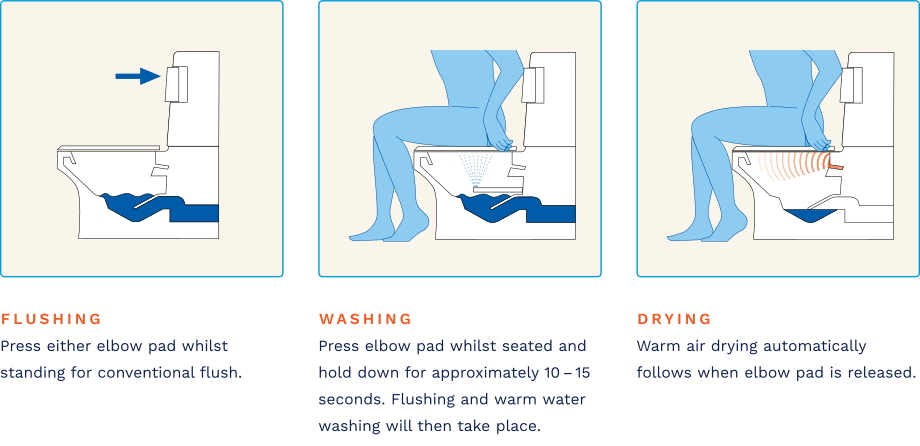
Wash and dry toilets reduce cognitive load by simplifying the task to a single, predictable action. Instead of locating toilet paper, judging quantity, coordinating wiping and remembering to flush, the user activates one intuitive control. This aligns with dementia friendly design principles and reduces reliance on executive function. Although wash and dry toilets simplify the sequence, the initial learning demands, for example, understanding the controls, trusting the automated process, and remembering the activation method, it may still be a barrier for people with significant cognitive impairment. Appropriate and timely introduction therefore needs to be considered.
Sensory
Warm water washing and gentle warm air drying provide a more regulated sensory experience, reducing tactile defensiveness and supporting individuals who are hypersensitive to cold or abrasive textures. For those who are hyposensitive, the automated sequence provides clear sensory cues that the task is complete. For some individuals, especially those with sensory hypersensitivity, the unexpected sensation of the douche spray or warm air drying may initially be startling, and so graded exposure or reassurance is likely something to think about.
Emotional
Wash and dry toilets integrate discreetly into domestic environments and look like standard fixtures, reducing stigma and supporting identity. They enable private, independent hygiene without intimate carer involvement, enhancing the maintenance of dignity.
A holistic ergonomic solution
By understanding wash and dry toilets through an ergonomic lens helps ensure the right solution. Whilst not for everyone, they do reduce physical effort, simplify cognitive sequencing, support sensory comfort and protect dignity. Rather than adding additional equipment to an already challenging task, wash and dry toilets redesign the task itself to be safer, simpler and more person centred.
In environments where independence, safety and user experience are priorities, wash and dry toilets represent not just an adaptation but a transformative approach to toileting.
[1] Wilson, J. R. (2014). Fundamentals of ergonomics in theory and practice. Applied Ergonomics, 45(1), 5–13
[2] Marquardt, G., Bueter, K., & Motzek, T. (2014). Impact of the design of the built environment on people with dementia: An evidence-based review. Health Environments Research & Design Journal, 8(1), 127–157
[3] Baranek, G. T., Little, L. M., Parham, L. D., Ausderau, K. K., & Sabatos-DeVito, M. G. (2018). Sensory features in autism spectrum disorders. In Handbook of Autism and Pervasive Developmental Disorders (4th ed.). Wiley
[4] Chu, R., et al. (2024). Aesthetic acceptability and stigma in assistive technology: A thematic review. Disability and Rehabilitation: Assistive Technology
[5] NIHR Evidence. (2022). Continence, dementia, and care that preserves dignity
[6] Yachnin, D., et al. (2017). Technology-assisted toilets: Improving independence and hygiene in stroke rehabilitation. Journal of Rehabilitation and Assistive Technologies Engineering