Understanding Douching in Wash and Dry Toilets
When specifying a wash and dry toilet, Occupational Therapists are focused on one outcome above all others: ensuring clients who cannot toilet independently, or who struggle to clean themselves after toileting, can achieve an appropriate and reliable level of hygiene.
Effective douching supports dignity, reduces reliance on carers, and enables greater independence where a client’s condition allows. Crucially, not all washing systems deliver the same clinical outcome. The way water is delivered, directed, and supported by seating and adaptations has a direct impact on hygiene effectiveness.
This guidance explains the key clinical factors that influence effective washing and douching performance, based on decades of specialist knowledge and real-world clinical feedback.
Why One Size Does Not Fit All
People with the same diagnosis or disability often present with very different physical needs. Pelvic tilt, muscle tone, body shape, continence patterns and seating tolerance all influence how effectively washing can occur.
Effective douching therefore relies on flexibility, customisation and reliability. Systems that cannot adapt to anatomy or seating position risk leaving residual soiling and increasing the need for manual intervention.
The Key Factors That Influence Effective Douching
Flow Rate and Duration
Many wash and dry toilets use aerated or mist-based sprays, typically delivering around 2 litres of water per minute. While this approach reduces water use, a light or aerated spray often lacks the physical mass needed to reliably remove faecal matter, particularly where there is heavy soiling, loose stools, or where the client cannot perform a manual check and wipe.
A high-volume wash delivers approximately 8 litres per minute, creating a true douching effect rather than a surface spray. The momentum of higher water volume plays a critical role in flushing solids away effectively and consistently, reducing the risk of residual soiling and improving clinical outcomes.
Spray Pattern and Direction
Spray dispersion and direction have important implications for hygiene and infection control. Oscillating or rotating sprays increase the surface area of contact, which can spread bacteria across the perineum rather than removing it.
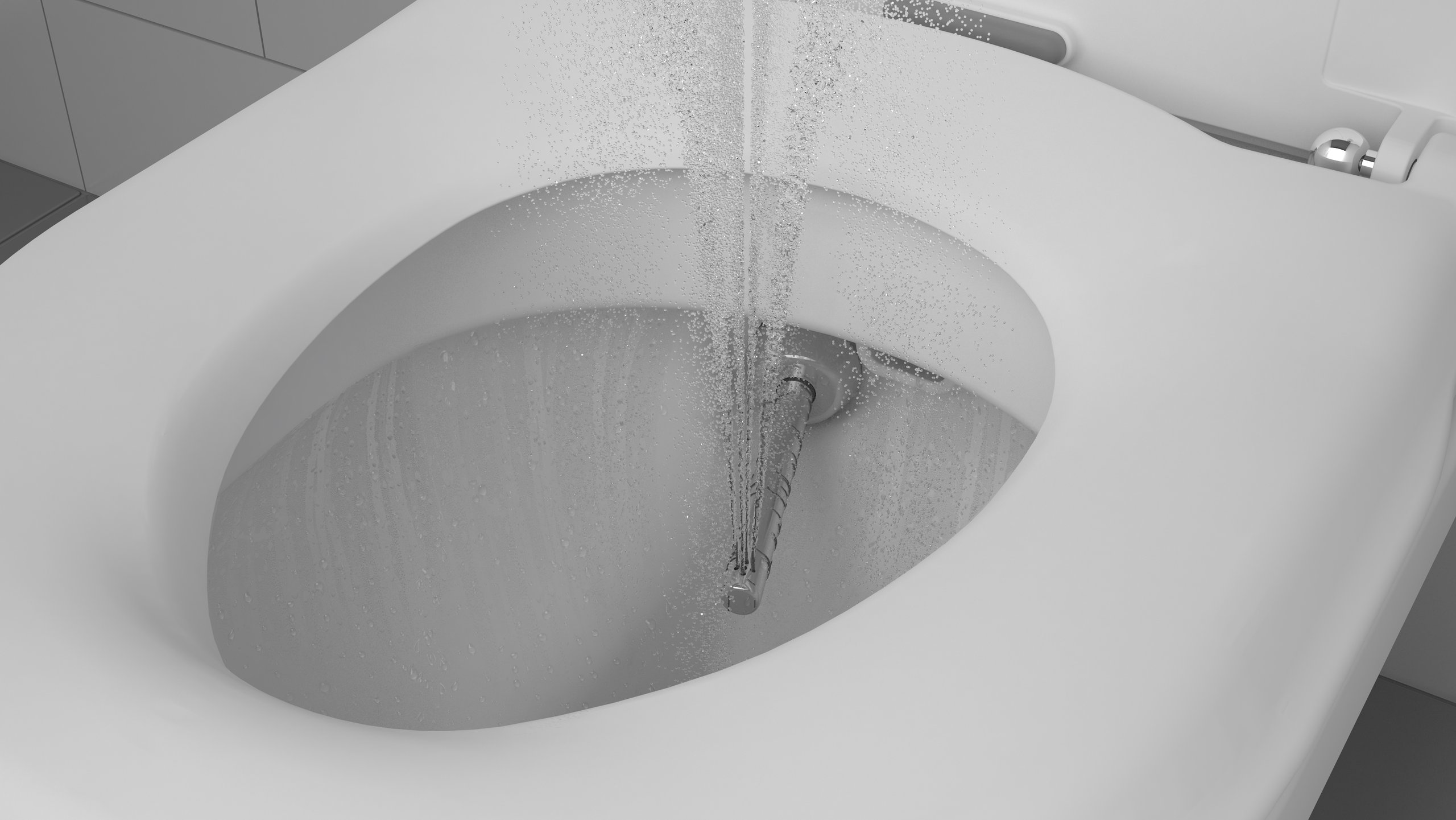
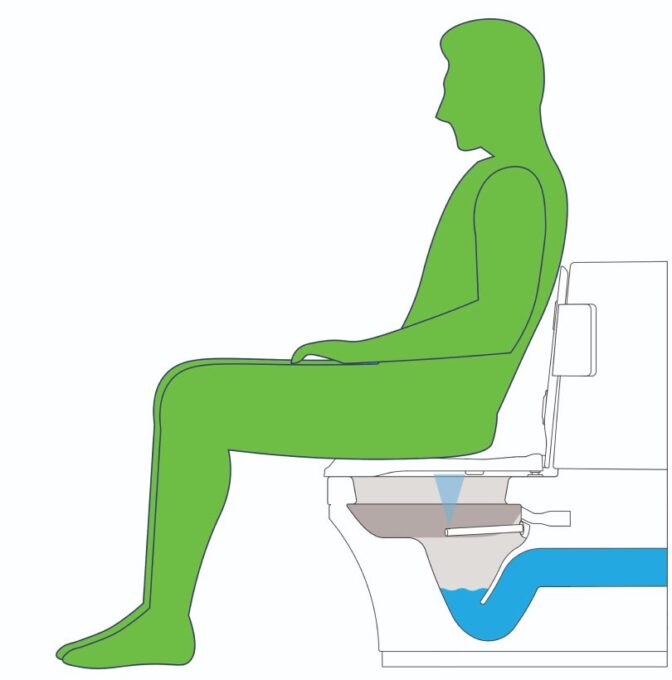
A concentrated, vertical spray deployed at a right angle to the douche arm allows waste water to fall directly back into the pan. This direct flushing action mirrors a front-to-back wiping motion, which is particularly beneficial for female users and helps reduce the risk of perineal contamination.
Douche Type: Hardware Versus Software Adjustment
Some systems rely on software-controlled spray arm movement to accommodate different users. However, if a client’s pelvic position or anatomy falls outside the limited adjustment range, wash effectiveness can be compromised.
A hardware-led approach allows the physical douche arm itself to be changed. Alternative configurations, such as extended or twin arms, ensure water is delivered precisely where it is needed. This is particularly important for clients with posterior pelvic tilt, a pronounced gluteal shelf, or where combined vaginal and anal cleaning is clinically required.
Seating Position and Compatibility
Even the most effective wash cannot compensate for poor positioning. Clients with complex needs may require specific seating solutions to manage tissue viability, pelvic obliquity, bariatric requirements or hygiene access.
Compatibility with a wide range of specialist seats, including soft tissue-viability seats, open-fronted designs and bariatric options, allows washing to remain effective across different presentations. Seamless integration with shower chairs also ensures the wash operates correctly without sensor interference, supporting safe and stable positioning.
Clinical Outcomes That Matter
When these factors work together, effective douching supports:
- Improved hygiene and reduced residual soiling
- Reduced need for manual cleaning or carer intervention
- Lower risk of skin breakdown and infection
- Greater dignity, comfort and confidence for the client
- More consistent outcomes for long-term use
For Occupational Therapists, this translates into greater confidence that a specified solution will continue to meet a client’s needs as conditions progress or circumstances change.
Support for Occupational Therapists
Effective specification extends beyond the product itself. Comprehensive support can simplify the clinical and practical pathway, including:
- Flexible and configurable systems to meet individual needs
- Access to Level 4 Trusted Assessors to support or undertake assessments
- Pre-assembled delivery for simplified installation
- Ongoing UK-based servicing, maintenance and spare parts
- Support with funding pathways, VAT exemption and clinical documentation
Products designed and built in Britain to UK standards ensure appropriate fit, compliance and long-term support.
Summary for Occupational Therapists
Effective washing is a key factor in achieving successful wash and dry toilet outcomes. By understanding how positioning, seating, spray direction and individual anatomy influence cleansing effectiveness, Occupational Therapists can help ensure consistent hygiene, comfort and user satisfaction.
Appropriate assessment and adjustment can improve washing performance while supporting independence, dignity and long-term use of the equipment.