If the bathroom environment creates falls risk, unsafe transfers, or inconsistent hygiene, clinically led adaptations can restore safety and independence. Structured solutions such as adjustable basins, changing benches, support rails, and hoisting systems reduce risk, minimise manual handling, and enable consistent daily routines.
Bathroom Adaptation Solutions
How do you make one of the highest-risk environments in the home safe and sustainable?
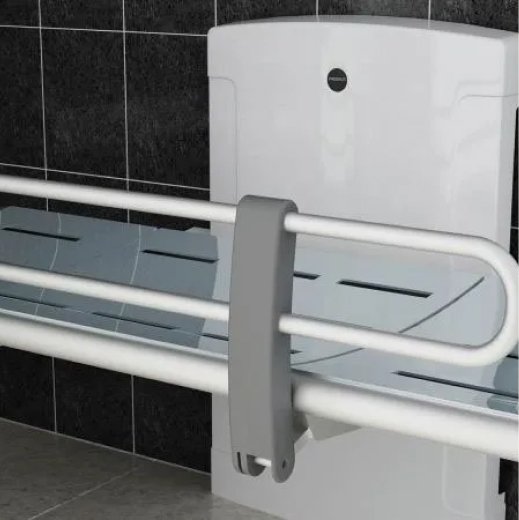
Height adjustable changing benches
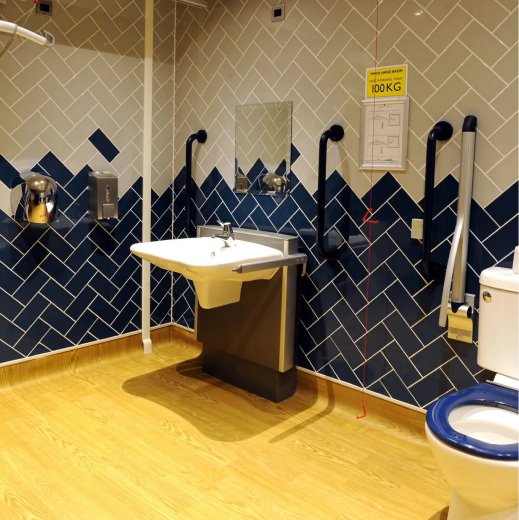
Height adjustable wash hand basins
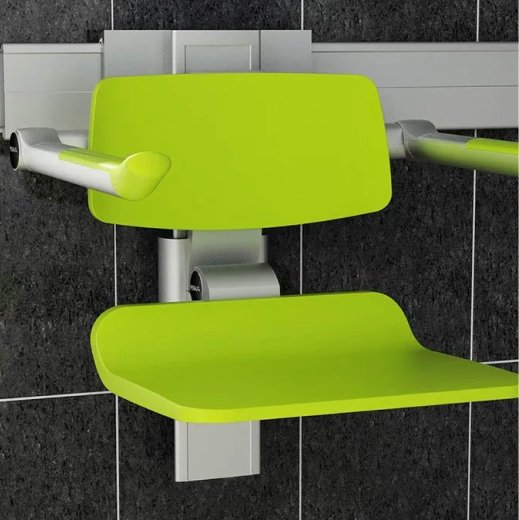
Shower seats
Why is the bathroom often the most challenging space to manage?
The bathroom brings together multiple high-risk tasks in a confined space. Washing, toileting, and transferring all rely on balance, coordination, strength, and sequencing.
Can the individual safely complete their daily routine in this environment without risk or support?
If not, you will often see:
- Falls or instability during transfers
- Unsafe compensatory movement patterns
- Inconsistent hygiene due to fatigue or reach limitations
- Increased reliance on carers for basic tasks
- Physical strain placed on those providing care
Left unresolved, these issues can quickly escalate into higher care needs and reduced independence.
What does a clinically effective bathroom adaptation actually achieve?
Successful adaptation does more than introduce equipment. It reshapes the environment to support function.
The goal is to create a space where:
- Tasks can be completed safely and consistently
- Movement is supported rather than restricted
- Manual handling is reduced or removed
- The individual can maintain dignity and control
How do all elements of the environment work together to support the daily routine?
How should you approach specification?
Effective bathroom adaptation begins with structured clinical reasoning.
Start by asking:
- Where does the task break down?
- What risk does this create?
- Can the environment be adjusted to remove that risk?
A well-designed solution should:
- Reduce risk in high-frequency activities such as washing and transfers
- Support repeatable routines, particularly where cognition is impaired
- Enable safe positioning and functional reach
- Adapt alongside progressive or fluctuating conditions
The outcome should be a coordinated system, not a collection of standalone products.
How do you improve access and positioning for daily hygiene?
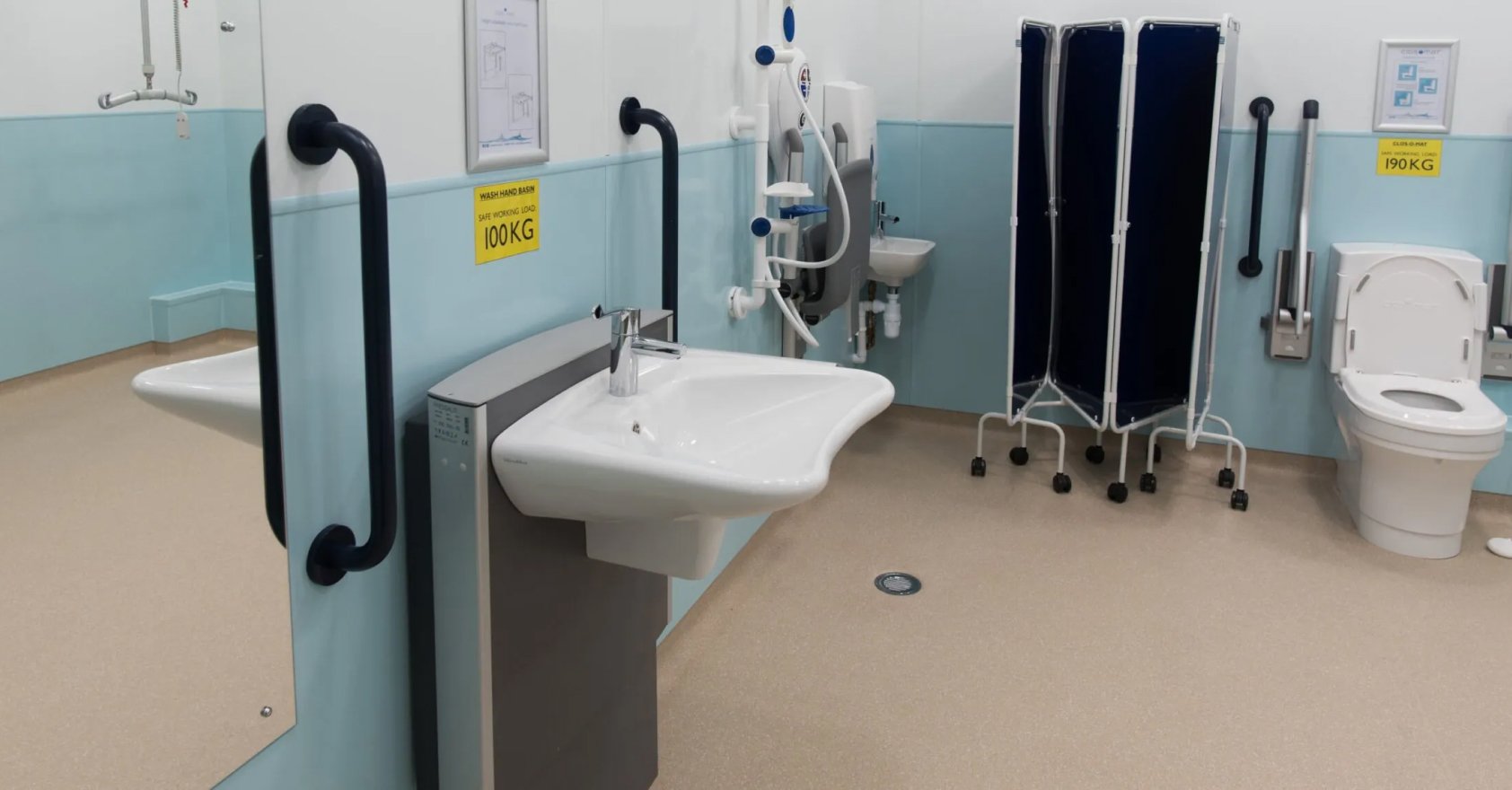
What if the user cannot safely reach or position themselves at a standard basin?
Fixed-height basins often force unsafe posture and compensatory movement.
A height-adjustable basin allows you to:
- Position the user correctly whether seated or standing
- Support safe upper limb function
- Enable wheelchair users to access the basin front-on
This results in:
- Safer, more efficient hand and face washing
- Reduced reliance on carers
- Improved independence in routine hygiene
What if safe personal care or showering is not achievable?
Changing Benches and Showering Solutions
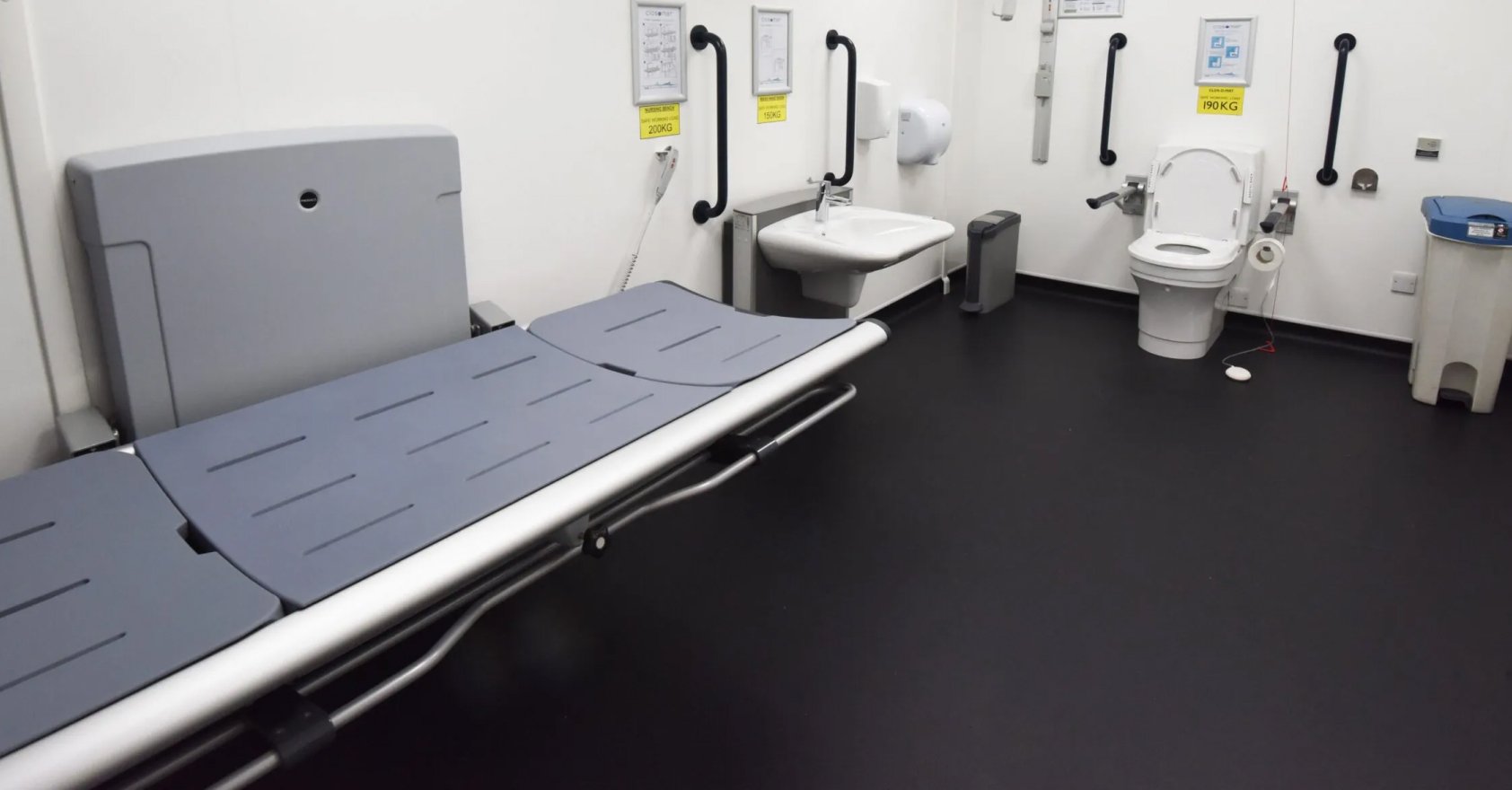
What if transfers into a shower are unsafe or require full assistance?
Changing benches provide a stable, height-adjustable platform for washing and care tasks.
They enable:
- Controlled positioning for personal care
- Safer assisted transfers
- Reduced physical strain on carers
This becomes essential where:
- The individual cannot maintain balance in a shower chair
- Transfers require one or two carers
- Manual handling risk needs to be reduced
The focus shifts from independence to safe, dignified care delivery.
How do you stabilise movement within the bathroom?
Grab Rails and Support Systems
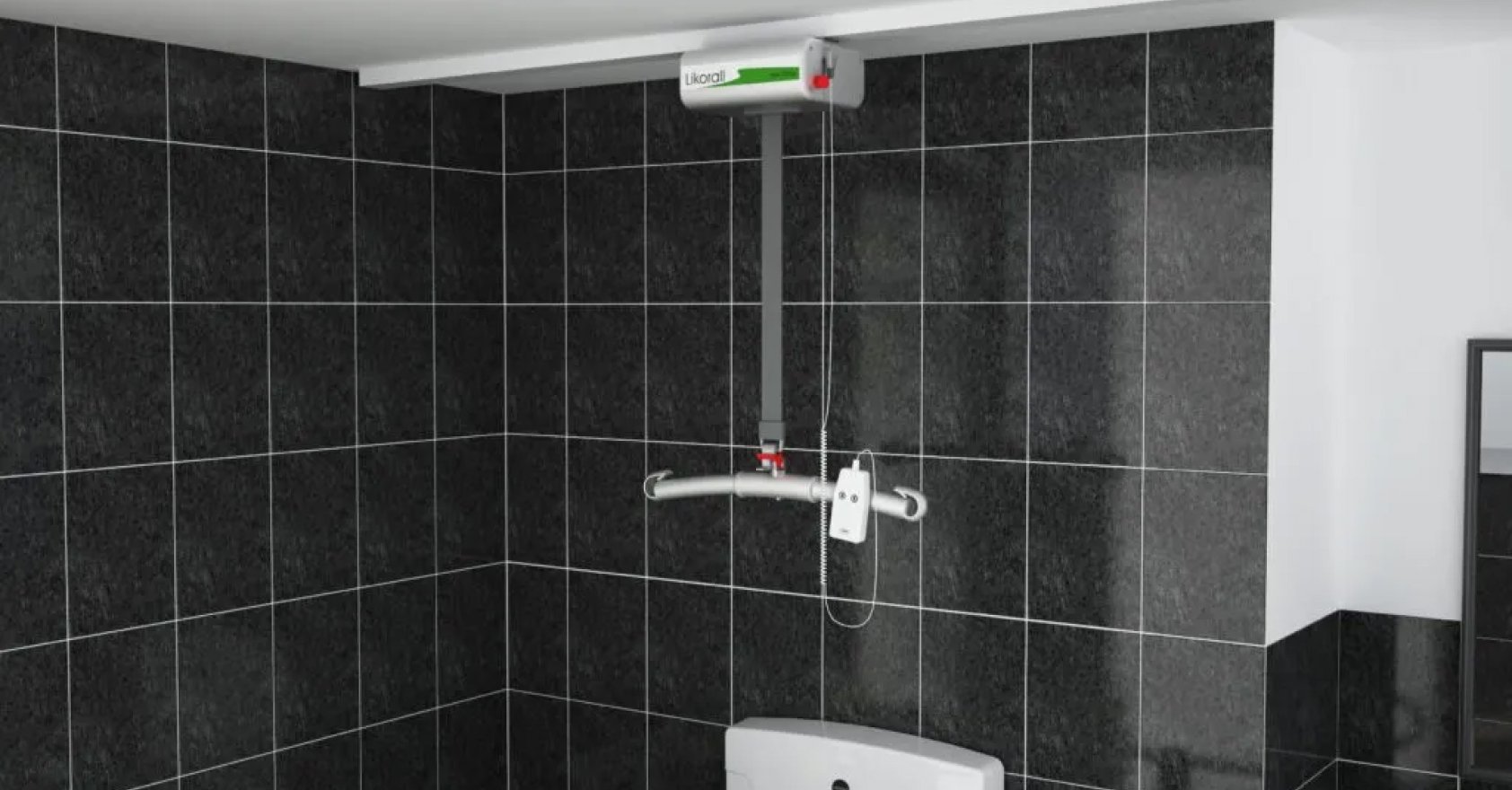
What if the individual relies on the environment to stay upright or complete transfers?
Grab rails provide fixed points of support during movement.
They allow users to:
- Stabilise during sit-to-stand transitions
- Maintain balance during washing or toileting
- Move with greater confidence and control
When placed correctly, they:
- Reduce falls risk at key transfer points
- Improve movement efficiency
- Enable greater independence without major intervention
What if transfers are no longer possible without lifting?
Ceiling Track and Hoisting Systems
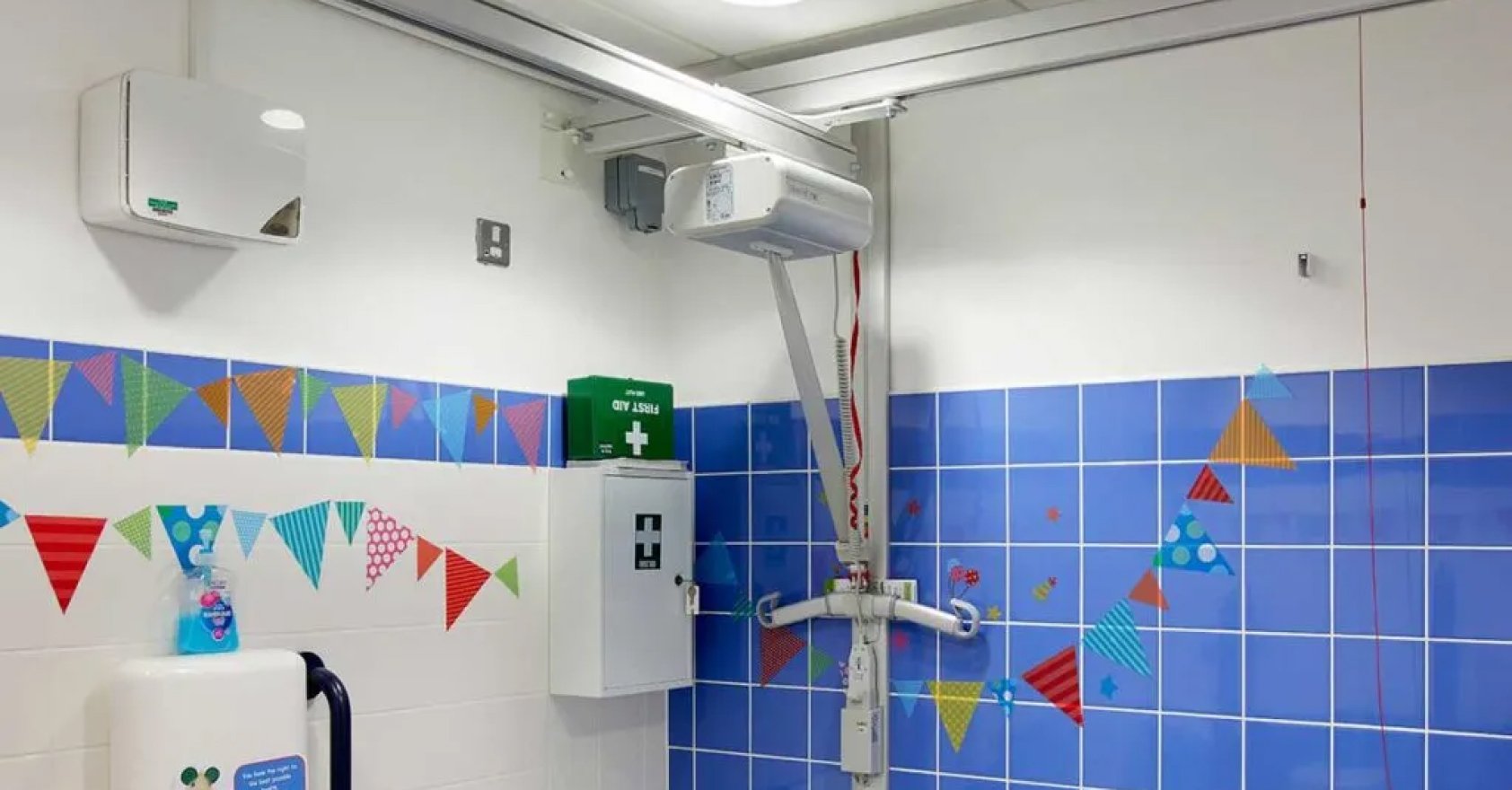
What if the individual cannot safely transfer independently at all?
Hoisting systems replace unsafe manual lifting with controlled, supported movement.
They enable:
- Safe transfers between toilet, shower, and seating
- Consistency across carers and settings
- Reduced physical strain and safeguarding risk
This is particularly important where:
- Transfers cannot be completed independently
- Manual handling presents a clear risk
- Complex needs require repeatable, structured support
Why do integrated solutions deliver better outcomes?
Most bathroom challenges involve more than one failure point.
For example:
- A height-adjustable basin supports access, but only if space allows wheelchair positioning
- A changing bench works best when paired with a hoist for seamless transfer
- Grab rails must align with both toileting and washing activities
Effective adaptation considers:
- Layout and spatial constraints
- Equipment interaction
- Long-term usability
The result is not just improved safety, but a fully functional environment.
What outcomes should you expect from a well-specified adaptation?
When the environment is properly aligned to the user’s needs, you achieve:
- Reduced falls and transfer-related risk
- Improved consistency in hygiene routines
- Lower manual handling demands
- Better energy efficiency in daily tasks
- Increased dignity, independence, and confidence
- Future-proofed solutions that adapt with changing needs
At this point, the bathroom shifts from being a risk-heavy space to one that actively supports independence.
How do you explore the right solution?
The most effective approach is to match interventions to functional need.
You can explore options based on:
- Access and positioning challenges
- Transfer and manual handling requirements
- Personal care and hygiene needs
- Complex or high-dependency scenarios
Each pathway should guide you toward a solution that is clinically justified and practically sustainable.
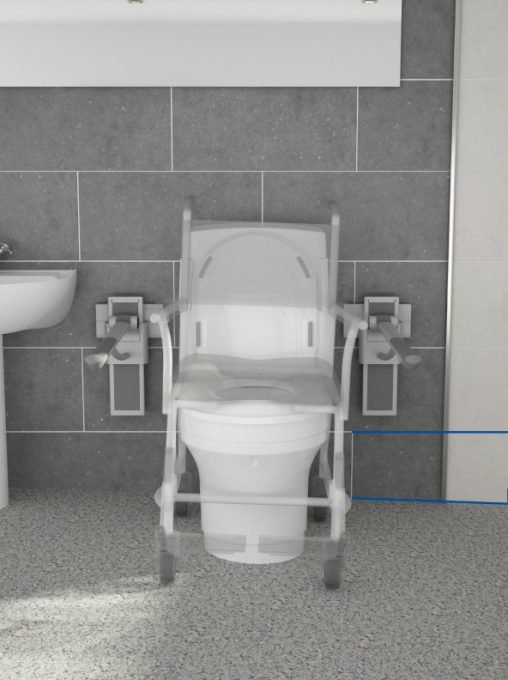
What should you do next?
If the bathroom environment is limiting safety or independence, the next step is to define the right combination of adaptations.
Identify where the task fails, align solutions to functional need, and specify a coordinated system that delivers safe, repeatable outcomes.