A Closomat White Paper Written by The Occupational Therapy Service
Abstract
Motor Neurone Disease (MND) creates a predictable trajectory of physical decline that can turn toileting—one of the most private, frequent and time-critical activities of daily living—into a high-risk, high-burden task. As limb strength, trunk control, endurance and hand function deteriorate, the toileting sequence becomes increasingly difficult to complete safely and with dignity, often resulting in avoidable dependency, carer strain, and increased clinical risk (e.g., falls, skin breakdown, constipation and urinary tract infections). For occupational therapists, this is not simply an equipment issue: it is a question of anticipatory planning, environmental design and risk management. This white paper summarises the functional implications of MND for toileting, provides an activity-analysis lens to identify where breakdown occurs, and outlines how wash and dry toilets can preserve independence, reduce intimate care needs and support safe, person-centred routines at home and in care settings.
Introduction
Motor Neurone Disease (MND) is a progressive, life-limiting neurological condition affecting upper and lower motor neurones. The resulting pattern of weakness, fatigue and loss of motor control is typically relentless, but its impact on day-to-day occupations is highly individual and shaped by environment, routines, and timely access to adaptation. Toileting is often an early “pressure point” because it demands strength, balance, coordination, speed and privacy—often in a confined space and at moments of urgency.

Unlike some conditions where cognition, insight and decision-making are affected early, many people with MND retain full awareness of the changes occurring in their bodies. This can make losses in intimate self-care particularly distressing. Occupational therapy therefore has a dual task: (1) reduce avoidable risk (falls, skin injury, infection, carer injury), and (2) protect autonomy, identity and dignity by enabling choice and reducing reliance on hands-on assistance for personal cleansing. Approaching toileting proactively—before crisis points such as failed transfers, near-falls or repeated skin issues—can stabilise routines and extend the period of safe independence.
Understanding Motor Neurone Disease
MND commonly presents with progressive weakness, muscle wasting and cramps, reduced coordination, altered speech and swallowing in some phenotypes, and respiratory compromise as the condition advances. Functionally, the condition often results in a moving target of needs: a person may walk short distances early on but struggle with turning, lowering, and rising; later, transfers may require assistance or equipment; and in advanced stages, full hoist transfers and extensive support may be required.
Toileting draws heavily on lower limb strength for sit-to-stand, eccentric control for lowering, and postural stability to maintain midline while clothing is managed. It also requires upper limb reach, grip and fine motor control for fastenings, wiping and hygiene. For people with MND, fatigue, reduced shoulder range, weak pinch grip, and impaired trunk control can combine with breathlessness to make the toileting sequence slow and effortful, increasing urgency-related risk and the likelihood of “task breakdown” in the later stages of the routine (cleansing and drying).
Importance of Toileting in Daily Life
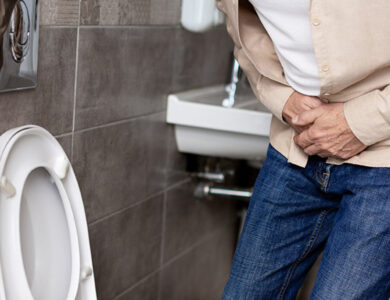
Toileting is a high-frequency, time-critical task that holds strong emotional and psychosocial significance. Loss of independence in this area is often one of the earliest and most distressing declines for individuals with MND.
Activity Analysis: Where MND Meets the Environment
A structured activity analysis helps identify the exact step(s) where independence is lost and where environmental change can restore it. A useful sequence is:
Access → Transfer → Clothing management → Positioning → Voiding → Cleansing → Drying → Hand hygiene → Exit
In MND, early breakdown may occur at transfer and clothing management (reduced leg strength, slowed motor planning, weak grip for fastenings). As the condition progresses, the highest-risk stages often become positioning, cleansing and drying, where reduced trunk stability and shoulder/hand function make twisting, reaching and repeated wiping unsafe. When these final steps are not completed effectively, the impact is not only psychosocial (distress, loss of privacy) but also clinical (skin damage, infection risk and increased reliance on carers for intimate care).
Common Toileting Challenges in MND
- Reduced ability to complete perineal hygiene (wiping) due to shoulder weakness, reduced reach, weak pinch grip or rapid fatigue
- Difficulty with sit-to-stand and controlled lowering because of proximal lower limb weakness and reduced eccentric control
- Reduced static sitting balance and trunk control, increasing the risk of sideways loss of balance during clothing management and cleansing
- Increased falls risk in confined bathroom spaces, particularly when turning, stepping back, or rushing due to urgency
- Constipation and bowel management issues (reduced mobility, hydration changes, medication effects), increasing time on the toilet and fatigue
- Breathlessness and low endurance leading to incomplete routines, prolonged transfers, and unsafe “last-minute” standing
- Carer manual handling risk and cumulative physical demand, particularly where intimate cleansing or repeated assisted transfers are required
The Risk Cascade: Falls, Skin Integrity and Avoidable Escalation
For many people with MND, toileting becomes the point at which multiple risks converge; urgency, fatigue, reduced balance, tight spaces, and time pressure. A near-fall during a transfer can quickly lead to increased supervision, reduced confidence and reduced mobility. Likewise, incomplete hygiene can contribute to skin soreness or breakdown, and longer toileting times can exacerbate fatigue and breathlessness. Once a person requires hands-on assistance for intimate care, the routine can become a trigger for carer injury risk, delayed responses overnight, and increasing emergency contacts—particularly if the person is unable to call for help, reposition safely, or complete hygiene after voiding.
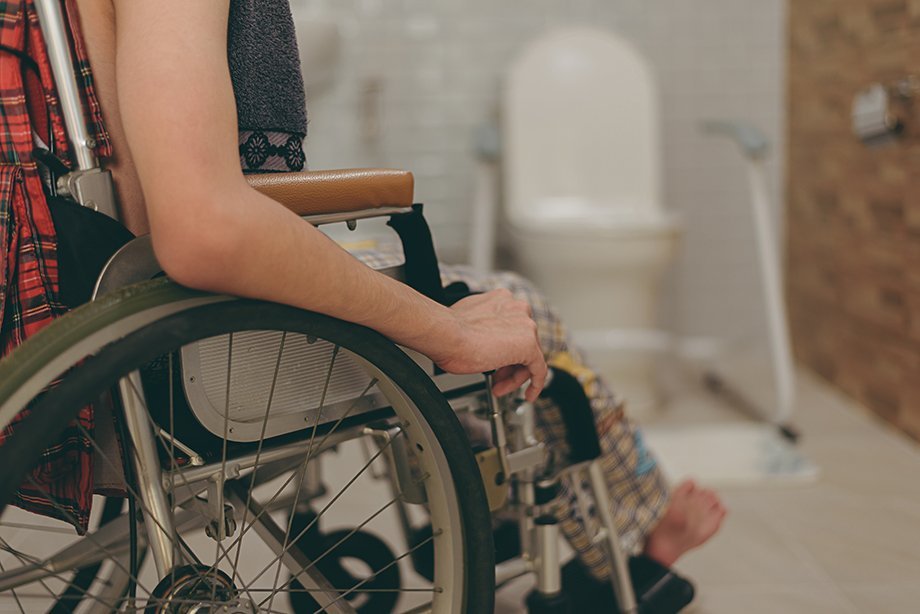
Occupational therapy interventions that reduce the most physically demanding and unstable parts of the sequence—particularly twisting/reaching for wiping—can interrupt this cascade. Environmental adaptation is often more sustainable than adding more assistance, because MND progresses; what is “just manageable” this month may be unsafe next month. A key principle is to choose solutions that continue to work as function declines, protecting dignity while reducing the need for repeated re-prescription.
Why Wash and Dry Toilets Support Independence
- Hands-free cleansing and drying: reduces or removes the need for wiping when upper limb reach, grip or endurance decline
- Reduced twisting and reaching: lowers balance challenge during the most unstable phase of toileting
- Consistent hygiene: supports skin integrity and comfort, particularly where sensation, endurance or technique is affected by fatigue
- Energy conservation: shortens the routine and preserves effort for transfers and other essential tasks
- Reduced intimate care: can delay or prevent the point at which a carer must provide perineal cleansing, supporting privacy and dignity
- Carer safety: reduces awkward postures and repetitive manual handling associated with toileting assistance
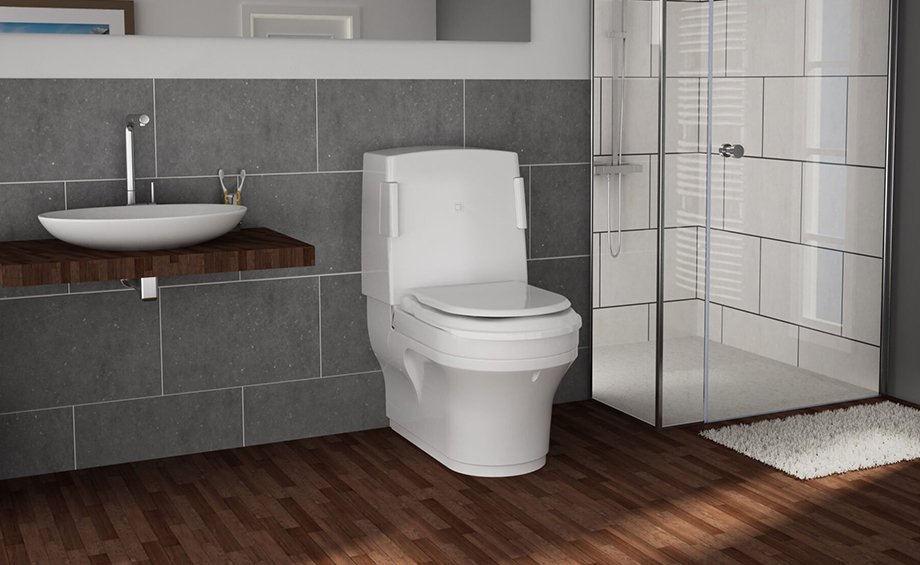
Clinical Decision-Making: Suitability, Controls and Contraindications
A wash and dry toilet is most effective when it is introduced before the person reaches crisis-level dependence—i.e., when hygiene is becoming inconsistent or transfers are becoming unsafe, but the person can still participate in positioning and routine. Suitability should be considered across four domains: physical ability (transfer/positioning), cognition and learning, sensory tolerance, and the home environment.
- Seating tolerance and safety: the person must be able to sit safely for the duration of the wash and dry cycle (with supports if required).
- Positioning: pelvic alignment and sitting posture affect cleansing effectiveness; consider lateral supports, foot support and seat height.
- Control access: identify whether the person can use standard controls, requires simplified controls, or needs carer-operated options due to weakness or communication difficulty.
- Sensory tolerance: some individuals may require graded introduction to warm-water cleansing and drying airflow.
- Clinical complexity: where there is active skin breakdown, severe pain, or complex bowel patterns, ensure the plan is aligned with tissue viability/continence guidance.
- Environmental constraints:check space for transfers/stand-aid/hoist and ensure safe access for carers if assistance is still required.
Indications for Prescription
- Manual wiping is inconsistent, unsafe, or requires frequent rest breaks due to fatigue or breathlessness
- Upper limb weakness/reduced reach means long-handled aids are no longer effective or increase balance risk
- Transfers are becoming effortful and time-consuming, increasing urgency-related rushing and falls risk
- A person is beginning to require intimate care for hygiene and wishes to preserve privacy and choice
- Anticipated progression suggests future hoist or stand-aid use—specify solutions compatible with changing transfer methods
Positioning and Setup Requirements
- Seat height and stability: set height to optimise hip/knee alignment and reduce effort for sit-to-stand or assisted transfers
- Foot support: ensure feet are supported to maintain pelvic position and reduce sliding, especially if fatigue causes “sacral sitting”
- Trunk and lateral support: consider positioning aids if midline sitting cannot be maintained throughout the cycle
- Arm support and grab rails: locate to support controlled lowering and safe weight shift without excessive shoulder demand
- Controls and access: ensure buttons/remote are reachable with available movement; consider mounting, large buttons, or carer-operated control where appropriate
- Space planning: confirm clearance for stand-aid/hoist approaches, turning radius, and safe carer positioning if assistance remains necessary
Transfer Methods with Wash and Dry Toilets
Transfer method is rarely static in MND. When specifying a wash and dry toilet, consider not only what is safe now, but what will be required with likely progression (e.g., transition from independent transfer to stand-aid, then to hoist). Equipment and environmental layout should minimise the need for repeated reconfiguration and reduce the chance that a helpful adaptation becomes unusable.
- Early stage: independent transfer with rails/frames; focus on seat height, safe turning space and routine training
- Mid stage: assisted transfer or stand-aid; check approach angles, knee clearance, and the ability to position fully back on the seat for effective washing
- Advanced stage: hoist transfer; ensure adequate space for hoist legs and carer stance, and consider sling management, prolonged sitting tolerance, and the ability to access controls via carer operation
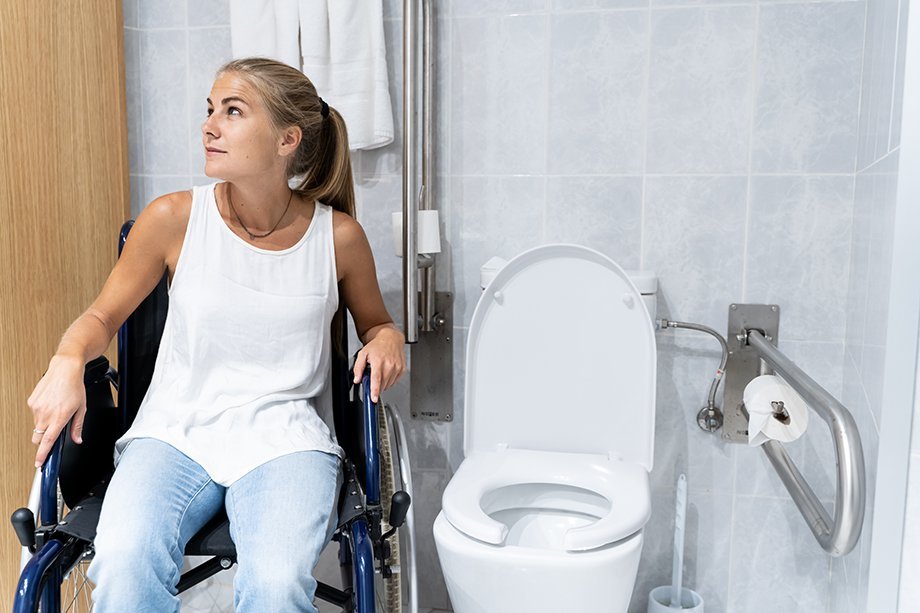
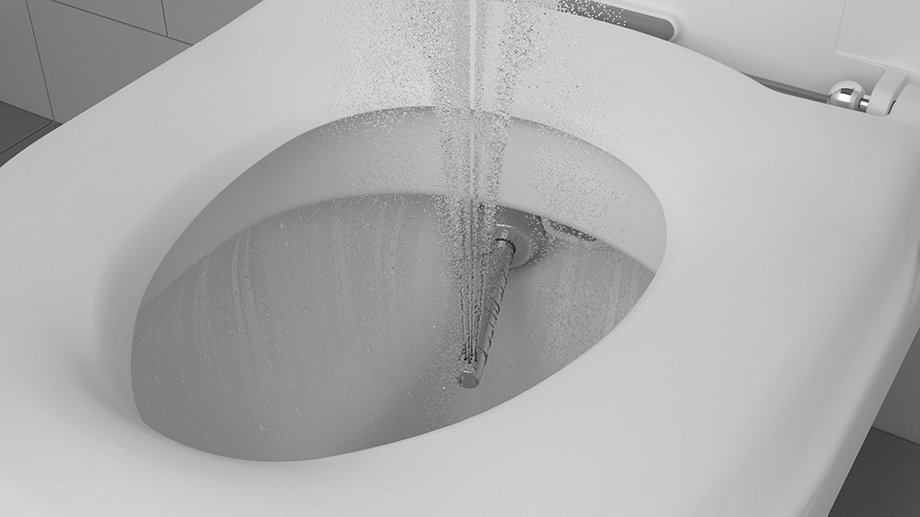
Wash and Dry Function Benefits
- Reduces reliance on shoulder strength, grip and reach for hygiene, supporting continued independence as function declines
- Supports skin integrity by reducing friction from repeated wiping and helping maintain cleanliness when fatigue limits technique
- Standardises the hygiene routine, which can reduce distress, time pressure, and “task failure” during episodes of fatigue
- Reduces intimate exposure for carers and the person, supporting dignity and potentially reducing carer burden in long-term routines
Carer Considerations
Carers supporting people with MND often describe toileting as one of the most physically demanding and emotionally sensitive parts of the care package. Assistance frequently involves working in confined spaces, supporting unstable transfers, managing clothing, and providing intimate cleansing—tasks associated with awkward postures and repetitive strain. As needs increase, toileting also becomes a night-time pressure point, with urgency, fatigue and reduced mobility increasing risk when staffing is limited or when family carers are exhausted. Reducing hands-on intimate care through assistive technology can improve privacy for the person, clarify care expectations, and support safer routines that align with manual handling principles and reduce cumulative carer burden.
Implementation Pathway for Occupational Therapists
- Assessment and goal setting: clarify priorities (privacy, speed, reduced assistance), assess transfers, sitting balance, upper limb function, fatigue/breathlessness, skin integrity and bowel routine.
- Environmental appraisal: measure access routes, turning space, carer working space, and compatibility with stand-aids/hoists; identify whether a height-adjustable or specialist configuration is required.
- Controls and training plan: agree how the person will activate wash and dry (self, carer, simplified control) and provide graded practice to build confidence and tolerance.
- Risk management: document transfer method, supervision level, contingency plan for fatigue/urgency, and night-time arrangements.
- Review and progression planning: set review triggers (near-falls, increased assistance, skin issues, slower transfers) and plan early for the next likely stage (e.g., stand-aid to hoist).
- MDT coordination: align with continence, tissue viability, physiotherapy, and palliative care input where relevant, ensuring the toileting plan remains person-centred.
Where funding decisions are required, the rationale should be framed in functional outcomes and risk reduction: maintaining safe transfers, reducing intimate care hours, protecting carer safety, and preventing avoidable escalation (e.g., falls, skin breakdown and increased care packages). In England, major adaptations may be supported through local authority pathways and the Disabled Facilities Grant; clear documentation of need, prognosis and anticipated progression can support timely decision-making.
Conclusion
Toileting is a core occupation with disproportionate impact on dignity, identity and wellbeing. In MND, predictable decline in strength, balance, reach and endurance makes the toileting routine increasingly complex and high risk—often well before mobility is lost entirely. Occupational therapists are well placed to identify early markers of difficulty (inconsistent hygiene, increased fatigue, unsafe twisting, prolonged transfers) and to intervene with adaptations that remain viable as needs progress. Wash and dry toilets can remove one of the key barriers to independent toileting—manual wiping—while reducing instability, conserving energy, and easing carer burden. Introduced proactively and set up with appropriate positioning, controls and review planning, they represent a practical, person-centred approach to maintaining choice and dignity throughout the disease trajectory.
References
- National Institute for Health and Care Excellence (2016). Motor neurone disease: assessment and management (NG42).
- Motor Neurone Disease Association. Living with motor neurone disease (information resources for people with MND and professionals).
- Royal College of Occupational Therapists (2018). Embracing risk; enabling choice: guidance for occupational therapists. London: RCOT.
- Royal College of Occupational Therapists (2019). Adaptations without delay: a guide to planning and delivering home adaptations differently. London: RCOT.
- Turner, M. R., Talbot, K., & Marsden, R. (2013). Motor neurone disease. Practical Neurology, 13(5), 289–300.
- Brown, R. H., & Al-Chalabi, A. (2017). Amyotrophic lateral sclerosis. New England Journal of Medicine, 377, 162–172.
- Health and Safety Executive (1992). Manual Handling Operations Regulations (as amended).
- Yachnin, D., Gharib, G., Jutai, J., & Finestone, H. (2017). Technology-assisted toilets: Improving independence and hygiene in stroke rehabilitation. Journal of Rehabilitation and Assistive Technologies Engineering, 4, 2055668317725686.
- Cohen-Mansfield, J., & Biddison, J. R. (2005). The potential of wash-and-dry toilets to improve the toileting experience for nursing home residents. The Gerontologist, 45(5), 694–699.
- Department for Levelling Up, Housing and Communities and Department of Health and Social Care (2022). Disabled Facilities Grant (DFG) delivery: guidance for local authorities in England.