A Closomat White Paper Written by The Occupational Therapy Service
Abstract
Age-related decline is not a subjective experience but a measurable physiological shift in “intrinsic capacity” and functional ability (Beard et al, 2016). As individuals age, the intersection of physical sarcopenia, cognitive shifts, and sensory changes creates a high-risk environment for one of the most private and frequent activities of daily living: toileting. For occupational therapists, understanding the reality of this decline is essential for moving beyond reactive equipment provision toward preventative environmental design. This white paper examines the evidence for age-related decline, its specific impact on the toileting sequence, and the role of wash and dry toilets in maintaining independence, safety, and health system efficiency.
The Biology of Decline: More Than Just “Getting Older”
The reality of age-related decline is rooted in significant physiological changes. Sarcopenia, the progressive loss of skeletal muscle mass and strength, directly impacts an individual’s ability to perform the physical manoeuvres required for safe toileting, such as controlled transfers and the manual dexterity needed for personal hygiene (Beard et al, 2016).

Furthermore, decline is often neurological. Research indicates that urinary urgency acts as a source of “divided attention,” which alters gait patterns and increases the risk of falls during the transition to the bathroom (Gibson, et al 2021). When combined with reduced shoulder range, grip strength, or the cognitive challenges of sequencing associated with dementia, the once-automatic task of toileting becomes a complex and hazardous hurdle (Featherstone et al, 2022; NIHR Evidence, 2022).
Activity Analysis: Where Decline Meets the Environment
From an occupational therapy perspective, the impact of decline is most visible when the toileting sequence is broken down into its component parts:
Access → Transfer → Clothing management → Voiding → Cleansing → Drying → Hand hygiene.
Decline often manifests first in the “Cleansing” and “Drying” stages. As reach and dexterity diminish, individuals may struggle to wipe effectively, leading to:
- Infection Risk: Poor hygiene and wiping direction (back-to-front) are major drivers of bacterial transfer and Urinary Tract Infections (UTIs), which account for nearly 190,000 hospital admissions annually in England (NIHR Evidence, 2022).
- Occupational Disengagement: Repeated difficulty or “toileting failure” can lead to anxiety, avoidance, and a loss of confidence, resulting in a total withdrawal from independent toileting (Featherstone et al, 2022).
- Loss of Dignity: The transition from independent hygiene to requiring a carer for intimate cleansing is a significant milestone in functional decline that profoundly impacts self-esteem (Royal College of Occupational Therapists, 2018; Royal Geriatrics Society, 2018).
The Risk Cascade: Falls, UTIs, and Hospitalisation
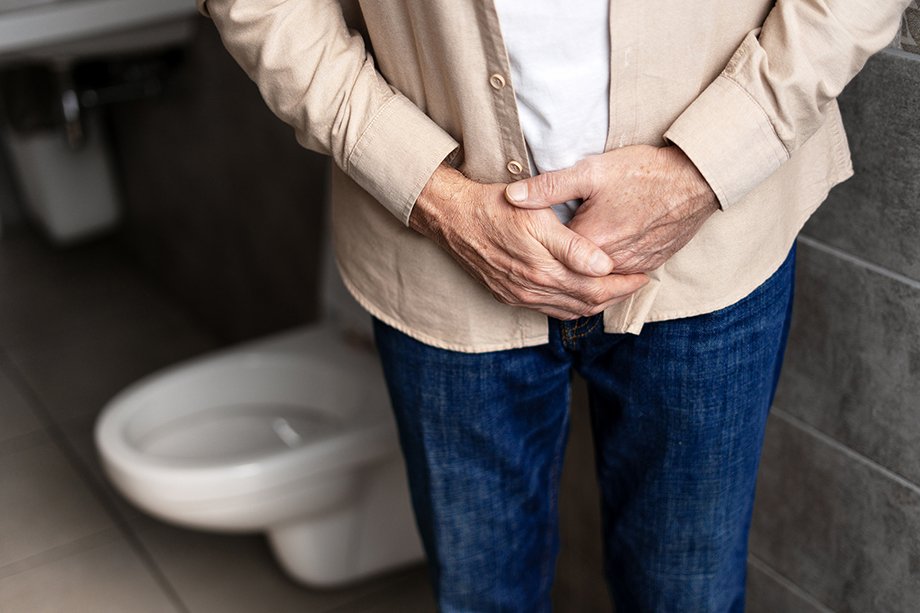
The functional consequences of age-related decline are a leading cause of falls particularly during night-time toileting (Zou et al, 2023).
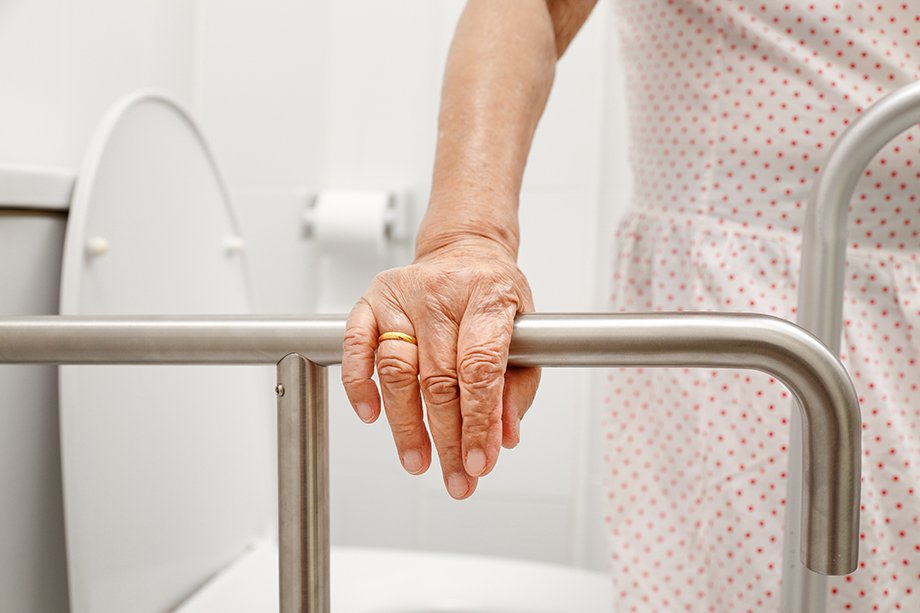
For older adults, particularly those over 70, a UTI is not merely a medical event; it often triggers a cascade of delirium, functional decline, and increased falls, which can lead to permanent loss of independence. OTs are often the first to see these functional markers of decline and are uniquely positioned to intervene through environmental adaptations.
Wash and Dry Toilets: A Clinical Tool for Independence
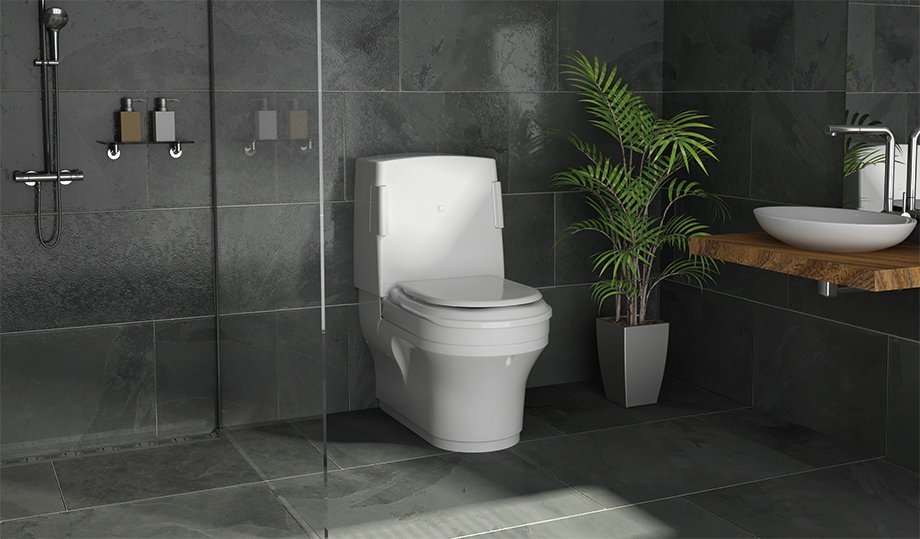
Addressing age-related decline requires technology that compensates for lost physical and cognitive capacity. Wash and dry toilets provide a hands-free cleansing and drying solution that directly addresses the challenges identified in activity analysis:
- Hygiene and Health: By replacing manual wiping with automated, vertical spray cleansing, these systems ensure more consistent hygiene and reduce the cross-contamination risks that lead to UTIs.
- Safety and Energy Conservation: Eliminating the need for complex twisting and reaching during cleansing reduces the risk of balance loss and preserves energy for other daily tasks.
- Carer Burden: Automated bidet interventions have been shown to significantly decrease the burden on family and professional carers, allowing the older adult to maintain privacy in their most intimate routines.
The Professional and Economic Case for Intervention
Occupational therapists must navigate the Mental Capacity Act 2005 to ensure choices reflect the individual’s “best interests” while enabling “positive risk-taking” to support life at home.
The financial case for such interventions is robust. Preventative housing adaptations, such as the installation of specialist toilets via the Disabled Facilities Grant (DFG), offer a massive return on investment. Evidence suggests that for every £1 spent on such adaptations, approximately £7.50 is saved in wider health and social care costs by reducing hospital bed days and delaying the need for long-term residential care.
Summary
Age-related decline is a measurable reality that specifically targets the complex sequence of toileting. By recognising the impact of sarcopenia, urgency-related gait changes, and reduced dexterity, OTs can specify solutions like wash and dry toilets that do not just “manage” decline but actively preserve independence. These adaptations represent a clinically sound, dignified, and cost-effective strategy for supporting the ageing population within their own homes.
Sources
Baig Z, Abu-Omar N, Harington M, Gill D, Nathan Ginther D. Be Kind to Your Behind: A Systematic Review of the Habitual Use of Bidets in Benign Perianal Disease. Evid Based Complement Alternat Med. 2022 May 31;2022:1633965. doi: 10.1155/2022/1633965. PMID: 35685735; PMCID: PMC9173983.
Beard JR, Officer A, de Carvalho IA, Sadana R, Pot AM, Michel JP, Lloyd-Sherlock P, Epping-Jordan JE, Peeters GMEEG, Mahanani WR, Thiyagarajan JA, Chatterji S. The World report on ageing and health: a policy framework for healthy ageing.
British Geriatrics Society (2018) Dignity – Supporting toilet access and us in frail older people. https://www.bgs.org.uk/dignity-supporting-toilet-access-and-use-in-frail-older-people
Lancet. 2016 May 21;387(10033):2145-2154. doi: 10.1016/S0140-6736(15)00516-4. Epub 2015 Oct 29. PMID: 26520231; PMCID: PMC4848186.
Cohen-Mansfield J, Biddison JR. The potential of wash-and-dry toilets to improve the toileting experience for nursing home residents. Gerontologist. 2005 Oct;45(5):694-9. doi: 10.1093/geront/45.5.694. PMID: 16199405.
Department for Levelling Up, Housing and Communities and Department of Health and Social Care (2022) Disabled Facilities Grant (DFG) delivery: guidance for local authorities in England. Available at: https://www.gov.uk/government/publications/disabled-facilities-grant-dfg-delivery-guidance-for-local-authorities-in-england (Accessed: 19 February 2026)
Featherstone K, Northcott A, Boddington P, et al. Understanding approaches to continence care for people living with dementia in acute hospital settings: an ethnographic study. Southampton (UK): National Institute for Health and Care Research; 2022 Jun. (Health and Social Care Delivery Research, No. 10.14.) Available from: https://www.ncbi.nlm.nih.gov/books/NBK581400/
Gibson W, Jones A, Hunter K, Wagg A. Urinary urgency acts as a source of divided attention leading to changes in gait in older adults with overactive bladder. PLoS One. 2021 Oct 4;16(10):e0257506. doi: 10.1371/journal.pone.0257506. PMID: 34606514; PMCID: PMC8489708.
Kanayama Katsuse A, Takahashi H, Yoshizawa S, Tateda K, Nakanishi Y, Kaneko A, Kobayashi I. Public health and healthcare-associated risk of electric, warm-water bidet toilets. J Hosp Infect. 2017 Nov;97(3):296-300. doi: 10.1016/j.jhin.2017.07.021. Epub 2017 Jul 26. PMID: 28756169.
NIHR Evidence (2022) Continence, dementia and care that preserves dignity. DOI: 10.3310/nihrevidence_51255. Available at: https://evidence.nihr.ac.uk/alert/continence-dementia-and-care-that-preserves-dignity/ (Accessed: 19 February 2026)
Royal College of Occupational Therapists (2018) Embracing risk; enabling choice: guidance for occupational therapists. London: RCOT.
Royal College of Occupational Therapists (2019) Adaptations without delay: a guide to planning and delivering home adaptations differently. London: RCOT.
UK Parliament (2005) Mental Capacity Act 2005, Section 1. Available at: https://www.legislation.gov.uk/ukpga/2005/9/section/1 (Accessed: 19 February 2026)
Yachnin D, Gharib G, Jutai J, Finestone H. Technology-assisted toilets: Improving independence and hygiene in stroke rehabilitation. J Rehabil Assist Technol Eng. 2017 Aug 29;4:2055668317725686. doi: 10.1177/2055668317725686. PMID: 31186933; PMCID: PMC6453101.
Zou M, Lu R, Jiang Y, Liu P, Tian B, Liang Y, Wang X, Jiang L. Association between toileting and falls in older adults admitted to the emergency department and hospitalised: a cross-sectional study. BMJ Open. 2023 Jun 1;13(6):e065544. doi: 10.1136/bmjopen-2022-065544. PMID: 37263694; PMCID: PMC10254614.