A Closomat White Paper Written by The Occupational Therapy Service
Using functional rooms – including the toilet – is the second-biggest difficulty faced in daily life for families that have children with disabilities. Using the toilet can be a challenging area for young people with continence difficulties affecting 1 in 12 young people
Young people go to the toilet on average eight times a day, even those without disabilities can struggle to access and functionally utilise the toilet affectively and independently
Common factors that often influence this are the toilet height, stability when using the toilet, or carrying out hygiene procedures. The ability to access the toilet independently, and carry out all of the functional aspects to complete hygiene tasks, is important to enable an improved level of independence with self-care activities; this can promote feelings of confidence, self-worth, and dignity, subsequently having a positive influence on the overall health and well-being of the young person. To go to the toilet independently, attending to all aspects including hygiene, has a huge impact on a child’s feelings of independence and acceptance, and their self-care skills.
Young people with disabilities
Young people with disabilities often have limitations with their physical and cognitive performance within tasks when compared to young people of their age group without disabilities.
These limitations can impact upon their ability to functionally utilise the toilet or carry out the toileting process affectively. Some of the common difficulties in this area are:
- Transferring on and off the toilet.
- Maintaining stability when using the toilet.
- Maintaining the correct position when on the toilet to enable suitable access for the process.
- Carrying out hygiene aspects such as wiping, cleaning, due to limitations with gross and fine motor skills.
Considerations for toileting
To compensate for the young person’s difficulties with toileting there are a number of interventions that can be utilised to enable independence with toileting access and the activity itself.
When deciding on the correct choice of intervention this should be led by the needs of the young person. It also has similar, corresponding benefits for the child’s carers and family. The choice of toilet aids is influenced by a number of factors:
- How long will the child need it.
- How capable is the child at transferring on/off the toilet.
- What level of support system may be required.
- Can the child sit in the correct position on the toilet.
- Can the child balance unaided on the toilet.
- Can the child wipe clean themselves.
- Can the child operate the toilet.
These considerations should be monitored and reviewed to ensure that the intervention continues to meet their needs, enabling independence with toileting in the short, medium, and long term, to positively influence their development and overall health and well-being.
Type of toilet used
Is the child using a conventional WC or a wash and dry (shower) toilet?
Whichever type of toilet is being used, the child needs to feel secure and stable. The child should be sat comfortably, with their back supported against the cistern, and their torso and legs forming approximately a 90° angle.
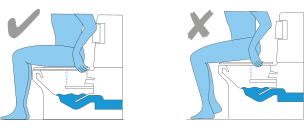
The child’s buttocks should be supported but slightly parted to enable effective bowel evacuation.
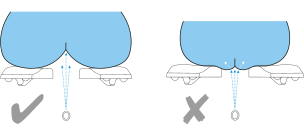
If a carer’s support is required, the carer needs to be able to provide appropriate intimate care easily. Consideration therefore needs to be given to access to intimate care areas with attention paid to how the environment supports safe handling and ergonomics.
What are Wash and Dry Toilets and how do they benefit the user?
Wash and Dry Toilets were invented by Closomat over 60 years ago to provide solutions for people having difficulties with toileting and, in particular, with cleaning themselves afterwards.
Put simply, Wash and Dry toilets (sometimes referred to as “shower toilets”) combine the functions of a toilet, a bidet and a drier in one easy to use unit. The toilet flushes, washes the user with warm water, and finally dries with warm air.
Wiping with toilet tissue requires manual, mental and physical dexterity, flexibility, and balance. The nature of certain disabilities or medical conditions means that some people are not able to wipe themselves, which can result in personal hygiene issues, higher risk of infection and an increased burden on family members or carers. This can, in turn, lead to psychological issues, feelings of isolation or reduced self worth from the loss of independence and dignity.
Whether the user is disabled or not, inevitably one is cleaned better with water than with toilet tissue. Furthermore, with hand/body contact removed the risk of infection or cross-contamination through failure to wash hands is greatly reduced.
Clearly, the fundamental reason for Wash and Dry toilets is to effectively wash the anal area, but the additional personal and psychological benefits cannot be under-stated.
Therefore, specifying a Wash and Dry toilet can have a fundamental, life-changing impact on a person’s life.
Considerations for toileting aids
Self-hygiene tasks associated to the toilet can require a high level of gross/fine motor skills and visual motor integration. For example, manual self-cleaning requires visual and non-visual motor integration.
Maintaining balance whilst using the toilet and coordinating the upper limbs can be challenging for those with motor and cognitive skill limitations. Toileting is a complex cognitive task as a high level of organisation, planning, and sequencing is involved, relying heavily on the young person’s higher executive functioning which is responsible for enabling the brain to deal with multiple information at the same time. If the young person has limitations with their cognitive ability this can affect their performance to carry out the task of toileting independently.
To compensate for these physical and cognitive limitations it often requires intimate hand and body contact, either by the parent or the young person’s carer. Utilising the Closomat with a shower cleaning system requires only the ability to sit in the right place and trigger a mechanism.
Through the addition of selecting a wash and dry unit this further reduces the impact of limitations and maximises independence.
Not only does the Closomat enable independence with toileting through compensatory strategies such as the washing and drying facilities, it also helps to reduce the time and costs around the toileting process where additional care and support would usually be required. The Closomat can also serve to reduce the space required for those that require additional support from a moving and handling perspective; as the equipment carries out the full washing and drying process for toileting this may remove the need for additional moving and handling usually required to support with the toileting process without the Closomat.
Cost therefore should be calculated as installation, off set by savings as a result.
Smearing of faeces is a comparatively common activity among young people with learning disabilities and can often be due to the young person not having the ability to fully clean the area required. As a wash and dry toilet effectively washes the anal area, this eliminates the potential for the young person to smear and helps maintain good personal hygiene which can have a positive impact on their overall health and well-being through their maintaining their dignity and self-respect.
Rollover support systems
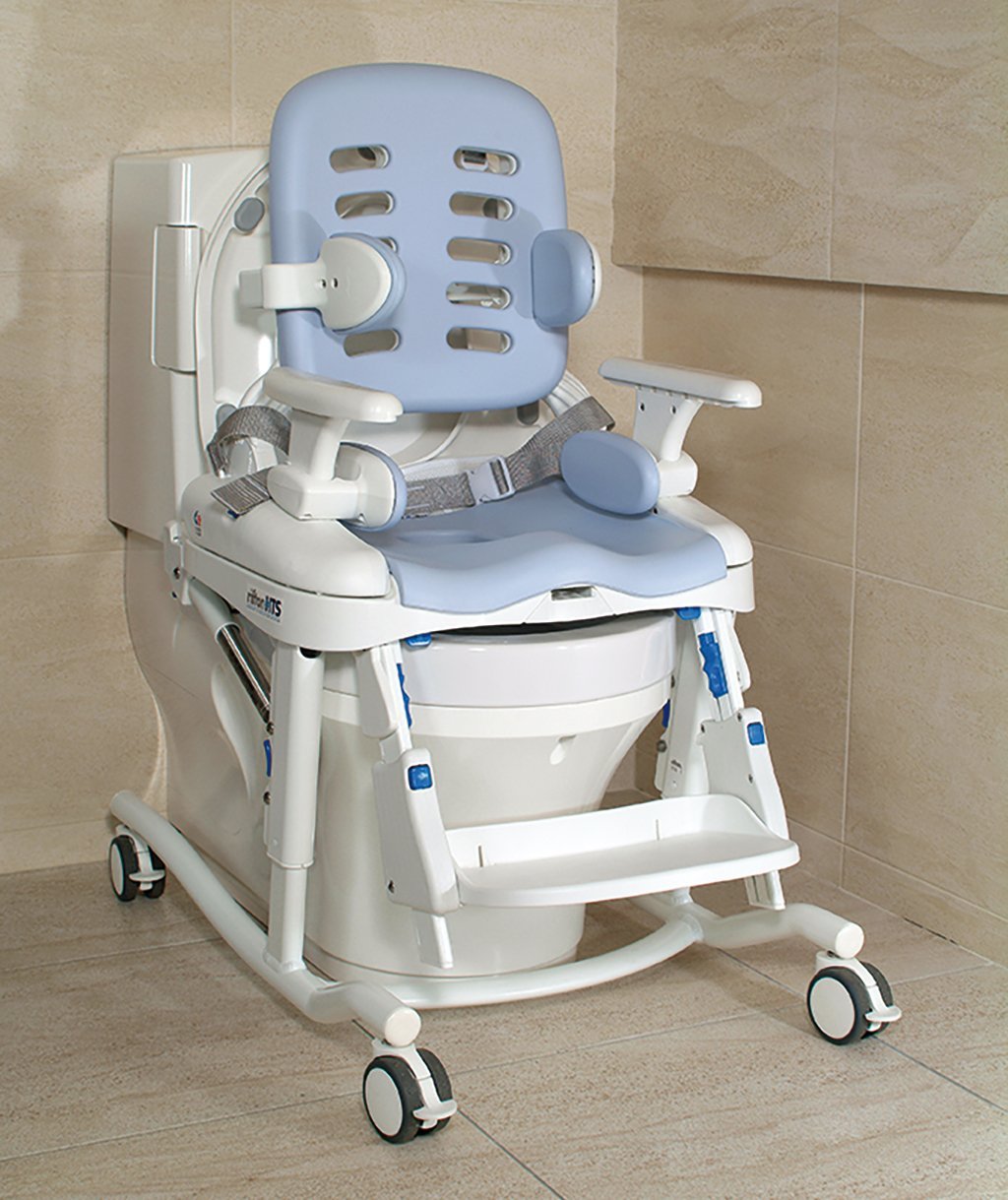
These can offer the same level of postural support as the clip-on systems but can roll over the toilet, enabling the young person to access the toilet without a clip-on support system needing to be fitted prior to accessing the toilet.
The latest evolution is a HTS (hygiene & toileting system) which provides head support, thoracic supports, hip supports, lap straps, chest harnesses, and upper limb support, but also has the addition of a foot support which can be beneficial for those where the toilet height means they are unable to reach the floor with their feet. Not having the feet supported can impact upon the pelvis and trunk position and subsequently the young person’s position for toileting. It is recommended that the feet are always in contact with the floor or a footplate to ensure a stable base of support for the rest of the body to promote a good toilet posture. Facilitating a stable base means the young person is required to provide less effort to maintain their position, therefore, enabling the muscles to relax which is an essential part of the evacuation process.