A PEO approach to bathroom independence for Benjamin, an autistic child with sensory needs.
Enhancing Bathroom Independence for an Autistic Child: A Person–Environment–Occupation Approach
An occupational therapy case study exploring sensory processing, environmental adaptations and assistive technology.
* Names and some details changed for confidentiality reasons.
Introduction
Bathroom participation is a fundamental occupation that supports health, hygiene, independence, dignity and quality of life. For many autistic children and young people, however, using the bathroom can present challenges due to the complex interaction between sensory processing differences, motor skills, executive functioning, interoception, communication and the physical environment.
This case study explores how the Person – Environment – Occupation (PEO) model was used to understand the barriers affecting Benjamin’s bathroom independence and guide the development of person-centred interventions. It demonstrates how environmental adaptations, sensory-informed strategies, structured routines and assistive technology can work together to optimise occupational performance, increase participation and promote greater independence and dignity.
Referral Information
Benjamin Smith*, presents with existing diagnoses of global developmental delay, autism spectrum disorder and speech and language delays. Benjamin also has nystagmus and a squint (convergent). Parents and professionals reported concerns relating to Benjamin’s gross and fine motor development, reduced muscle tone, coordination difficulties, delayed self-care skills, sensory processing differences, and difficulties engaging independently within play and learning activities.
Background Information
Family
Benjamin is a 5-year-old boy who lives at home with his mother, father, older sister and younger brother. His family are actively involved in his care and are committed to supporting his development and independence across all aspects of daily life. They recognise his unique strengths and celebrate his achievements, while also advocating for the support he needs to participate meaningfully in everyday activities.
School
Benjamin attends Woodlands Specialist School*, where he is currently in year 1. He enjoys attending school and is described by staff as a sociable, affectionate and happy child who seeks interaction with familiar adults and peers. He particularly enjoys music, books, sensory play, cause-and-effect toys and watching movement-based activities.
Benjamin currently requires a high level of adult support throughout the school day to access learning opportunities, engage in play, participate in self-care routines and move safely around the environment. He responds well to structured routines, visual supports, repetition and highly supported adult interaction, which enable him to engage more successfully in classroom activities.
Daily Routines
Benjamin’s daily routines are highly structured and supported by the adults around him. Throughout the day he benefits from clear visual cues, repetition and predictable routines that help him understand what is expected and support successful participation.
Activities involving music, movement and social interaction are naturally incorporated into his day and provide valuable opportunities for engagement, learning and regulation.
Strengths
Benjamin has many personal strengths. He presents as a sociable and determined young boy who is highly motivated by positive relationships with familiar adults. Although he is currently non-speaking, Benjamin actively communicates through vocalisations, gestures, facial expressions, eye contact and shared attention. He consistently demonstrates a strong desire to connect with others and enjoys celebrating success through smiles, laughter, clapping and shared enjoyment. Benjamin responds particularly well to encouragement, praise and positive reinforcement.
Interests
Benjamin’s interests provide important opportunities for engagement and motivation during therapy and everyday activities. He has a particular fascination with people and enjoys watching others play, especially activities involving climbing, jumping and movement but takes increased encouragement to join in himself. He is drawn to moving objects such as cars and balls and demonstrates sustained engagement during cause-and-effect play.
Music is one of Benjamin’s greatest motivators. He enjoys listening to familiar nursery rhymes, musical toys and interactive singing with adults. His favourite activities include playing with his musical bus and his “Posting Pig” game.
Goals
Benjamin’s family would like him to develop as much independence as possible so that he becomes less reliant on others to meet his everyday needs. Their long-term aspiration is for him to experience the greatest possible quality of life through increased participation in meaningful activities, improved independence in daily living skills and opportunities to engage in activities that bring him enjoyment and fulfilment.
From an occupational therapy perspective, intervention focuses on supporting Benjamin to participate as independently as possible in everyday occupations by building on his strengths, adapting environments and developing functional skills.
What independence means for Benjamin
For Benjamin, independence does not necessarily mean completing every aspect of a task without support. Instead, it means enabling him to participate as fully as possible in meaningful occupations while reducing unnecessary barriers and maximising opportunities for choice, autonomy and dignity.
Within the context of bathroom participation, independence may involve recognising the need to use the toilet, participating in clothing management, completing aspects of personal hygiene, communicating his needs or using environmental adaptations and assistive technology to reduce reliance on caregivers. Every small increase in participation represents a meaningful step towards improved confidence, quality of life and long-term independence for both Benjamin and his family.
Assessment Findings
A comprehensive occupational therapy assessment was completed to understand the interaction between Benjamin’s abilities, the environment and the occupational demands of daily activities, especially his bathroom and toileting participation. Information was gathered through parent interview, school consultation, clinical observation, functional assessment and sensory processing assessment.
Occupational Performance
Benjamin presents with developmental differences that impact his participation across a wide range of everyday occupations, including self-care, play, learning and community participation. He requires high levels of adult support to initiate, engage in and complete many daily activities and demonstrates a strong preference for familiar routines and environments.
Within self-care, Benjamin remains dependent on adults for dressing, toileting and many aspects of feeding. His developmental delays, hypotonia, motor coordination difficulties and sensory processing differences reduce his ability to perform age-appropriate activities independently.
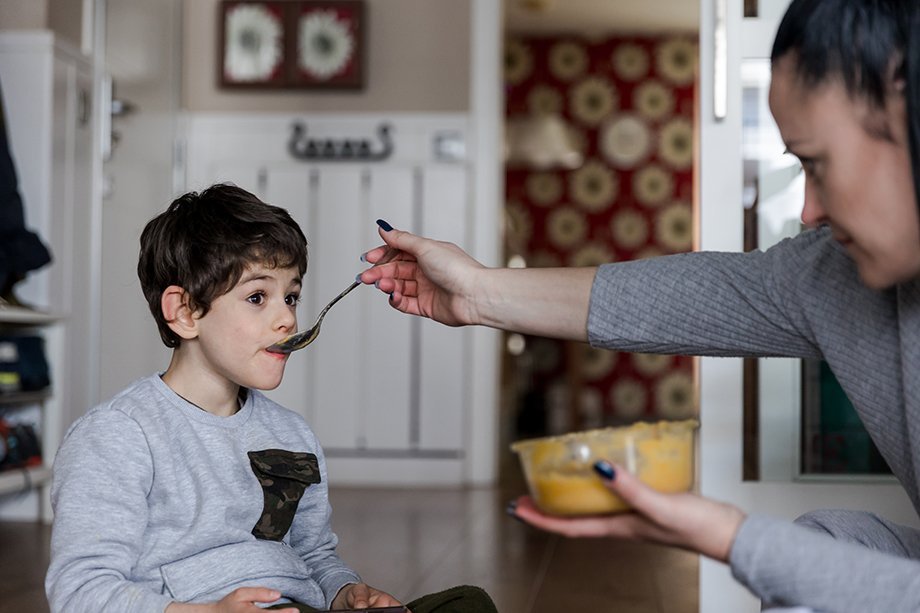
Toileting is currently one of Benjamin’s most dependent occupations. He wears nappies and relies on adults throughout the entire toileting routine, including recognising toileting needs, managing clothing, maintaining balance, completing personal hygiene and handwashing. He is not yet able to recognise when he needs the toilet consistently and depends on familiar adults to anticipate his needs using routines and behavioural cues.
Benjamin is able to cooperate with familiar routines but requires continuous reassurance, verbal prompting and physical assistance throughout the toileting sequence. Following bowel movements, he is unable to complete wiping independently due to reduced balance, body awareness and motor planning and is unable to judge whether personal hygiene has been completed effectively. Unfamiliar bathrooms and changes to routine can increase anxiety and reduce his willingness to participate.
Sensory Processing
Benjamin’s sensory profile is characterised by reduced sensory registration, alongside increased sensory sensitivity and sensory avoidance, indicating that he may both miss important sensory information and become overwhelmed by competing sensory input. This combination impacts his regulation, participation and functional independence.
Benjamin demonstrates tactile sensitivities and finds activities such as hair washing, nail cutting and certain textures distressing. Parents also report that he dislikes unexpected touch around his head and can become uncomfortable when others enter his personal space. Conversely, he appears to have a high pain threshold and reduced awareness of temperature, suggesting that he may not consistently notice important body sensations.
Movement and proprioceptive processing differences contribute to reduced body awareness, postural control and motor planning. Benjamin enjoys familiar movement activities such as slides, swings and forward rolls but approaches unfamiliar movement with caution and often requires reassurance before participating. Difficulties processing proprioceptive information affect his balance, coordination, dressing, mobility and participation in self-care activities.
Benjamin does not like loud, unexpected sounds and busy environments. This affects his ability to use public toileting facilities due to the hand dryers.
Within the bathroom environment, these sensory differences contribute to discomfort during wiping and contact with wet textures. Flushing toilets, extractor fans and hand dryers further increase sensory load and reduce Benjamin’s confidence and participation.
Gross Motor Skills
Benjamin presents with gross motor difficulties related to hypotonia, reduced postural control and delayed motor development. He is able to walk independently on familiar, level surfaces but demonstrates reduced balance, coordination and confidence when negotiating uneven ground, stairs or changes in height. Fatigue is evident during physical activities, and he often requires encouragement to attempt unfamiliar movement tasks.
Within the bathroom, these challenges affect his ability to transfer safely on and off the toilet, maintain a stable sitting posture, bend to manage clothing, reach for toilet paper and maintain balance during hygiene tasks. Poor core stability and body awareness increase his reliance on adult assistance throughout the toileting routine.
Fine Motor Skills
Benjamin demonstrates delays in fine motor development, including reduced hand strength, bilateral coordination, grasp development, finger isolation and in-hand manipulation. He currently uses immature grasp patterns and requires hand-over-hand assistance for many tasks requiring precision.
These difficulties extend beyond play activities and impact everyday occupations. Within bathroom routines, Benjamin experiences difficulty manipulating clothing fastenings, pulling trousers up and down, squeezing soap dispensers and completing effective handwashing. Fine motor limitations therefore contribute to his dependence during self-care activities.
Executive Functioning
Benjamin demonstrates a strong preference for routine, familiarity and predictability. He requires adults to initiate, sequence and complete most activities and benefits from repetition, visual supports, and consistent routines. Novel or unpredictable situations often increase his reliance on familiar adults for reassurance.
The toileting routine places significant executive functioning demands on Benjamin. He is not yet able to independently sequence the multiple stages involved in toileting and requires prompting throughout each step, including entering the bathroom, managing clothing, sitting on the toilet, completing hygiene, flushing, washing hands and returning to his previous activity. Reducing cognitive load through structured routines and visual supports, is, therefore likely to improve participation.
Interoception
Benjamin demonstrates reduced awareness of internal body sensations associated with bladder and bowel function. Parents report that he rarely indicates when he needs the toilet before his nappy is wet or soiled and instead relies on adults to monitor toileting routines and recognise behavioural changes. He is able to identify once his nappy is wet.
Reduced interoceptive awareness also affects Benjamin’s ability to recognise when personal hygiene is incomplete or when his hands require washing following toileting. These differences increase his dependence on caregivers throughout the entire toileting routine and reduce opportunities for developing greater independence.
Bathroom Observation
Although Benjamin’s home bathroom was not formally assessed, a functional environmental analysis was completed using information gathered through parent interview, clinical observation and occupational therapy reasoning.
| Area | Barrier identified | Potential impact |
|---|---|---|
| Noise | Toilet flush, extractor fan, hand dryers, bathroom echo. | Increased sensory overload, anxiety, avoidance, and reduced willingness to use unfamiliar toilet. |
| Layout | Limited space around the toilet, incorrect toilet height (feet are unsupported). | Reduced opportunity for independent clothing management and transfers. His feet are also unsupported meaning he has to work harder to sustain an upright position making toileting more challenging. |
| Toilet Paper | Positioned behind the toilet. | Difficult to reach due to reduced trunk rotation and balance. |
| Sink Area | Soap dispenser difficult to operate and sink too high making it difficult to reach. | Increased reliance on adults during handwashing. |
| Visual Environment | No visual sequence. | Increased dependence on adult prompting. |
Task Analysis
A task analysis of toileting highlights the complexity of the occupation and demonstrates how multiple underlying skills interact to influence Benjamin’s independence.
| Task | Current performance | Primary barriers |
|---|---|---|
| Recognises need to toilet | Inconsistent | Reduced interoception |
| Walks to bathroom | Verbal prompting | Initiation and routine dependence |
| Manages clothing | Physical assistance | Fine motor skills, balance and motor planning |
| Transfers to toilet | Close supervision | Hypotonia, postural control and balance |
| Maintains sitting posture | Reduced stability | Core strength and proprioception |
| Reaches for toilet paper | Unable independently | Trunk control and body awareness |
| Completes wiping | Fully dependent | Balance, motor planning, tactile processing |
| Recognises when clean | Unable independently | Interoception and sensory feedback |
| Flushes toilet | Prompting and reassurance | Executive functioning and sensory preferences |
| Washes hands | Hand-over-hand support | Fine motor skills, sequencing, tactile sensitivities and motor planning |
Clinical Reflection
Benjamin’s assessment highlights that bathroom independence is influenced by far more than toileting skills alone. His sensory processing profile, gross and fine motor abilities, postural control, executive functioning, interoceptive awareness and communication all interact with the physical and sensory characteristics of the bathroom environment. Understanding these interactions enables holistic, person-centred interventions that optimise the fit between the person, environment and occupation that underpins this case study.
Person-Environment-Occupation Analysis
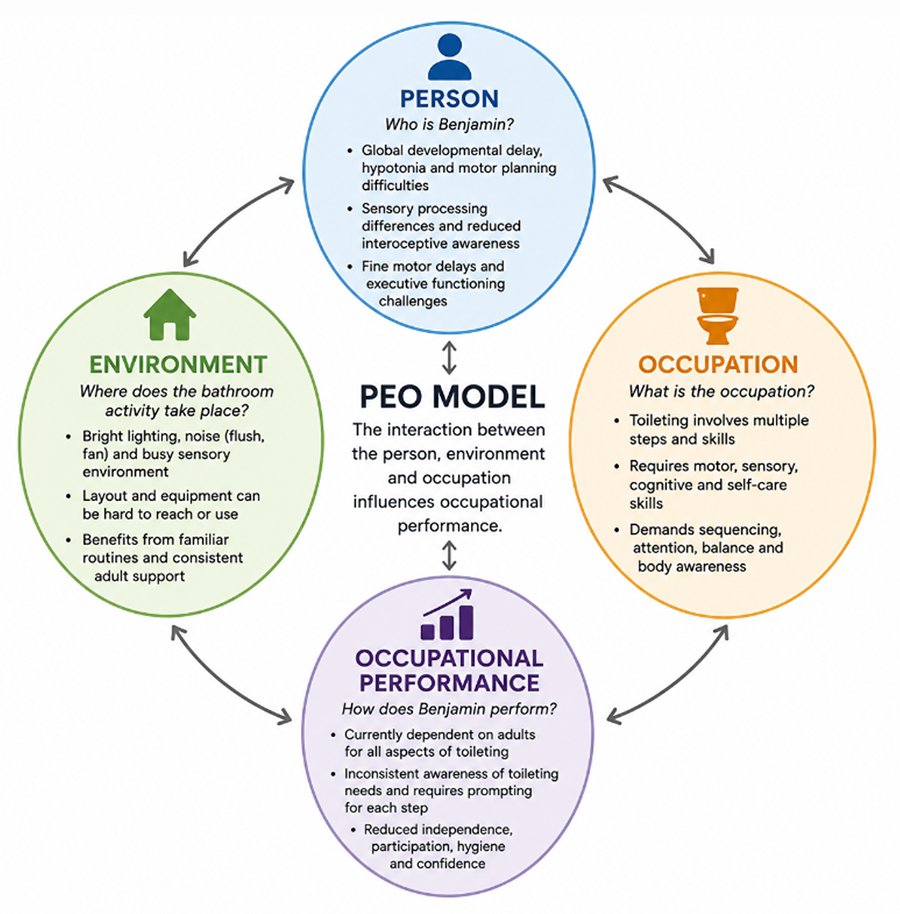
The Person–Environment–Occupation (PEO) Model provides a useful framework for understanding Benjamin’s participation in bathroom occupations. Rather than viewing toileting difficulties as being solely related to Benjamin’s diagnosis, the PEO model considers how the interaction between the person, the environment and the occupation influences occupational performance.
Person
Benjamin presents with a complex combination of developmental, sensory and motor differences that significantly influence his participation in bathroom routines. Reduced postural control, hypotonia, poor balance and body awareness affect his ability to safely transfer, maintain sitting balance, reach for toilet paper and complete hygiene tasks independently. Fine motor difficulties further impact clothing management, manipulation of toiletries and effective handwashing.
Benjamin’s sensory profile is characterised by reduced sensory registration alongside increased sensory sensitivity and avoidance. These differences influence how he interprets tactile, proprioceptive and auditory sensory information.
Executive functioning differences, including reduced initiation, sequencing and reliance on familiar routines, further increased dependence on adults to guide each stage of the toileting process. Reduced interoceptive awareness also limits Benjamin’s ability to recognise bladder and bowel signals and determine when personal hygiene has been completed effectively.
Environment
Potential environmental barriers include:
- echoes and flushing noises
- extractor fans
- limited space
- slippery flooring
- positioning of toilet paper
- inconsistent routines
- Toilet and basin height
Benjamin performs best within environments that are calm, structured and predictable. Familiar adults, visual supports and consistent routines reduce uncertainty and enable him to participate more successfully.
Occupation
Toileting is a highly complex occupation requiring the successful integration of multiple performance skills including:
- recognise internal bladder and bowel sensations,
- communicate need to use the toilet,
- navigate safely to the bathroom,
- manage clothing,
- maintain balance to remain seated and when wiping,
- complete hygiene,
- manipulate toilet paper,
- determine when he is clean,
- flush the toilet,
- wash and dry his hands.
Each step places demands on sensory processing, motor coordination, executive functioning and communication.
For Benjamin, the cumulative demands of this occupation currently exceed his abilities, resulting in dependence on caregivers.
Interaction Between the PEO Components
| Person | Environment | Occupation | Impact on occupational performance |
|---|---|---|---|
| Reduced body awareness | Limited space and toilet & basin heights | Clothing management, toileting and hand washing/self-care | Requires physical assistance |
| Hypotonia | Standard toilet height | Transfers and sustaining upright position on the toilet | Reduced balance and safety |
| Tactile sensitivity | Toilet paper, soap, clothing | Hygiene | Reluctance and dependence |
| Reduced interoception | No visual supports | Recognising toileting needs | Continues to wear nappies |
| Executive functioning | Unpredictable routines | Multi-step sequence | Requires adult prompting |
| Motor planning | Toilet paper positioned behind toilet | Wiping | Unable to complete independently |
| Communication differences | Reliance on verbal instructions | Expressing needs | Increased dependence on caregivers |
Occupational Therapy Clinical Reasoning
The PEO analysis demonstrates that Benjamin’s difficulties with bathroom participation arises from a mismatch between Benjamin’s abilities, the characteristics of the bathroom environment and the complex demands of toileting as an occupation.
From an occupational therapy perspective, intervention should therefore focus on improving the fit between these components rather than attempting to change the individual alone. Environmental modifications, sensory-informed strategies, structured routines and visual supports should be considered to reduce unnecessary barriers and support successful participation.
Where environmental adaptations alone are insufficient to achieve the desired level of independence, assistive technology may further optimise occupational performance by reducing the physical, sensory and cognitive demands associated with personal hygiene. This enables occupational therapists to support not only functional independence, but also autonomy, dignity and participation in meaningful everyday occupations.
Goals
Following assessment, the following goals were collaboratively identified:
Long-Term Goal
To maximise Benjamin’s independence, participation and dignity during toileting and other self-care occupations by improving the fit between his abilities, the bathroom environment and the demands of the task.
Short-Term Goals
- Improve Benjamin’s participation within the toileting routine.
- Increase awareness of bathroom routines through visual supports and predictable sequencing.
- Improve postural stability and body awareness during toileting activities.
- Develop greater independence with clothing management.
- Increase participation in handwashing and hygiene routines.
- Reduce sensory and physical barriers within the bathroom environment.
Intervention
Occupational therapy intervention aimed to improve the fit between Benjamin (Person), the bathroom environment (Environment) and the occupational demands of toileting (Occupation). Intervention focused on reducing environmental barriers, supporting sensory regulation, simplifying task demands and gradually increasing Benjamin’s participation and independence within bathroom routines.
Environmental Adaptations
The bathroom environment was considered an important area for intervention, as reducing unnecessary sensory and physical barriers may improve Benjamin’s participation before introducing specialist equipment.
- Reduce visual clutter to create a calm and predictable environment.
- Minimise background noise by limiting extractor fan use, when appropriate; and preparing Benjamin before flushing the toilet. Add softenings to the bathroom to reduce echo, e.g. towels, bathmats etc.
- Position frequently used items (toilet paper, soap and towels) within Benjamin’s reach to minimise unnecessary movement and improve independence.
- Consider non-slip flooring or supportive mats to improve confidence and safety.
- Consider supportive seating, toilet height or foot support, e.g. step, to improve postural stability during toileting.
Sensory Supports
- Introduce preferred calming sensory input before toileting, if required (e.g. deep pressure such as ball squashes, heavy work activities such as animal walks and music).
- Use familiar toiletries and towels to reduce tactile uncertainty.
- Prepare Benjamin, before potentially aversive sensory experiences, such as flushing the toilet.
- Allow additional processing time before expecting responses.
Routine Supports
- Develop a consistent toileting routine at home and school.
- Introduce a visual toileting sequence using photographs or symbols.
- Use “First-Then” language and / or “now and next” boards, to support understanding.
- Break the toileting routine into smaller, achievable steps.
- Maintain consistent language and adult prompts across settings.
Family Education
- Understanding Benjamin’s sensory profile.
- Supporting early interoceptive awareness.
- Using consistent prompts and routines.
- Grading assistance to maximise independence.
School Recommendations
- Maintain a consistent toileting schedule.
- Use the same visual supports used at home.
- Reduce unnecessary sensory demands within the school bathroom, where possible.
- Identify a familiar member of staff to support toileting routines.
- Allow additional transition time before toileting.
Assistive Technology
Despite environmental adaptations and structured intervention, Benjamin is likely to continue experiencing challenges related to personal hygiene, body awareness, balance and motor planning.
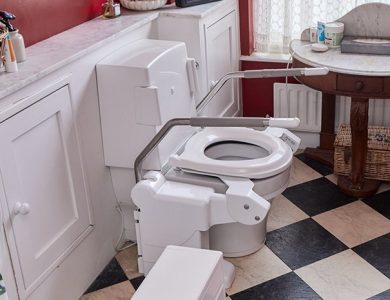
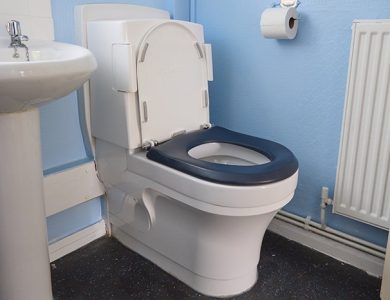
Adapted or adjustable toilets and basins may could be considered as options following comprehensive occupational therapy assessment, where increased independence in hygiene remains an identified goal.
Evaluating the role of Closomat
Benjamin’s intervention initially focused on environmental adaptations, sensory-informed strategies and structured routines. These approaches aimed to reduce sensory demands, improve predictability and maximise his participation within the bathroom environment. Whilst these interventions reduced some barriers, challenges remained that continued to impact his independence and reliance on caregivers.
Assistive technology should be considered, where ongoing barriers continue to limit occupational performance despite appropriate environmental modifications and skill development.
✔ Reducing the physical demands of wiping.
✔ Simplifying the final stages of the toileting routine.
✔ Reducing the need for complex reaching, trunk rotation and balance during hygiene.
✔ Reducing caregiver involvement in intimate personal care.
✔ Supporting Benjamin to participate more actively within the toileting routine rather than relying entirely on adult assistance.
✔ Handwashing and self-care independence for greater hygiene and personal autonomy.
Sensory Considerations
Although an adapted toilet such as a ‘wash-and-dry toilet’, may reduce some barriers, it also introduces new sensory experiences that should be considered during assessment.
Water Sensation
Warm water may feel calming and reduce discomfort associated with wiping for some individuals. For others, the sensation may initially feel unfamiliar or overwhelming and require gradual introduction.
Drying Function
The sensation of warm air may be tolerated differently depending on the individual’s tactile processing profile and may require desensitisation.
Sound
The operational noise of the toilet may increase auditory load for individuals who are sensitive to unexpected sounds. Preparation, gradual familiarisation and predictability may reduce anxiety.
Individual Assessment
Not every individual will benefit from the same equipment. Occupational therapists should evaluate sensory preferences, functional goals, cognitive abilities, family priorities and environmental context before recommending assistive technology.
Reflection
This case highlights the complexity of bathroom participation for children with autism with developmental, sensory and motor differences. Benjamin’s assessment demonstrated that successful participation relies on the integration of sensory processing, interoception, motor skills, executive functioning, communication and environmental supports.
By using the Person–Environment–Occupation (PEO) model, it became possible to understand that Benjamin’s challenges were not solely related to his diagnosis but resulted from the interaction between his abilities, the bathroom environment and the occupational demands of toileting.
What Worked Well
A holistic, person-centred assessment enabled intervention to focus on Benjamin’s strengths whilst identifying the barriers affecting his independence. Rather than concentrating solely on toileting skills, intervention addressed the wider factors influencing occupational performance, including sensory processing, postural control, body awareness, environmental demands and family routines.
Environmental adaptations, visual supports and structured routines helped to reduce cognitive and sensory demands, creating a calmer and more predictable bathroom experience. Close collaboration with Benjamin’s parents and school staff also promoted consistency across settings, increasing opportunities for learning and participation throughout the day.
Importantly, intervention focused on increasing Benjamin’s participation rather than expecting complete independence immediately. Recognising and celebrating small functional achievements supported motivation and helped build confidence for both Benjamin and his caregivers.
This case also highlights the importance of adopting a neuroaffirming approach to practice. Rather than expecting Benjamin to adapt to an environment that is not designed to meet his needs, occupational therapy seeks to modify the environment and the occupation to create the best possible fit for the individual. Through this approach, meaningful gains in participation, confidence and independence can be achieved, even when complete independence is not immediately attainable.