Our September newsletter, with insights on Multiple Sclerosis and bathroom independence.

Multiple Sclerosis (MS) is a chronic, progressive and unpredictable neurological condition affecting more than 130,000 people in the UK. With symptoms that include fatigue, heat sensitivity, reduced mobility, cognitive changes, and bladder/bowel dysfunction, even essential daily routines like toileting can become complex, exhausting, and unsafe.
The MS Society defines three types of MS
Relapse-Remitting (RRMS): This is the most common type, where individuals experience periods of new or worsening symptoms (relapses) followed by periods of recovery or remission.
Primary Progressive (PPMS): In PPMS, symptoms gradually worse from the onset, with no distinct periods of remission. It affects about 10- 15% of people diagnosed with MS.
Secondary Progressive (SPMS): SPMS often develops after RRMS, with a steady worsening of symptoms and disability, regardless of whether there are periods of relapse.
The MS Society makes it clear that MS affects everyone differently, and even individuals with the same type of MS may experience symptoms and disease progression in unique ways.
You can read more about each condition here
In collaboration with The Occupational Therapy Service, we’ve brought together six design considerations that can make a meaningful difference for people with MS in the bathroom environment.
Key design considerations for MS specific bathroom needs
1. Accessibility
- Level access showering
- Space for mobility aids or wheelchairs
- Wide, easy-to-operate doors (preferably sliding/outward)
2. Fatigue Management
- Compact layouts to reduce walking distance
- Seated shower options
- Wall-mounted or powered support fixtures
3. Temperature Control
- Level access showering
- Space for mobility aids or wheelchairs
- Wide, easy-to-operate doors (preferably sliding/outward)
4. Safety
- Level access showering
- Space for mobility aids or wheelchairs
- Wide, easy-to-operate doors (preferably sliding/outward)
5. Cognitive and Sensory Support
- Level access showering
- Space for mobility aids or wheelchairs
- Wide, easy-to-operate doors (preferably sliding/outward)
6. Specialist sanitation
- Level access showering
- Space for mobility aids or wheelchairs
- Wide, easy-to-operate doors (preferably sliding/outward)
By following these six design principles will help Occupational Therapists (OTs) meet the physical, cognitive and sensory needs of individuals with MS. Through focusing on usercentric design, OTs can ensure that the bathroom remains a supportive space throughout every stage of the condition.
Looking to deepen your knowledge of MS, hear lived experience and make a difference in
your community?
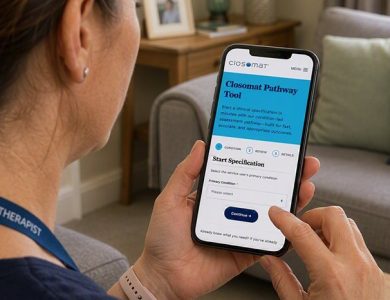
What happens if your client’s Wash and Dry Toilet breaks down?
This is an important question which is not always asked at the right time. The best time to ask it is when the assessment has taken place and a specification is being put together as part of the DFG process.
This is because a Closomat Care Plan can be included in the funding arrangements, meaning that all future servicing and repairs will be handled and covered by us, the manufacturer. So if there is ever a problem of any kind the client can call us, not you.
The Closomat Care Plan provides comprehensive cover and complete peace of mind. It requires no user intervention whatsoever – for example, there is no requirement for the client to carry out maintenance tasks without which the warranty would be invalidated, like some other manufacturers – especially important for clients who may lack the manual dexterity to do it themselves.
Without a service plan in place, what happens if things go wrong? What are the implications for the client?
So, when specifying a toilet to meet the needs of a client, keep in mind the question, “What happens if the toilet breaks down?”. By including a Closomat Care Plan in the initial funding, you are ensuring any potential future problems will be dealt with by us, thus protecting your client from risk.
To find out more about how our Care Plan can keep your clients covered if something goes wrong, speak to your local Closomat representative, who can be found here: our sales team

Supporting individuals with MS through housing design
After overwhelming positive feedback from previous sessions, we’re excited to announce the return of a new webinar series for 2025/26.
We are rolling out a 4-part series over the next 12 months, giving attendees the opportunity to build a deeper, more sustained understanding of key conditions and the practical ways Occupational Therapists (OTs) can enhance quality of life for those living with the conditions.
- MS: Supporting the person through housing design – September 2025
- Cerebral Palsy and the built environment: A reflection on ‘accessibility’ – November 2025
- UTIs: the impact of toilet hygiene on health and wellbeing – March 2026
- Exploring the ergonomics of toileting and why it matters – June 2026
The first one in the series focuses on Multiple Sclerosis (MS) and the role of housing design in supporting daily living
Learning outcomes, include:
- Explore the aetiology and epidemiology of MS
- Reflect on functional and occupational impacts of the condition
- Consider how home modifications have impacted the life of someone with MS
CPD Accredited: Participation in the webinar contributes to your Continuing Professional Development (CPD) requirements
This webinar is ideal for:
- Occupational Therapists
- Housing professionals
- Students and trainees in healthcare and social work
- Anyone with a passion for inclusive and accessible living environments
Whether you’re new to the topic or returning to refresh and extend your knowledge, this
series will offer both inspiration and practical tools to help you make a meaningful difference.
Case Study: Matthew – Living with MS and restoring independence with Closomat
Background
Matthew Davidson, a former assistant head teacher and father of one, lived an active life filled with work, football and family. That changed when unexplained collapses and overwhelming fatigue led to a diagnosis of Relapsing Remitting Multiple Sclerosis (RRMS).
The Challenge
Matthew found that living with MS means that even the simplest daily tasks can become overwhelming, as the constant fatigue and severely limited energy leaves him unable to manage much more than the basics.
Every activity, no matter how small, requires careful planning and comes at the cost of needing long periods of rest and recovery. He has to structure his week with built-in rest days, making sacrifices in order to save his energy for the things that truly matter to him – going to watch NUFC and spending quality time with his daughter.
MS brought a wide range of symptoms that affected Matthew’s independence:
- Severe fatigue: Requiring strict planning and rest around even small activities.
- Visual impairment: Making unfamiliar environments challenging to navigate.
- Reduced strength and mobility: Often relying on a wheelchair and needing assistance to stand even for short periods of time.
- Heat sensitivity: Dramatically limiting his ability to carry out daily self-care.
The Solution
As his condition progressed, Matthew found his home and other spaces and activities increasingly inaccessible. Stairs and a standard bathroom setup made day-to-day life difficult and reduced his privacy.
To help Matthew maintain independence at home, key adaptations were introduced:
- Stair lift: To support safe navigation of his home.
- Wash and Dry Toilet: The installation of a Closomat Palma Vita Toilet, to maintain independence in the bathroom.
- Bed stick: To pull himself up when his fatigue makes the act of getting out of bed a challenge.
The Impact of Closomat
The Closomat Palma Vita became a turning point in Matthew’s daily life, and he describes, in the accompanying video, the impact of a Wash and Dry Toilet on his daily life.
Matthew adds:
I’ve got a Closomat toilet which is amazing. It’s honestly one of the best things I’ve ever had.
Matthew’s ongoing struggle with fatigue and the need to self-catheter often led to recurring urinary tract infections (UTIs). Since installing a Wash and Dry Toilet, Matthew now benefits from:
- Independence: No longer relying on others for assistance in the bathroom.
- Hygiene & comfort: Hands-free washing and drying ensured dignity and confidence.
- Energy conservation: Reducing the physical and cognitive effort needed for toileting.
- Emotional wellbeing: Having privacy restored brought back a sense of normality.
Thoughtful bathroom design
For individuals with MS and similar conditions, the Closomat Palma Vita offers independence, comfort and dignity. Matthew’s experience highlights why occupational therapists, healthcare professionals and families should consider adaptive bathroom solutions as a vital part of long-term care planning.
By choosing the Closomat Palma Vita, Matthew regained the ability to manage one of life’s most personal needs on his own terms.