Ceiling Track Hoists

How it works

A ceiling track hoist allows carers to easily transfer clients from one location to another.
It is a flexible system that can be designed specifically for the clients needs and installed into most situations.

  • Room-to-room transfers.
  • Full room coverage.
  • Can be installed into most environments.
  • Easy and safe to operate.

 
Ceiling hoist in a children's accessible bathroom with colourful bunting

  • Available for lifts up to 200kg/31St.
  • Can pick client up from the floor.
  • ‘Soft start/soft stop’.
  • Remote control.
  • Rechargeable batteries.
  • Emergency lowering.
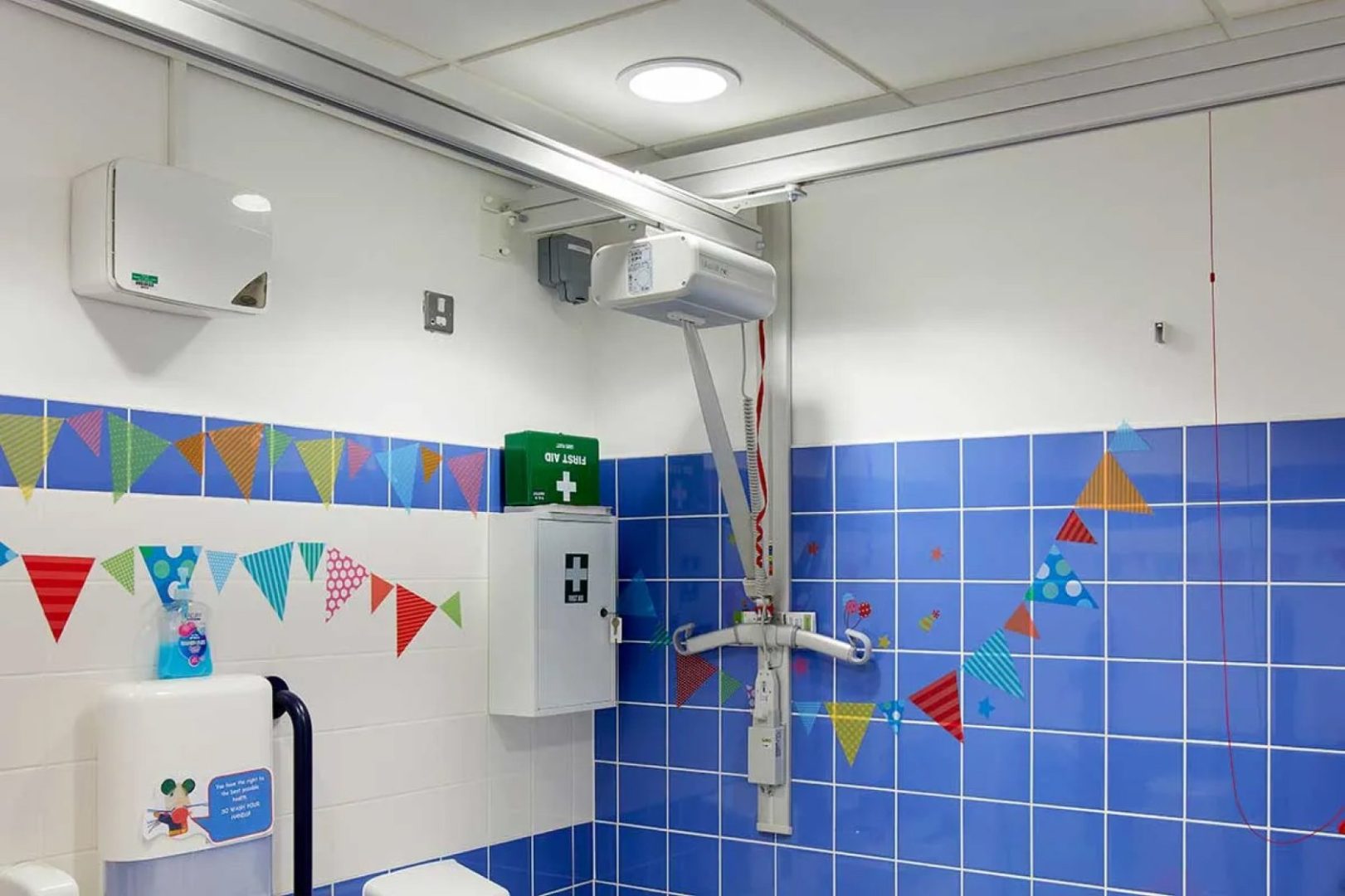
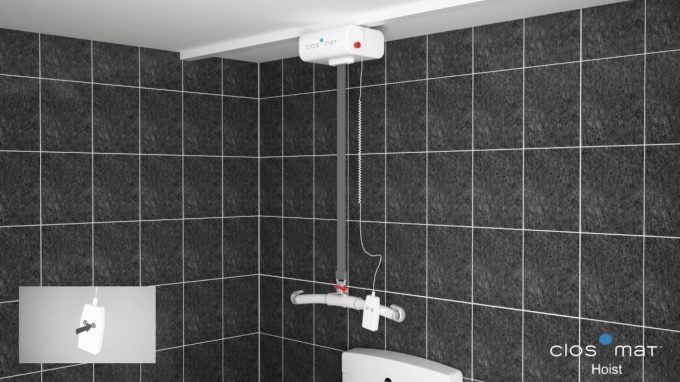
Ceiling hoist and hand control above a toilet in a tiled bathroom

Considerations when hoisting a child in a bathroom

Firstly, assess exactly what the hoist is needed for, there’s some questions below, then use the guide to determine which is the most suitable hoist to meet the child’s needs.

Task

QUESTION ANSWER
What facilities does the child need to access in the bathroom? Bath, shower chair, shower trolley, changing table, toilet?
How will the child get into the bathroom? Wheeled in their wheelchair, hoisting from their bedroom?
Are there any medical issues to consider? Diagnosis, continence, sensory difficulties around movement/noise?
Who will be caring for them in the bathroom? Parents, formal carers? What are their capabilities?

Hoists

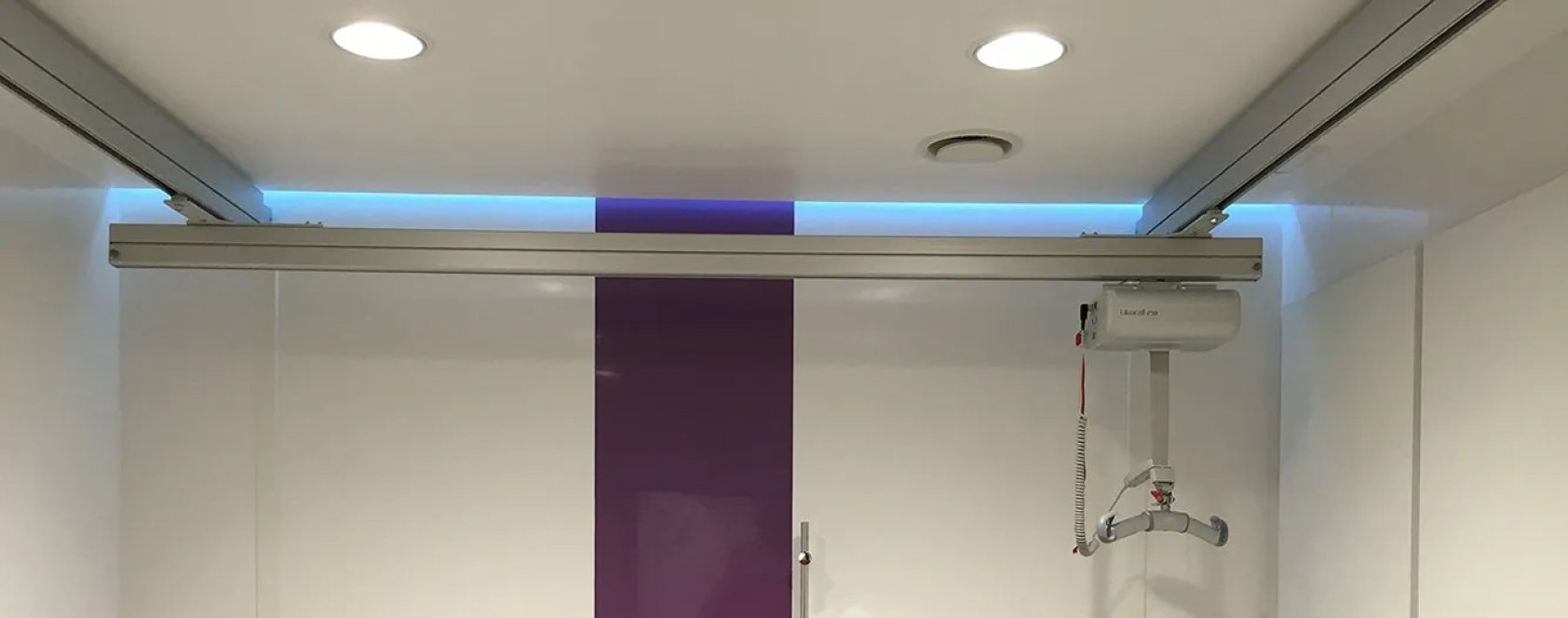
Ceiling track hoist running across a bathroom ceiling above the shower
 
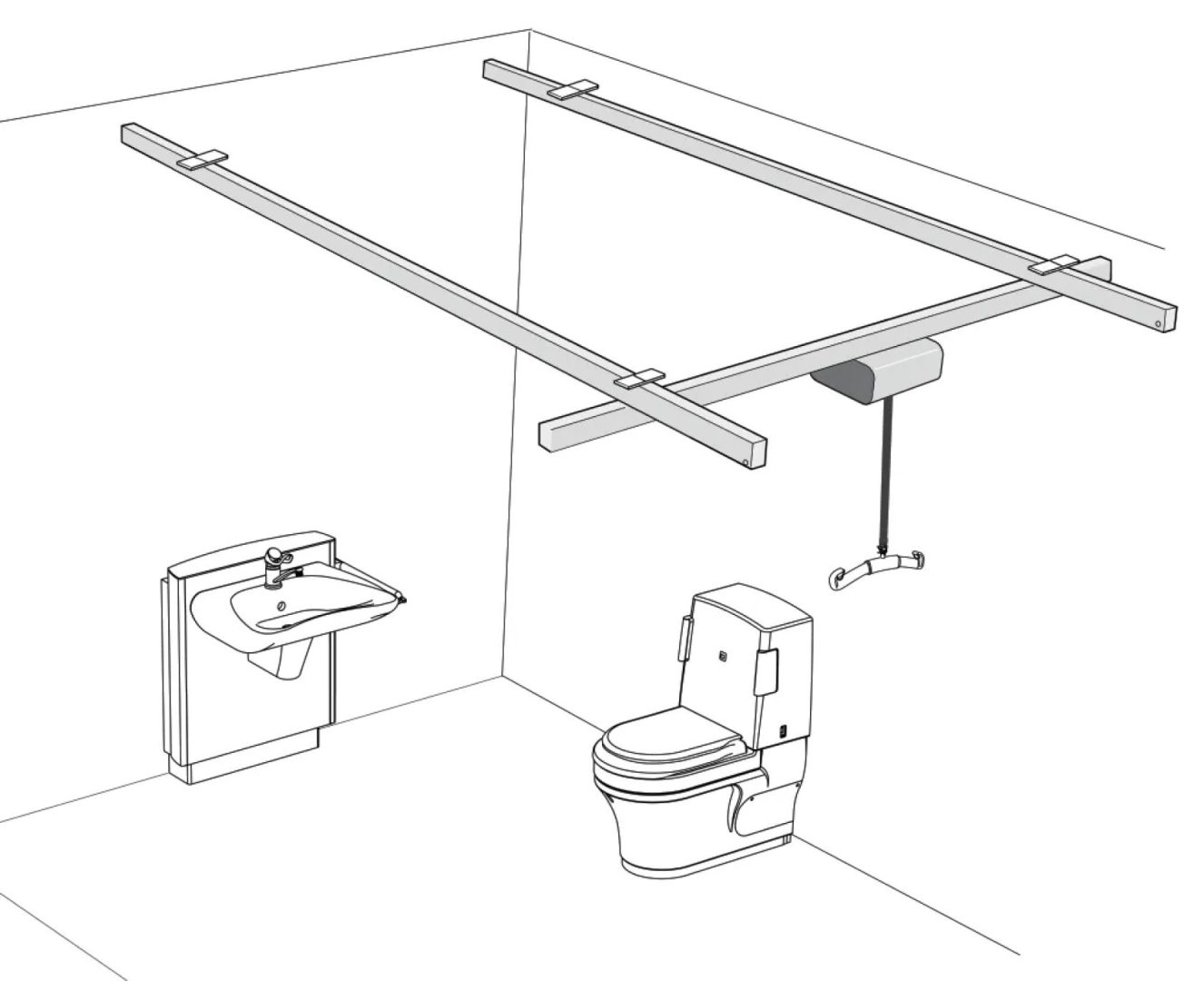
H or XY ceiling track

  • Covers the entire bathroom – best for multiple transfers and access to numerous facilities
  • Future Proofing- cost saving in the long term as it provides flexibility
  • A single carer can use
  • Doesn’t take up floor space in small bathrooms
  • Can be used my multiple occupants with different needs

 
Diagram of a ceiling track hoist covering the basin and toilet
 
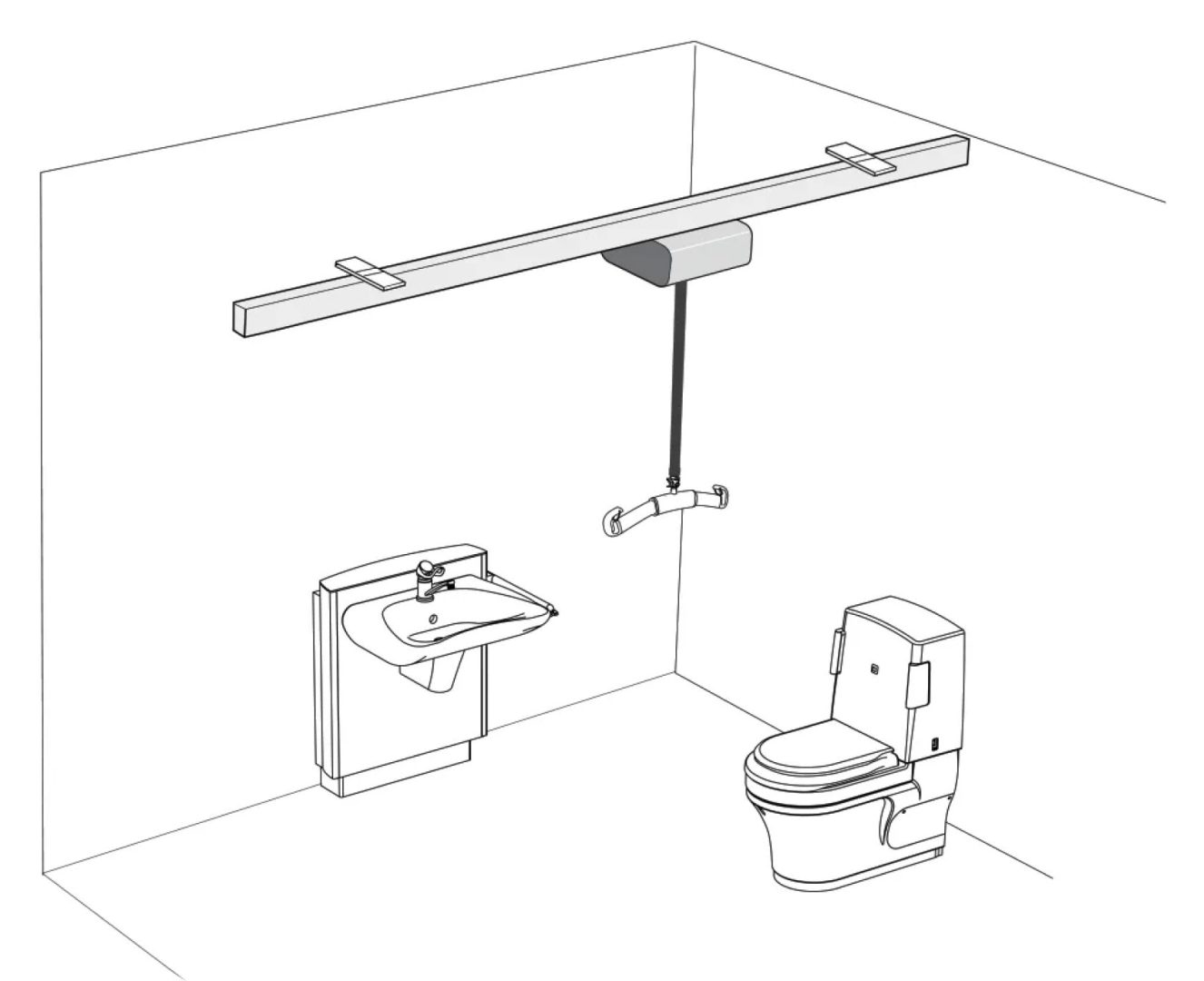
Single track

  • Best used for one transfer e.g., wheelchair to bath
  • A single carer can use
  • Cheaper that an XY track but does not offer flexibility or futureproofing
  • Doesn’t take up floor space in small bathrooms

 
Diagram of a single ceiling track running between the basin and toilet
 
Mobile hoist

  • Could be used if only needed for a short period of time
  • Limited transfers e.g., cannot transfer into a standard bath
  • Takes up a lot of floor space in a small bathroom
  • Risk assessment often indicates two carers to use, one to guide the child, one to operate the hoist, although this is not necessitated by legislation

Other hoist considerations

Transition gates

If the hoist is required to move between the bathroom and another room, use transition gates as part of the hoisting system. Consider the door head as this will need to be removed to make space for the hoist to travel.

Traverse

Manual traverse – the carer has to physically move the child along the track, giving them total control over speed and direction of movement.

Powered traverse – the hoist is moved electronically from the handset, ideal for smooth movement.

Spreader bars

Smaller spreader bars are necessary when hosting children as they allow the sling to support the child more securely, whereas larger spreader bars distort the shape of the sling, affecting positioning and safety.
Ceiling

Structure

Ceilings need to be structurally strong enough to take the weight of the hoist equipment and the child being hoisted.

  • Joist size- minimum 6-inch x 2 inch (140mm x 38mm)
  • Ceiling height – floor to ceiling minimum 2.4m

Shower curtains and light fittings

If a H or XY track is being fitted:

  • all light fittings need to be flush to the ceiling
  • ceiling mounted shower curtains need to be removed, alternatives are wall mounted shower rails, glass screens or wet rooms

Training

And finally, provide a comprehensive moving and handling plan to ensure both the child and parents or carers are kept safe during hoisting, photos are always a great addition to a plan.