If a user is beginning to struggle with sit-to-stand transfers but can still manage hygiene, Easylet provides powered lift assistance to restore safety and independence. It reduces falls risk, lowers physical effort, and delays the need for more complex interventions.
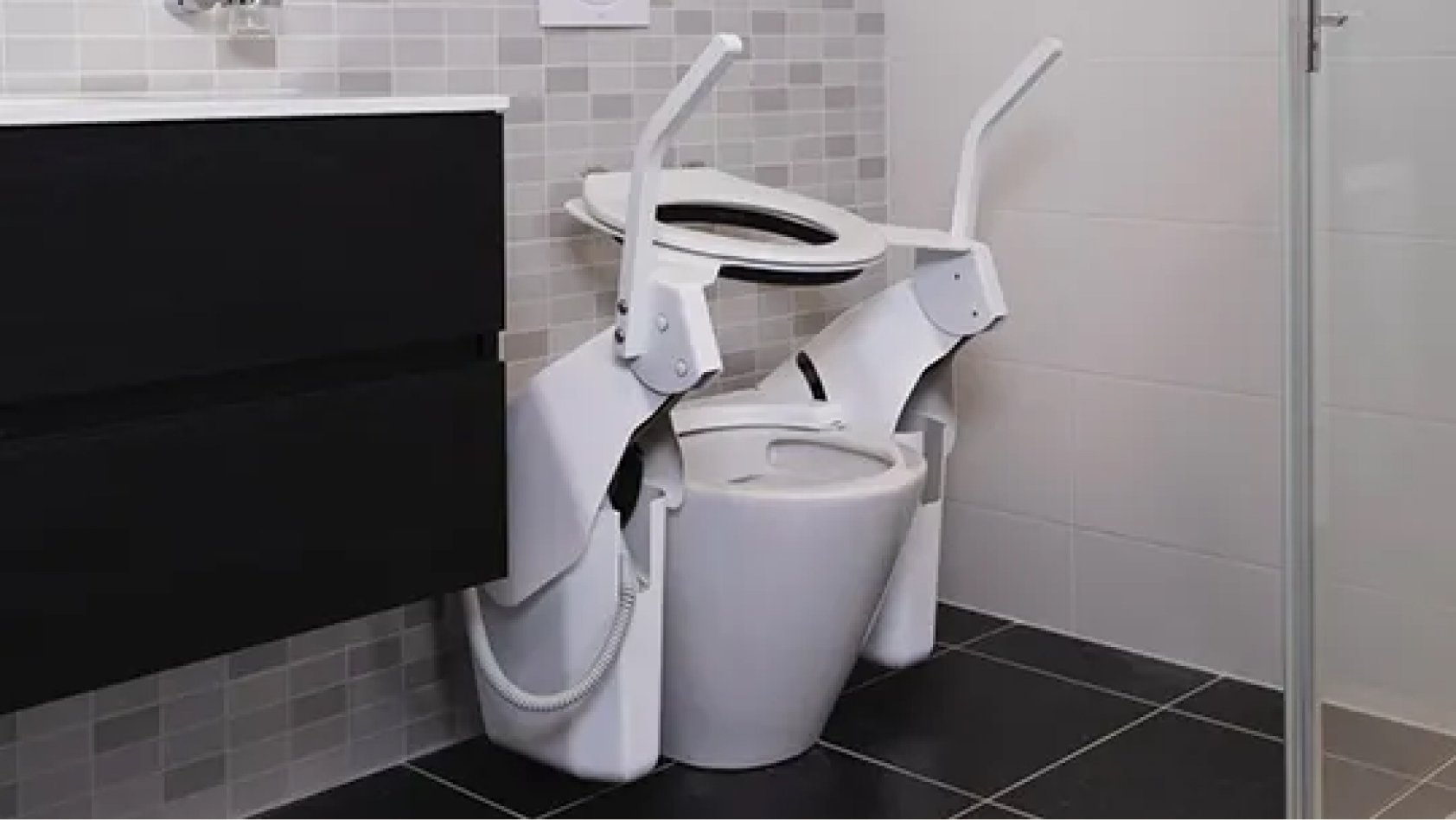
Easylet Toilet Lift
When standing from the toilet becomes difficult, how do you prevent risk before it escalates?
When does transfer difficulty first become a problem?
Toileting independence often starts to decline gradually rather than suddenly.
Can the individual still stand from the toilet safely, consistently, and without excessive effort?
Early indicators of difficulty include:
- Increased effort or time required to stand
- Reduced lower limb strength
- Fatigue during repeated transfers
- Early signs of balance instability
- Occasional reliance on support or assistance
At this stage, the individual may still complete the full task, but the risk is increasing.
How do you stabilise transfers early, before they become unsafe or carer-dependent?
Why intervene at the early stage of decline?
If transfer difficulty is not addressed, it typically progresses.
You may see:
- Increased falls or near-misses
- Greater reliance on carers
- Avoidance of toileting due to effort or fear
- Escalation to more complex and restrictive interventions
Early intervention allows you to:
- Maintain independence for longer
- Reduce risk before it becomes acute
- Introduce support without over-prescribing
Easylet is designed specifically for this stage, where the goal is prevention rather than recovery.
What changes when you introduce a powered toilet lift?
Easylet replaces a physically demanding movement with a controlled, assisted one.
Can the user manage this transfer unaided?
How can we make this movement safe, consistent, and repeatable?
This removes variability from the most demanding part of the task while preserving independence.
What outcomes should you expect?
As with any OT intervention, outcomes must be measurable and meaningful.
Easylet enables:
- Safer sit-to-stand and stand-to-sit transitions
- Reduced falls risk during transfers
- Lower physical strain for the user
- Reduced need for early-stage carer involvement
- Continued independence in toileting routines
The result is sustained occupational performance, not just short-term assistance.
How does Easylet support safe transfers?
Easylet integrates a powered lifting mechanism into the toilet seat, guiding the user through the movement.
It works by:
- Gently raising and lowering the user
- Providing a smooth, controlled motion
- Reducing the effort required at the most demanding phase
This creates a predictable transfer that supports confidence and reduces instability.
Which movement pattern is most appropriate?
Not all transfer difficulties are the same. Matching the movement to the user is essential.
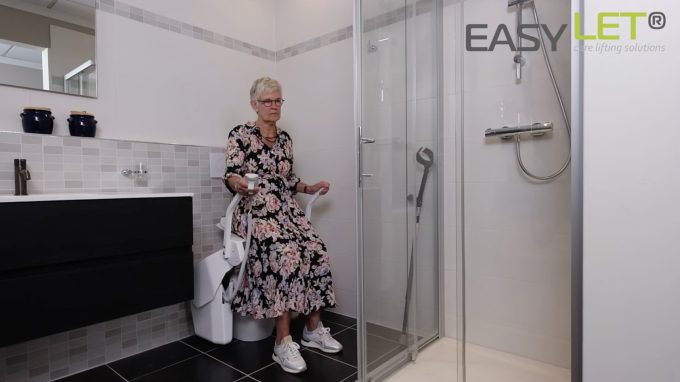
When is a vertical lift suitable?
Choose a vertical lift when the user maintains reasonable control and balance.
Ask:
- Can they stabilise themselves during movement?
- Do they prefer a steady, upright transition?
A vertical lift:
- Raises the seat in a straight motion
- Maintains a level position throughout
- Supports controlled, deliberate transfers
Best suited to users with:
- Good postural control
- Stable movement patterns
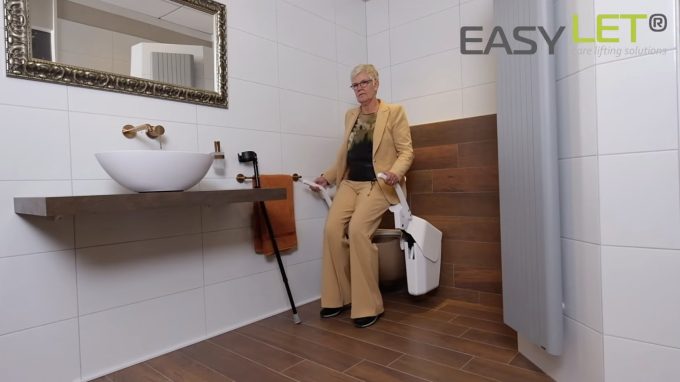
When is a tilting lift more effective?
Choose a tilting lift when the user struggles to initiate standing.
Ask:
- Do they lack forward momentum?
- Do they fatigue or hesitate during movement?
A tilting lift:
- Introduces a forward tilt before rising
- Supports a more natural sit-to-stand pattern
- Reduces the effort required to initiate movement
Best suited to users with:
- Reduced lower limb strength
- Early neurological or fatigue-related conditions
Which users benefit most from Easylet?
Easylet is typically specified when decline is emerging but independence is still achievable.
Common presentations include:
- Age-related frailty
- Early-stage Parkinson’s disease
- Mild to moderate multiple sclerosis
- Post-hospital rehabilitation
- Arthritis affecting lower limb function
- General mobility decline
In each case, the shared challenge is not hygiene, but safe and sustainable transfers.
How does Easylet fit into the wider toileting pathway?
A key principle in OT specification is matching intervention to level of need.
Easylet sits at the preventative stage:
1
Early transfer difficulty
2
Easylet
1
Hygiene requires intervention
2
Palma Vita
1
Complex or high-risk transfers
2
Aerolet
It allows you to intervene early without prematurely moving to more complex solutions.
What are the practical advantages in the home environment?
Easylet is designed to deliver clinical outcomes without major environmental change.
It offers:
- Compatibility with most standard toilets
- Straightforward installation without major adaptation
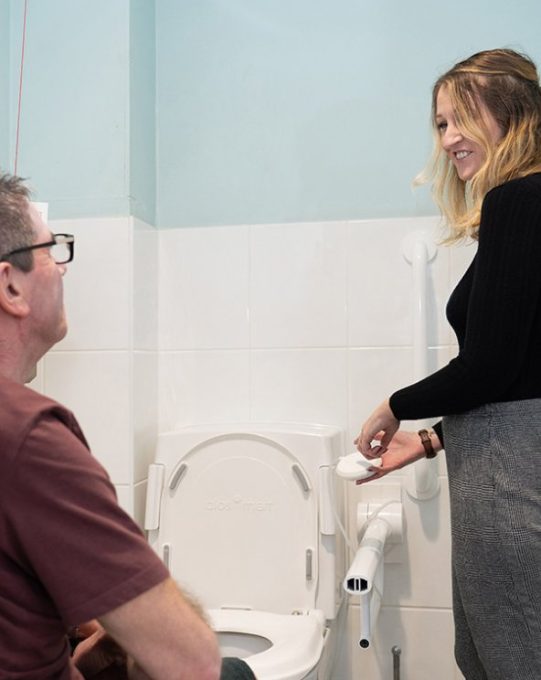
- Optional remote control for ease of use
- Battery back-up to maintain function during power loss
This makes it suitable for early intervention in both domestic and care settings.
How should you assess suitability?
Effective specification begins with identifying early risk.
Focus on:
Transfer ability
Is the user beginning to struggle or compensate during sit-to-stand?
Strength and fatigue
Can they repeat transfers safely over the course of a day?
Risk indicators
Are there early falls, near-misses, or signs of instability?
Future progression
Is the condition likely to deteriorate, requiring a staged approach?
Easylet is most effective when introduced at the point where risk is emerging, not established.
Why choose Easylet?
Easylet supports a more proactive approach to toileting intervention.
It allows you to:
- Prevent escalation of risk
- Maintain independence without over-prescribing
- Introduce support in a proportionate way
- Create a clear progression route if needs increase
This makes it a clinically appropriate choice for early-stage intervention.
What should you do next?
If transfer difficulty is developing, the priority is to match support to the user’s movement and level of need.
Determine the most suitable lift type and ensure the intervention aligns with both current ability and future progression.