Aerolet Toilet Lift

Safe, controlled transfers when sit-to-stand becomes the point of failure

Struggling to complete safe toilet transfers despite hygiene still being manageable? The Aerolet toilet lift provides powered sit-to-stand assistance, stabilising the highest-risk part of the toileting task. It reduces falls risk, removes unsafe manual lifting, and enables continued independence when transfers become unreliable.
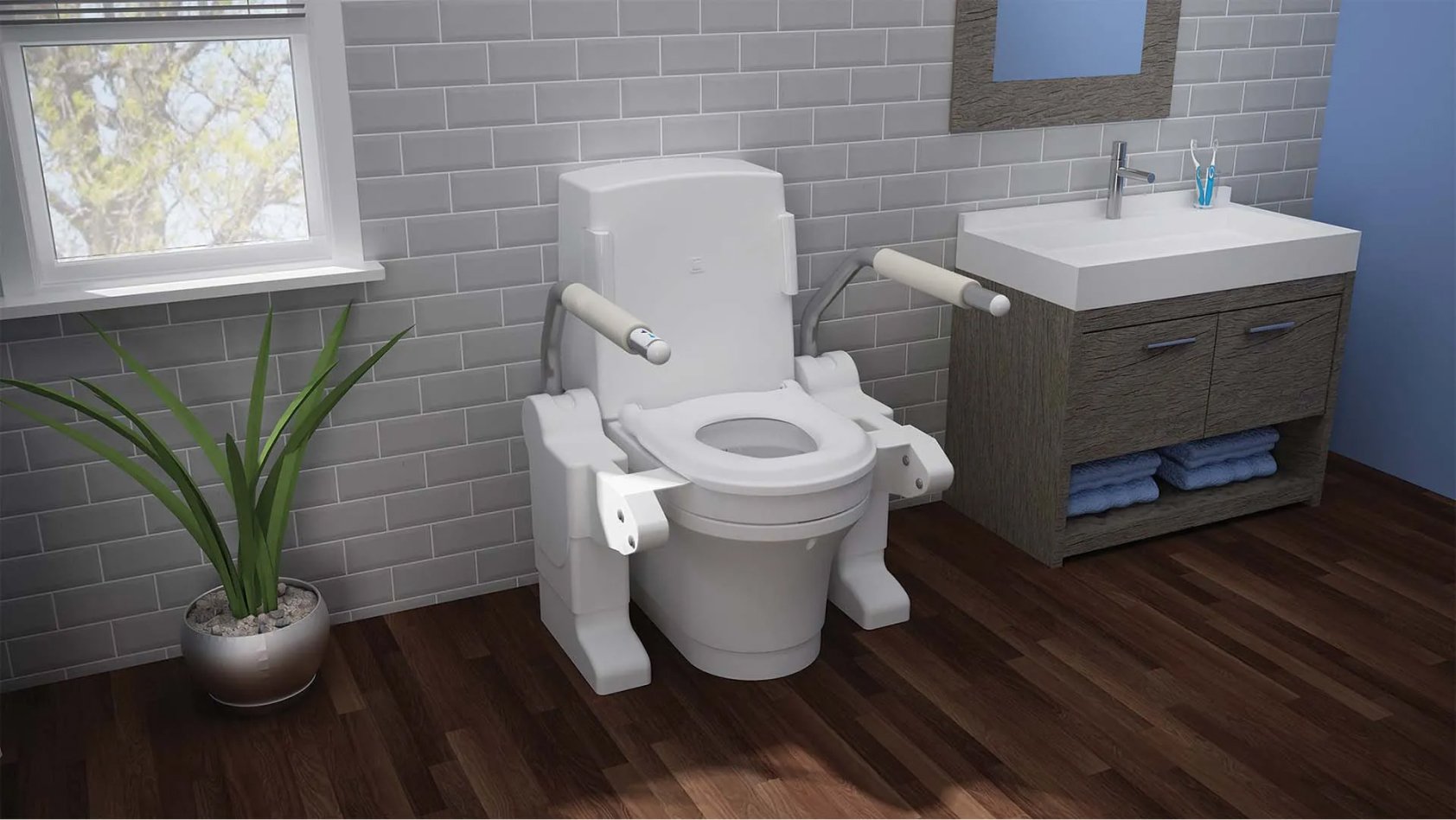
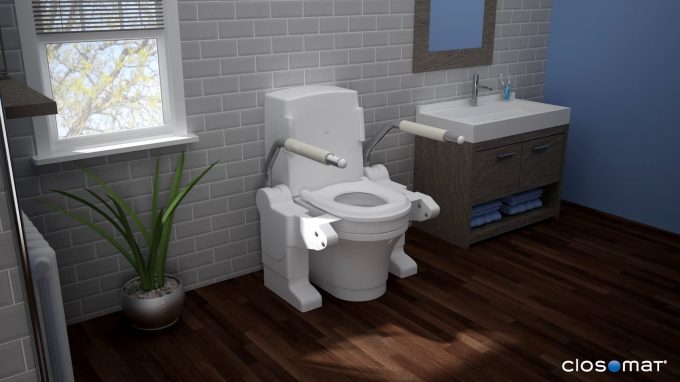
Aerolet toilet lifter with support arms beside a basin

When does toileting independence break down at the transfer stage?

Is the client safe during sit-to-stand and stand-to-sit?

Ask yourself

If the answer is no, you will typically see:

  • Difficulty rising due to reduced lower limb strength
  • Loss of balance mid-transfer
  • Falls or repeated near-misses
  • Fatigue limiting repeated attempts
  • Increasing reliance on carers to lift or steady

How do you make transfers safe, repeatable, and sustainable again?

At this point, the question shifts from adaptation to control

Why is the transfer phase the highest-risk point?

This is where:

  • Falls are most likely to occur
  • Carer intervention becomes physically demanding
  • Confidence drops, leading to reduced engagement in toileting

If left unaddressed, this often drives escalation to assisted care.

What changes when you introduce a powered toilet lift?

Can the user stand safely?

Instead of asking

How can we deliver a safe, repeatable transfer regardless of strength or fatigue?

The intervention answers

This removes variability from the highest-risk part of the task and restores confidence in completion.

What functional outcomes should you expect?

Aerolet enables:

  • Safer sit-to-stand and stand-to-sit transitions
  • Reduced falls risk during transfers
  • Lower manual handling demands on carers
  • Sustained independence in toileting (ADL)
  • Improved confidence, dignity, and willingness to engage in the task

This is not simply assistance. It is risk-controlled independence.

How does Aerolet achieve consistent transfer safety?

It works by:

  • Supporting body weight through a stable seating system
  • Replicating natural sit-to-stand biomechanics
  • Keeping the user’s feet in contact with the floor to maintain balance
  • Providing a smooth, repeatable motion for every transfer

The result is a predictable transfer that no longer depends on fluctuating physical ability.

Which movement pattern is right: vertical or tilting?

Not all transfers fail for the same reason. Choosing the wrong lift pattern can reduce effectiveness.

When is a vertical lift the right choice?

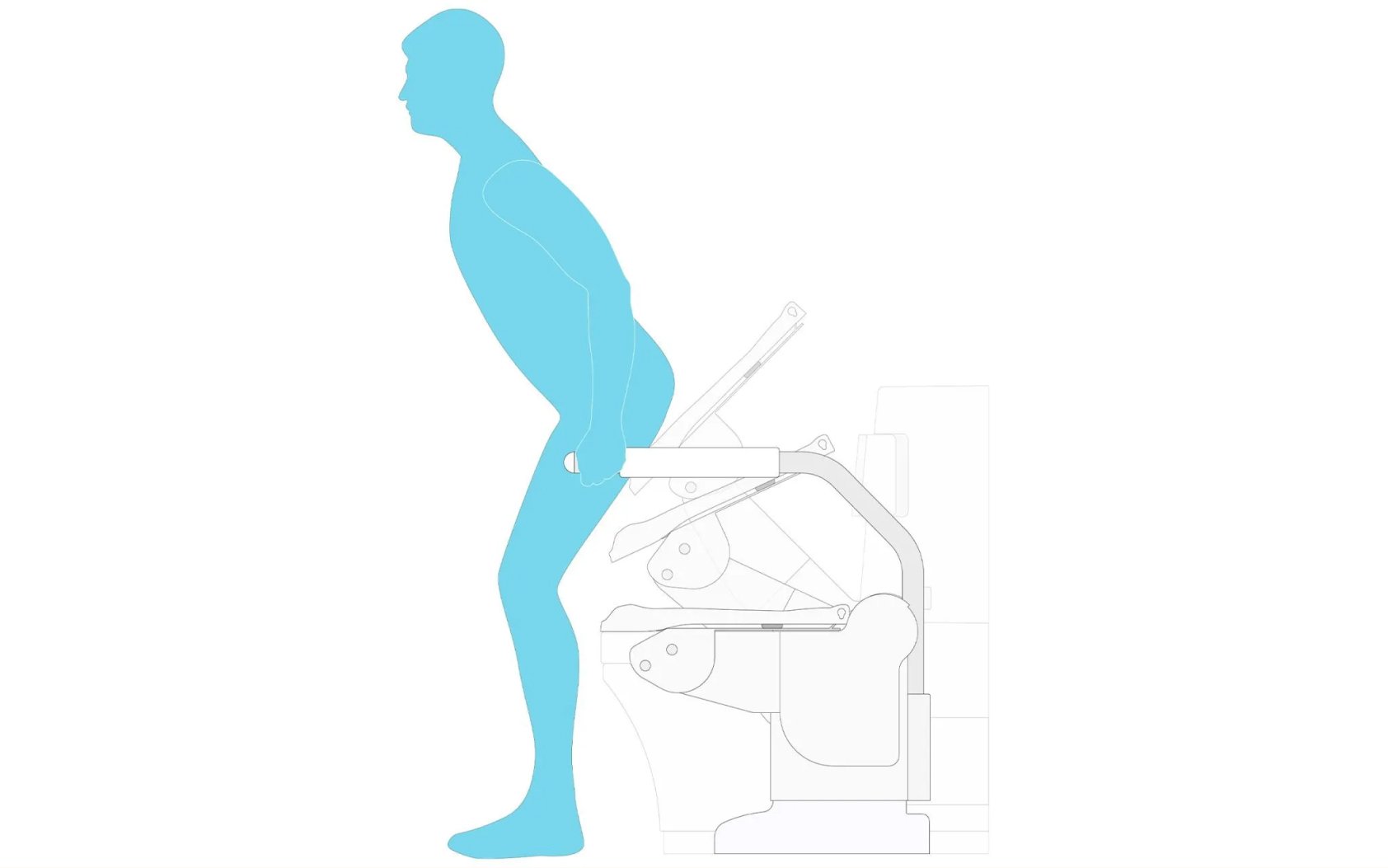
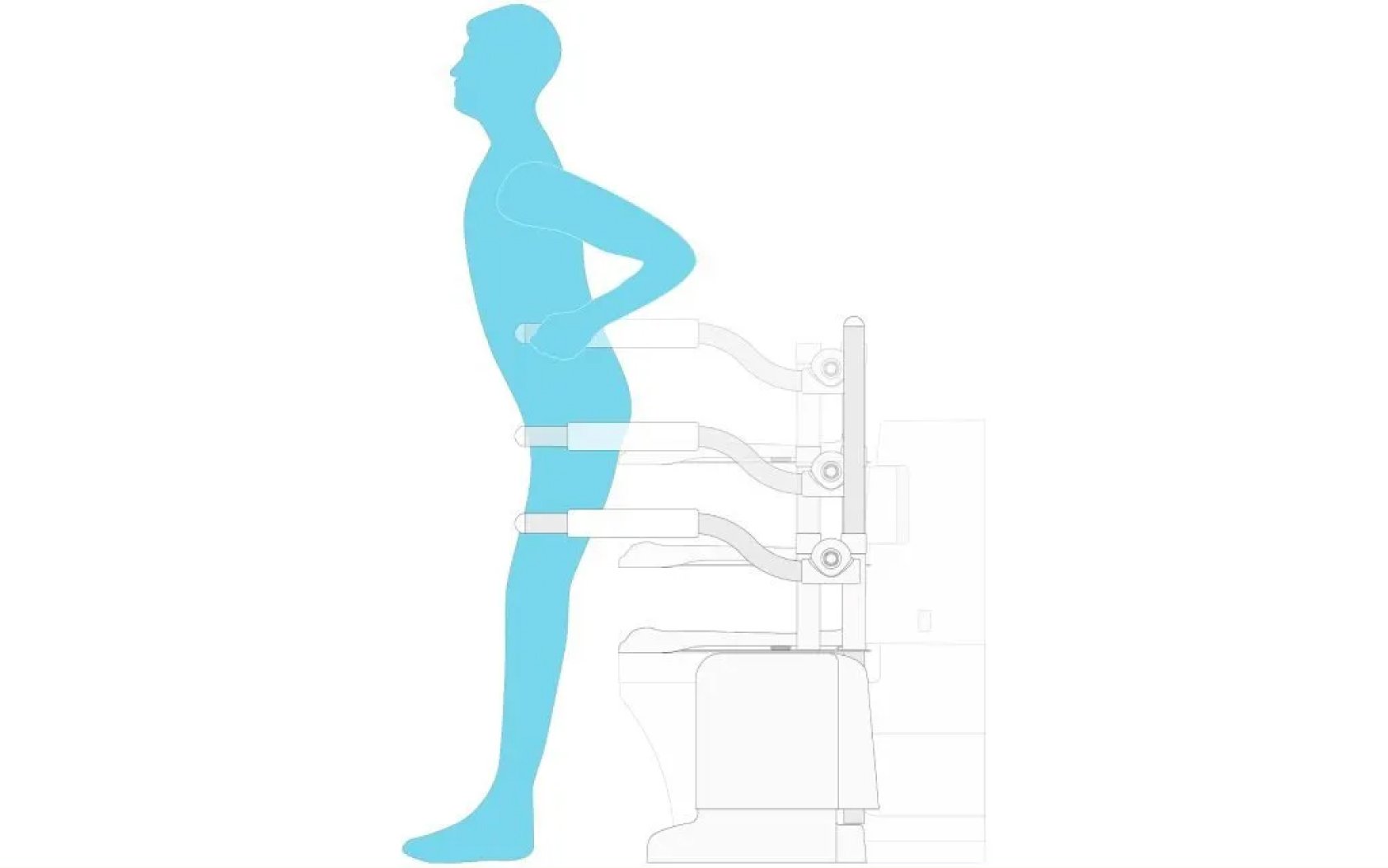
Diagram of a person standing up with the Aerolet toilet lifter raised

Ask:

  • Can they push through their arms?
  • Can they control their descent and ascent?

Vertical Aerolet provides:

  • Straight upward movement
  • Arm supports that move with the seat
  • Active engagement during transfer

Best suited to:

  • Users with upper body strength
  • Controlled, deliberate movement patterns

When is a tilting lift more appropriate?

Diagram of a person sitting down with the Aerolet toilet lifter lowering

Ask

  • Do they struggle to lean forward into standing?
  • Do they fatigue or freeze during movement?

Tilting Aerolet provides:

  • A forward tilt before lift-off
  • A more natural sit-to-stand transition
  • Stable arm supports for balance

Best suited to:

  • Reduced lower limb strength
  • Parkinson’s, stroke, or frailty
  • Fatigue-driven or inconsistent transfers

Which clinical presentations benefit most?

Common indications include:

  • Stroke with impaired balance or hemiparesis
  • Parkinson’s disease affecting initiation and posture
  • Multiple sclerosis with fatigue and variability
  • Motor neurone disease with progressive weakness
  • Frailty and age-related decline
  • Bariatric users with high transfer demand

In each case, the shared problem is not hygiene, but safe movement.

How does Aerolet work with Palma Vita?

This allows you to move from:

1

Unsafe transfer

2

Stable positioning

3

Automated hygiene

4

Automated hygiene

The result:

  • Accurate positioning for washing and drying
  • Seamless task completion from start to finish
  • Full independence across both transfer and hygiene

This is where the intervention moves beyond support and becomes a complete solution.

How do you decide if Aerolet is the right intervention?

Is the transfer unsafe, even if hygiene is still manageable?

Ask

Transfer biomechanics

  • Can the user initiate standing independently?
  • Do they require forward momentum or vertical support?

Strength and control

  • Upper limb versus lower limb reliance
  • Trunk stability and postural control

Risk exposure

  • Falls history or near-misses
  • Carer involvement and handling strain

Future trajectory

  • Will strength decline further?
  • Does the solution need to adapt over time?

Aerolet becomes appropriate when independence is still achievable, but risk is no longer acceptable.

Where does Aerolet sit in the toileting pathway?

1

Transfers unsafe, hygiene manageable

2

Easylet

1

Hygiene compromised

2

Palma Vita

1

Transfers unsafe and high-risk

2

Aerolet

Aerolet represents the highest level of transfer support, used when the consequence of failure is greatest.

Aerolet toilet lifter fitted beside a basin in a bathroom
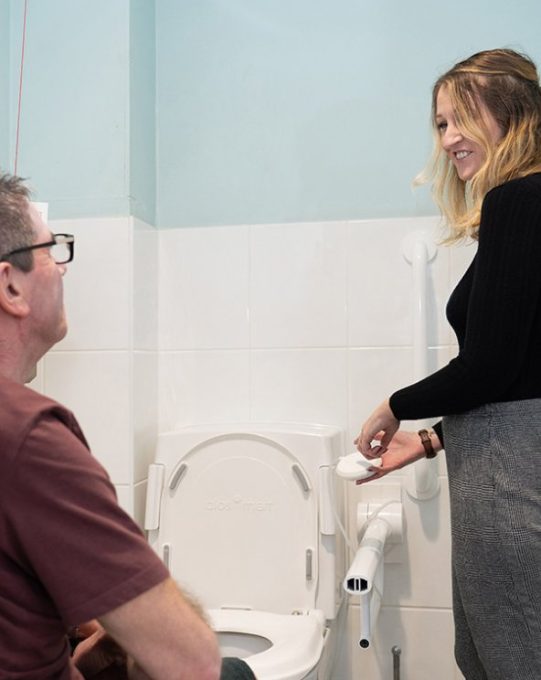
Woman showing a seated man how to use the Aerolet toilet lifter

What should you do next?

Identify whether vertical or tilting movement provides the safest and most effective outcome