Once clinical need is established, the challenge shifts to delivering the right outcome within the limits of the environment. In smaller bathrooms, this means prioritising safety, independence, and long-term suitability over ideal layouts. Wash and dry toilets and configurable support systems enable effective outcomes even where space is restricted.
Options for a small or restricted bathroom/wetroom
You’ve Identified the Need. How Do You Choose the Right Solution in a Small Bathroom?
What changes when space becomes the limiting factor?
Clinical reasoning may be sound, but small bathrooms introduce a new constraint: the environment no longer supports ideal solutions.
Can the required outcome still be delivered safely within the available space?
In smaller bathrooms, you are often working around:
- Limited floor area and restricted transfer space
- Fixed plumbing and immovable services
- Door swings and obstructive layouts
- Reduced opportunity to achieve standard accessible clearances
At this point, the focus must shift from achieving a “perfect” layout to delivering a solution that is safe, functional, and sustainable in practice.
Where should you start: layout or outcome?
In restricted environments, starting with the layout often leads to compromise.
Instead, ask:
- Is the priority safe transfers?
- Is hygiene independence the key outcome?
- Is the goal to reduce or remove care input?
- Will needs change over time?
This keeps the specification clinically driven, rather than dictated by physical limitations.
Where hygiene independence is compromised, particularly when wiping is unsafe or inconsistent, wash and dry solutions become highly relevant because they resolve the task itself, not just the environment.
What approaches typically work in smaller bathrooms?
In practice, most small bathroom adaptations follow one of three routes.
Can you achieve the outcome by upgrading the toilet alone?
Retain the layout, upgrade the function
Where structural change is not feasible, replacing the WC with a wash and dry toilet can deliver the greatest functional gain within the existing footprint.
This works because it removes the most complex part of the task:
manual hygiene
A wash and dry toilet enables:
- Independent cleansing and drying
- Reduced reliance on carers for intimate care
- Improved hygiene consistency
- Greater dignity and confidence
In many cases, this is the least disruptive intervention, but achieves the most meaningful outcome.
If space is limited, where should it be prioritised?
Reconfigure around the transfer zone
Not all areas of the bathroom carry equal importance.
In smaller layouts, the priority is not overall space, but usable space where it matters.
Ask
- Is there a clear side for transfer?
- Are basins or doors obstructing movement?
- Can the user achieve a stable seating position?
Even where ideal turning circles are not achievable, ensuring a safe transfer approach and positioning is often enough to deliver a successful outcome.
This becomes particularly important when using wash and dry toilets, where correct seating position directly affects both safety and performance.
Does converting to a wet room always solve the problem?
Integrate carefully within a shower or wet room
Wet rooms can increase usable space, but they introduce new considerations.
Will the toileting solution still function safely within this environment?
When specifying in a wet room:
- The unit must tolerate a bathroom environment (e.g. splash zones)
- It should not sit directly in the path of shower spray
- It should not be used as a shower seat
In smaller bathrooms, these zones often overlap, so positioning becomes critical to ensure both usability and product longevity.
Which solutions work best in restricted spaces?
Closomat systems are designed to adapt to real-world environments rather than ideal ones.
Palma Vita (Floor-Mounted Wash & Dry Toilet)
When hygiene and independence are the primary challenges
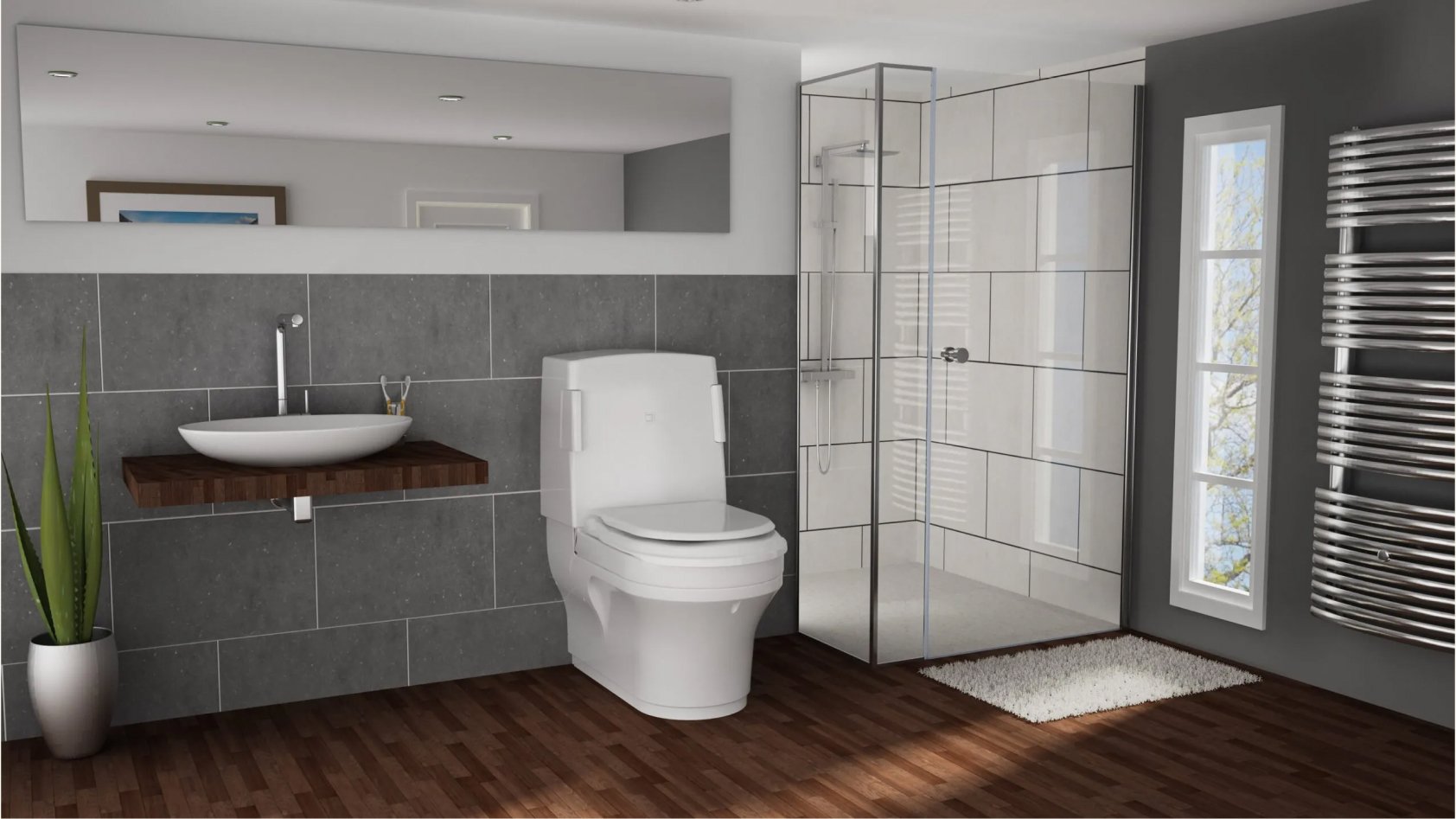
Palma Vita provides:
- A compact footprint suitable for standard bathrooms
- Configurable seating height to support transfers
- Compatibility with support arms and adaptive controls
It works well where:
- Space is restricted but independence must be restored
- Hygiene is unsafe or carer-dependent
Lima Vita (Wall-Hung Wash & Dry Toilet)
When flexibility and floor clearance matter
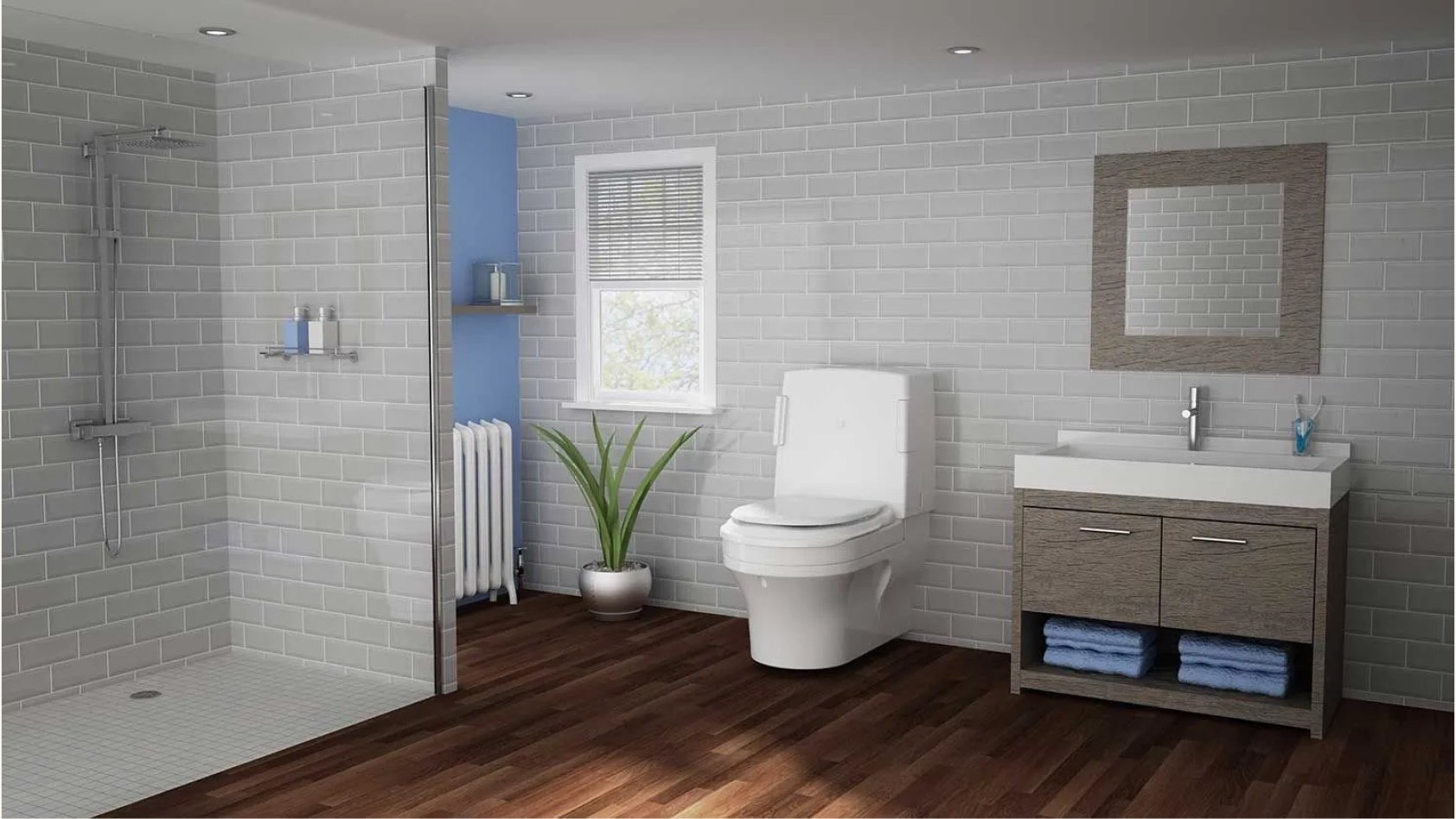
Lima Vita allows:
- Greater adjustment of seating height
- Improved floor space for positioning or mobility aids
- A cleaner transfer area where space is tight
This is particularly useful when:
- Floor clearance improves access
- Structural support allows wall-mounted installation
How important is configuration in small spaces?
In restricted environments, configuration is often as important as the product itself.
What adaptations will make this solution usable day to day?
Options include:
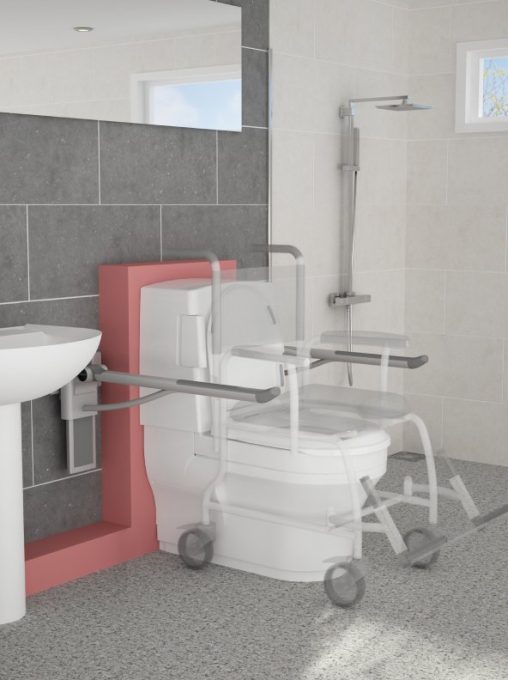
- Fold-down support arms to provide stability without blocking access
- Alternative control types for users with reduced dexterity
- Compatibility with shower or commode chairs
When using a chair over a toilet:
- It must align correctly with the pan
- Gaps should be minimised to ensure effective hygiene performance
Small adjustments like these often determine whether a solution succeeds or fails in practice.
What should you check before finalising your recommendation?
A detailed environmental assessment becomes critical in smaller bathrooms.
Key checks include:
- Can the user sit in a stable, effective position?
- Is there sufficient access for transfer or mobility aids?
- Do surrounding fixtures restrict movement or safety?
- Will water sources interfere with equipment use?
- Can services (water and electrics) support installation?
Answering these questions early prevents rework, modification, and delayed outcomes.
What defines a successful outcome in a restricted space?
Success is not measured by how closely the layout meets ideal standards, but by whether the individual can:
- Complete the task safely
- Maintain independence where possible
- Reduce reliance on care
- Use the environment consistently over time
When these outcomes are achieved, the solution is clinically effective, regardless of spatial limitations.
What should you do next?
If you have identified need but space is limiting your options, the next step is to align outcome with environment.
Define the core outcome, assess spatial constraints, and configure a solution that delivers safe, sustainable toileting within the available space.