Double handling and repeat visits usually occur when toileting is assessed in parts rather than as a complete task. When hygiene, access, posture, control, and long-term needs are addressed together at the first assessment, interventions become more effective. Wash and dry toilets, when clinically justified and correctly specified, can reduce carer reliance, minimise re-intervention, and support sustainable independence.
How to Reduce Double Handling and Repeat Visits in Toileting Interventions
Why do some toileting adaptations need to be revisited, and how do you get it right first time?
Why do toileting interventions often lead to repeat visits?
Repeat visits rarely happen because the original recommendation was wrong. They happen because it was incomplete.
Did the first assessment resolve the entire toileting task, or just part of it?
In practice, many interventions focus on one element, most often transfers or access. While this may solve the immediate problem, it can leave other stages unresolved.
This is where issues reappear:
- Hygiene still requires carer involvement
- Equipment does not support posture or positioning over time
- Cognitive or dexterity challenges are not addressed
- The environment requires modification after installation
- Changing needs were not considered at the outset
Each gap leads to reassessment, additional visits, and further adaptation.
What does “double handling” actually look like in practice?
Double handling is not always obvious. It often shows up as:
- Carers stepping in after the transfer to complete hygiene
- Multiple pieces of equipment layered over time
- Repeated OT involvement to correct or upgrade previous solutions
- Manual handling increasing rather than reducing

The root issue is consistent:
The full task was not solved in a single, coordinated intervention.
How do you prevent this at the point of assessment?
The most effective way to reduce repeat visits is to treat toileting as a single, continuous occupation.
Can the individual complete the entire toileting routine safely, independently, and consistently?
A clinically robust assessment should always include:
Access and transfers
Can the user reach, position, and transfer safely?
Posture and seating
Is stability maintained throughout the task?
Hygiene completion
Can washing and drying be achieved without assistance?
Cognition and control
Are controls intuitive and repeatable?
Environment and installation
Will the solution fit without modification or compromise?
Future progression
Will this remain appropriate as needs change?
When any of these are missed, the likelihood of re-intervention increases.
How can a single intervention reduce multiple risks?
One of the most effective ways to reduce double handling is to remove task fragmentation.
Wash and dry toilets do this by integrating hygiene directly into the toileting process.
How do we support wiping more effectively?
How do we remove the need for wiping altogether?
This delivers:
- Independent hygiene within the task itself
- Reduced reliance on carers for intimate care
- Fewer follow-up visits to address unmet hygiene needs
- Less need for additional equipment or adaptations
By solving hygiene at the same time as access and positioning, the intervention becomes more complete from the outset.
Why does correct specification make such a difference?
Many repeat visits stem not from the product, but from how it was specified.
What solution is needed?
Has it been configured correctly for this individual and their environment?
Effective specification includes:
- Matching controls to dexterity and cognitive ability
- Aligning seating height, support arms, and posture
- Confirming spatial and service requirements before installation
- Validating technical fit to avoid later modification
Getting this right the first time reduces the need for adjustment, replacement, or escalation.
How does this support funding justification?
Reducing double handling is not just a clinical objective. It also aligns with funding priorities.
A well-justified intervention should clearly demonstrate:
Identified need
The individual requires support with hygiene or transfers, increasing risk and reliance on care.
Intervention
A correctly specified solution enables independent completion of the full toileting task.
Outcome
- Reduced carer involvement in intimate care
- Fewer repeat visits and reassessments
- Improved dignity and consistency
- Long-term value through prevention rather than escalation
This positions the intervention as both clinically appropriate and cost-effective.
What risks are reduced when the task is fully resolved?
Addressing the entire toileting task at once allows you to mitigate multiple risks simultaneously.
These include:
- Hygiene-related risks such as skin breakdown or infection
- Falls risk associated with unsafe positioning or reaching
- Manual handling strain for carers
- Loss of dignity and privacy
- Inconsistent routines, particularly in cognitive impairment
A complete solution supports safer, more predictable outcomes across all of these areas.
What should you do differently at your next assessment?
If the goal is to reduce repeat visits, the focus must shift from partial solutions to full task resolution.
Ask
- Have I addressed every stage of the toileting routine?
- Does this solution remove dependency rather than manage it?
- Will this still be appropriate in 6–12 months?
- Can this be delivered without further adaptation?
When the answer to all of these is yes, the need for re-intervention drops significantly.
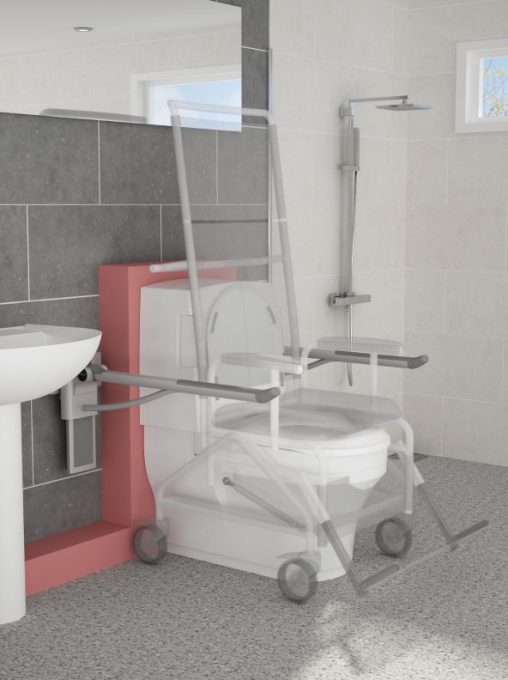
What should you do next?
If you are seeing repeat visits or layered adaptations, the next step is to reframe the assessment.
Use a full-task approach to align hygiene, transfers, posture, control, and environment into a single, coordinated intervention that delivers sustainable outcomes.